













Screening of transition and post-transition metals to incorporate into copper oxide and copper bismuth oxide for photoelectrochemical hydrogen evolution
Literature Information
Publication Date
2013-02-11
DOI
10.1039/C3CP50540E
Impact Factor
3.676
Authors
Sean P. Berglund, Heung Chan Lee, Paul D. Núñez, Allen J. Bard
View Original
Abstract
A new dispenser and scanner system is used to create and screen Bi–M–Cu oxide arrays for cathodic photoactivity, where M represents 1 of 22 different transition and post-transition metals. Over 3000 unique Bi : M : Cu atomic ratios are screened. Of the 22 metals tested, 10 show a M–Cu oxide with higher photoactivity than CuO and 10 show a Bi–M–Cu oxide with higher photoactivity than CuBi2O4. Cd, Zn, Sn, and Co produce the most photoactive M–Cu oxides, all showing a 200–300% improvement in photocurrent over CuO. Ag, Cd, and Zn produce the highest photoactivity Bi–M–Cu oxides with a 200–400% improvement over CuBi2O4. Most notable is a Bi–Ag–Cu oxide (Bi : Ag : Cu atomic ratio of 22 : 3 : 11) which shows 4 times higher photocurrent than CuBi2O4. This material is capable of evolving hydrogen under illumination in neutral electrolyte solutions at 0.6 V vs. RHE when Pt is added to the surface as an electrocatalyst.
Related Literature
Poly(methylene green) employed as molecularly imprinted polymermatrix for electrochemical sensing
2005-10-25
Paper
DOI: 10.1039/B510878K
Direct monitoring of toxic compounds in air using a portable mass spectrometer
Christopher C. Mulligan, Dina R. Justes, Robert. J. Noll, Nathaniel L. Sanders, Brian C. Laughlin, R. Graham Cooks
2006-02-28
Paper
DOI: 10.1039/B517541K
Validation of new microvolume Couette flow linear dichroism cells
Rachel Marrington, Timothy R. Dafforn, David J. Halsall, James I. MacDonald, Matthew Hicks, Alison Rodger
2005-10-14
Paper
DOI: 10.1039/B506149K
Rapid testing of infection and disease states: the faster the better
Karen M. Black, Neeraj Vats
2007-09-12
Editorial
DOI: 10.1039/B712103M
Speciation analysis with HPLC-mass spectrometry: time to take stock
Kevin A. Francesconi, Michael Sperling
2005-06-09
Forum
DOI: 10.1039/B504485P
Nanoparticle-based immunoassays in the biomedical field
Dianping Tang, Yuling Cui, Guonan Chen
2012-12-12
Minireview
DOI: 10.1039/C2AN36500F
Enhanced stability and sensitivity of ionic liquid–carbon paste electrodes at elevated temperatures
Mustafa M. Musameh, Roohollah Torabi Kachoosangi, Richard G. Compton
2007-11-14
Paper
DOI: 10.1039/B713071F
Diffusional protection of electrode surfaces using regular arrays of immobilised droplets: overcoming interferences in electroanalysis
Andrew O. Simm, Olga Ordeig, Javier del Campo, Francesc Xavier Muñoz, Richard G. Compton
2006-08-02
Communication
DOI: 10.1039/B607888E
Microfluidics at the crossroad with point-of-care diagnostics
Vincent Linder
2007-08-10
Forum
DOI: 10.1039/B706347D
Analytical performance characteristics of nanoelectrospray emitters as a function of conductive coating
Douglas R. Smith, Marie A. Moy, Anthony R. Dolan
2006-02-28
Paper
DOI: 10.1039/B516188F
You might also like
Compound Q&A
How should waste containing (6-Bromo-2-naphthyl)oxy](dimethyl)(2-methyl-2-propanyl)silane be handled?
Waste containing (6-Bromo-2-naphthyl)oxy](dimethyl)(2-methyl-2-propanyl)silane (...
100751-65-3[(6-Bromo-2-naphthyl...
Compound Q&A
How is 7-Fluoro-4-isoquinolinecarboxylic acid (CAS: 1841081-40-0) typically synthesized?
7-Fluoro-4-isoquinolinecarboxylic acid can be synthesized via a multi-step proce...
1841081-40-07-Fluoro-4-isoquinol...
Compound Q&A
What are the physical and chemical properties of 2,3,5,6-Tetrabromothieno[3,2-b]thiophene (CAS: 124638-53-5)?
2,3,5,6-Tetrabromothieno[3,2-b]thiophene is a crystalline compound with a high m...
124638-53-52,3,5,6-Tetrabromoth...
Compound Q&A
Is 1-[4-(Benzylamino)-7,8-dihydro-5H-pyrano[4,3-d]pyrimidin-2-yl]-2-methyl-1H-indole-4-carboxamide (CAS: 1542705-92-9) safe?
1-[4-(Benzylamino)-7,8-dihydro-5H-pyrano[4,3-d]pyrimidin-2-yl]-2-methyl-1H-indol...
1542705-92-91-[4-(Benzylamino)-7...
Compound Q&A
What is the market or research trend for imidazo[5,1-d]-1,2,3,5-tetrazine-8-carboxylic acid, 3,4-dihydro-3-methyl-4-oxo- (CAS: 113942-30-6)?
The market for imidazo[5,1-d]-1,2,3,5-tetrazine-8-carboxylic acid, 3,4-dihydro-3...
113942-30-6Imidazo[5,1-d]-1,2,3...
Compound Q&A
What is 3-(Triisopropylsilyl)propiolaldehyde (CAS: 163271-80-5)?
3-(Triisopropylsilyl)propiolaldehyde is a synthetic organic compound with the CA...
163271-80-53-(Triisopropylsilyl...
Compound Q&A
What regulatory guidelines apply to 6-Nitro-2H-1,4-benzoxazin-3(4H)-one (CAS: 81721-87-1)?
6-Nitro-2H-1,4-benzoxazin-3(4H)-one (CAS: 81721-87-1) is subject to various regu...
81721-87-16-Nitro-2H-1,4-benzo...
Compound Q&A
How should waste containing (3-Fluorophenyl)(4-{[(2-methyl-2-propanyl)oxy]carbonyl}-1-piperazinyl)acetic acid (CAS: 885272-91-3) be handled?
Waste containing (3-Fluorophenyl)(4-{[(2-methyl-2-propanyl)oxy]carbonyl}-1-piper...
885272-91-3(3-Fluorophenyl)(4-{...
Compound Q&A
What are the physical and chemical properties of N,N'-4,4'-Biphenyldiyldiisonicotinamide (CAS: 55119-40-9)?
N,N'-4,4'-Biphenyldiyldiisonicotinamide is a white crystalline solid with a mole...
55119-40-9N,N'-4,4'-Biphenyldi...
Compound Q&A
What industries use 6-Bromo-8-fluoro-2-quinazolinol (CAS: 1036756-15-6)?
6-Bromo-8-fluoro-2-quinazolinol is primarily used in the pharmaceutical industry...
1036756-15-66-Bromo-8-fluoro-2-q...
Source Journal
Physical Chemistry Chemical Physics

CiteScore:
5.5
Self-citation Rate:
10.3%
Articles per Year:
3036
Physical Chemistry Chemical Physics (PCCP) is an international journal co-owned by 19 physical chemistry and physics societies from around the world. This journal publishes original, cutting-edge research in physical chemistry, chemical physics and biophysical chemistry. To be suitable for publication in PCCP, articles must include significant innovation and/or insight into physical chemistry; this is the most important criterion that reviewers and Editors will judge against when evaluating submissions. The journal has a broad scope and welcomes contributions spanning experiment, theory, computation and data science. Topical coverage includes spectroscopy, dynamics, kinetics, statistical mechanics, thermodynamics, electrochemistry, catalysis, surface science, quantum mechanics, quantum computing and machine learning. Interdisciplinary research areas such as polymers and soft matter, materials, nanoscience, energy, surfaces/interfaces, and biophysical chemistry are welcomed if they demonstrate significant innovation and/or insight into physical chemistry. Joined experimental/theoretical studies are particularly appreciated when complementary and based on up-to-date approaches.
Recommended Compounds
![N-[(E)-Phenylmethylene]benzenesulfonamide structure](https://static.chemtradehub.com/structs/139/13909-34-7-8167.webp "N-[(E)-Phenylmethylene]benzenesulfonamide structure")

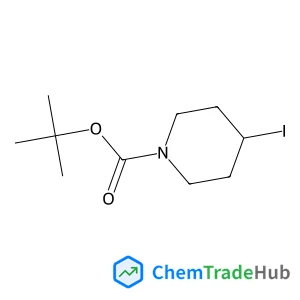
2-Methyl-2-propanyl 4-iodo-1-piperidinecarboxylate
CAS Number:
301673-14-3
Molecular Formula:
C10H18INO2

Recommended Suppliers






Disclaimer
This page provides academic journal information for reference and research purposes only. We are not affiliated with any journal publishers and do not handle publication submissions. For publication-related inquiries, please contact the respective journal publishers directly.
If you notice any inaccuracies in the information displayed, please contact us at support@chemtradehub.com. We will promptly review and address your concerns.