












Solvent states and spectroscopy of doped helium clusters as a quantum-chemistry-like problem
Literature Information
Publication Date
2013-03-25
DOI
10.1039/C3CP50282A
Impact Factor
3.676
Authors
Néstor F. Aguirre, Pablo Villarreal, Gerardo Delgado-Barrio, Alexander O. Mitrushchenkov, María Pilar de Lara-Castells
View Original
Abstract
The Full-Configuration-Interaction Nuclear-Orbital (FCI-NO) approach [J. Chem. Phys., 2009, 131, 19401], as the implementation of the quantum-chemistry ansatz, is overviewed and applied to (He)N–Cl2(X) clusters (N ≤ 4). The ground and excited states of both fermionic 3He and bosonic 4He [see also, J. Phys. Chem. Lett., 2012, 2, 2145] clusters are studied. It is shown that the FCI-NO approach allows us to overcome three main difficulties: (1) the Fermi–Dirac (Bose–Einstein) nuclear statistics; (2) the wide (highly anharmonic) amplitudes of the He–dopant and He–He motions; and (3) both the weakly attractive (long-range) and the strongly repulsive (short-range) interaction between the helium atoms. Special emphasis is placed on the dependence of the cluster properties on the number of helium atoms, and on the comparison between the two helium isotopes. In particular, we analyze the analogies between quantum rings comprising electrons and 3He atoms. The synthetic vibro-rotational Raman spectra of Cl2(X) immersed in (3,4He)N clusters (N ≤ 4) are discussed as a function of the cluster size and the nuclear statistics. It is shown that the Coriolis couplings play a key role in modifying the spectral dopant profile in 3He. Finally, we point out possible directions for future research using the quantum-chemistry ansatz.
Related Literature
An in situ cross-linked 1D/3D perovskite heterostructure improves the stability of hybrid perovskite solar cells for over 3000 h operation
Ning Yang, Cheng Zhu, Yihua Chen, Huachao Zai, Chenyue Wang, Xi Wang, Hao Wang, Sai Ma, Ziyan Gao, Xueyun Wang, Jiawang Hong, Yang Bai, Huanping Zhou
2020-09-28
Paper
DOI: 10.1039/D0EE01736A
Fluorine-free ionic liquid electrolytes for sustainable neodymium recovery using an electrochemical approach
Kalani Periyapperuma, Jennifer M. Pringle, Laura Sanchez-Cupido, Maria Forsyth, Cristina Pozo-Gonzalo
2021-04-21
Paper
DOI: 10.1039/D1GC00361E
Splitting growth of novel CuO straw sheaves and their improved photocatalytic activity due to exposed active {110} facets and crystallinity
Yunxuan Zhao, Huaxia Shi, Mingdong Chen, Fei Teng
2014-01-10
Paper
DOI: 10.1039/C3CE42271B
A kinetically well-matched full-carbon sodium-ion capacitor
Kangyu Zou, Peng Cai, Cheng Liu, Jiayang Li, Xu Gao, Laiqiang Xu, Guoqiang Zou, Hongshuai Hou, Zuming Liu, Xiaobo Ji
2019-05-13
Paper
DOI: 10.1039/C9TA03797G
Lithiophilicity conversion of the Cu surface through facile thermal oxidation: boosting a stable Li–Cu composite anode through melt infusion
Tianpeng Jiao, Shaoran Yang, Bin Liu, Wenjun Zhang, Kaili Zhang
2019-02-06
Paper
DOI: 10.1039/C9TA00466A
Boosting supercapacitor and capacitive deionization performance of hierarchically porous carbon by polar surface and structural engineering
2019-12-14
Paper
DOI: 10.1039/C9TA12170F
Methyl substituent effect on structure, luminescence and semiconducting properties of furan/phenylene co-oligomer single crystals
Vladislav G. Konstantinov, Dmitry Yu. Paraschuk
2017-02-28
Paper
DOI: 10.1039/C6CE02565J
Polymeric carbon nitride-based photocatalysts for photoreforming of biomass derivatives
Jiu Wang, Pawan Kumar, Heng Zhao, Md Golam Kibria, Jinguang Hu
2021-08-16
Tutorial Review
DOI: 10.1039/D1GC02307A
Directed holey and ordered g-C3N4.5 nanosheets by a hard template nanocasting approach for sustainable visible-light hydrogen evolution with prominent quantum efficiency
Bindu Antil, Sasanka Deka
2020-06-15
Paper
DOI: 10.1039/D0TA02734K
Correction: Large-scale electricity storage utilizing reversible solid oxide cells combined with underground storage of CO2 and CH4
S. H. Jensen, C. Graves, M. Mogensen, C. Wendel, R. Braun, G. Hughes, Z. Gao, S. A. Barnett
2016-11-25
Correction
DOI: 10.1039/C6EE90064J
You might also like
Compound Q&A
What are the main uses of (5-Sulfamoyl-3-pyridinyl)boronic acid (CAS: 951233-61-7)?
(5-Sulfamoyl-3-pyridinyl)boronic acid is primarily used in chemical synthesis, p...
951233-61-7(5-Sulfamoyl-3-pyrid...
Compound Q&A
How is Benzyl 2-methyl-2-(methylsulfonyl)-4-pentenoate (CAS: 1942858-50-5) typically synthesized?
Benzyl 2-methyl-2-(methylsulfonyl)-4-pentenoate is typically synthesized via est...
1942858-50-5Benzyl 2-methyl-2-(m...
Compound Q&A
What precautions should be taken when handling 8-Fluoroquinolin-6-ol (CAS: 209353-22-0)?
When handling 8-Fluoroquinolin-6-ol (CAS: 209353-22-0), it is important to use p...
209353-22-08-Fluoroquinolin-6-o...
Compound Q&A
What are the physical and chemical properties of 1,3-Dibromo-5-(2-methyl-2-propanyl)benzene (CAS: 129316-09-2)?
1,3-Dibromo-5-(2-methyl-2-propanyl)benzene (CAS: 129316-09-2) is a crystalline c...
129316-09-21,3-Dibromo-5-(2-met...
Compound Q&A
What industries use Ethyl 7-chloro-4-oxo-1-(1,3-thiazol-2-yl)-1,4-dihydro-1,8-naphthyridine-3-carboxylate (CAS: 174726-87-5)?
Ethyl 7-chloro-4-oxo-1-(1,3-thiazol-2-yl)-1,4-dihydro-1,8-naphthyridine-3-carbox...
174726-87-5Ethyl 7-chloro-4-oxo...
Compound Q&A
What precautions should be taken when handling Delta-7-Avenasterol (CAS: 23290-26-8)?
When handling Delta-7-Avenasterol (CAS: 23290-26-8), it is important to wear app...
23290-26-8Delta-7-Avenasterol
Compound Q&A
What precautions should be taken when handling N-({(5R)-3-[3-Fluoro-4-(4-morpholinyl)phenyl]-2-oxo-1,3-oxazolidin-5-yl}methyl)acetamide (CAS: 872992-20-6)?
Proper handling involves the use of personal protective equipment such as gloves...
872992-20-6N-({(5R)-3-[3-Fluoro...
Compound Q&A
What precautions should be taken when handling 2-Methyl-2-proanyl 4-[(2-aminophenyl)amino]-1-piperidinecarboxylate (CAS: 79099-00-6)?
When handling 2-Methyl-2-proanyl 4-[(2-aminophenyl)amino]-1-piperidinecarboxylat...
79099-00-62-Methyl-2-propanyl ...
Compound Q&A
What is N-Methyl-4-chlorobenzylamine hydrochloride (CAS: 65542-24-7)?
N-Methyl-4-chlorobenzylamine hydrochloride (CAS: 65542-24-7) is a organic compou...
65542-24-7N-Methyl-4-chloroben...
Compound Q&A
Is [2-(Dodecyloxy)ethoxy]acetic acid (CAS: 27306-90-7) safe?
[2-(Dodecyloxy)ethoxy]acetic acid (CAS: 27306-90-7) is generally considered safe...
27306-90-7[2-(Dodecyloxy)ethox...
Source Journal
Physical Chemistry Chemical Physics

CiteScore:
5.5
Self-citation Rate:
10.3%
Articles per Year:
3036
Physical Chemistry Chemical Physics (PCCP) is an international journal co-owned by 19 physical chemistry and physics societies from around the world. This journal publishes original, cutting-edge research in physical chemistry, chemical physics and biophysical chemistry. To be suitable for publication in PCCP, articles must include significant innovation and/or insight into physical chemistry; this is the most important criterion that reviewers and Editors will judge against when evaluating submissions. The journal has a broad scope and welcomes contributions spanning experiment, theory, computation and data science. Topical coverage includes spectroscopy, dynamics, kinetics, statistical mechanics, thermodynamics, electrochemistry, catalysis, surface science, quantum mechanics, quantum computing and machine learning. Interdisciplinary research areas such as polymers and soft matter, materials, nanoscience, energy, surfaces/interfaces, and biophysical chemistry are welcomed if they demonstrate significant innovation and/or insight into physical chemistry. Joined experimental/theoretical studies are particularly appreciated when complementary and based on up-to-date approaches.
Recommended Compounds
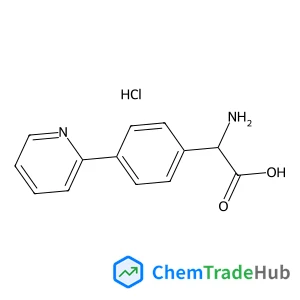
2-Amino-2-(4-(pyridin-2-YL)phenyl)acetic acid hydrochloride
CAS Number:
1135818-89-1
Molecular Formula:
C13H13ClN2O2
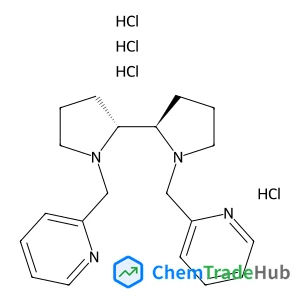
(2R,2'R)-1,1'-Bis(2-pyridinylmethyl)-2,2'-bipyrrolidine tetrahydrochloride
CAS Number:
1228077-88-0
Molecular Formula:
C20H30Cl4N4
![N-[4-(Cyanoethynyl)phenyl]-16-oxo-4,7,10,13-tetraoxa-17-azahenicos-1-yn-21-amide structure](https://static.chemtradehub.com/structs/218/2183440-36-8-68cb.webp "N-[4-(Cyanoethynyl)phenyl]-16-oxo-4,7,10,13-tetraoxa-17-azahenicos-1-yn-21-amide structure")
N-[4-(Cyanoethynyl)phenyl]-16-oxo-4,7,10,13-tetraoxa-17-azahenicos-1-yn-21-amide
CAS Number:
2183440-36-8
Molecular Formula:
C25H31N3O6
Recommended Suppliers






Disclaimer
This page provides academic journal information for reference and research purposes only. We are not affiliated with any journal publishers and do not handle publication submissions. For publication-related inquiries, please contact the respective journal publishers directly.
If you notice any inaccuracies in the information displayed, please contact us at support@chemtradehub.com. We will promptly review and address your concerns.