













Characterization of charge transport properties of a 3D electrode for dye-sensitized solar cells
Literature Information
Publication Date
2013-05-22
DOI
10.1039/C3CP50214G
Impact Factor
3.676
Authors
Chang-Yeol Cho, Hye-Na Kim, Jun Hyuk Moon
View Original
Abstract
Electron transport and recombination in three-dimensionally-ordered (3D-ordered) structure electrodes were investigated using intensity-modulated photocurrent and photovoltage spectroscopy. The surface-modified TiO2 inverse opal structure was applied as a 3D electrode. The morphology, crystalline structure and surface states of the 3D-ordered structure were characterized by SEM, TEM and XPS and compared to those of the conventional nanoparticulate TiO2 structure. The performance of the 3D electrode was also evaluated by comparing the transport time and recombination lifetime to those of the conventional electrodes. Remarkably, the recombination lifetime in inverse opal was found to be greater than in nanocrystalline TiO2 by 4.3–6.2 times, thus improving the electron collection efficiency by 10%. Comparing the photovoltaic performance, although the dye adsorption of the 3D-ordered porous electrode is lower, the electrode achieves a photocurrent density comparable to that of a nanoparticulate TiO2 electrode due to the higher light scattering as well as the higher collection efficiency.
Related Literature
Intermolecular interactions in self-assembled monolayers of tetrathiafulvalene derivatives
Pierre-Yves Blanchard, Olivier Alévêque, Séverine Boisard, Christelle Gautier, Abdelkrim El-Ghayoury, Franck Le Derf, Tony Breton, Eric Levillain
2010-11-30
Communication
DOI: 10.1039/C0CP01968B
Benchmarks for the generation of interaction potentials for scattering calculations: applications to rotationally inelastic collisions of C4 (X3Σ −g) with He
Jacek Kłos, Majdi Hochlaf
2010-08-20
Paper
DOI: 10.1039/C004945J
Tautomers of extended reduced pyrazinacenes: a density-functional-theory based study
Roberto Scipioni, Jonathan P. Hill, Gary J. Richards, Toshiyuki Mori, Katsuhiko Ariga, Takahisa Ohno
2010-12-06
Paper
DOI: 10.1039/C0CP01245A
A theoretical study of the interactions of NF3 with neutral ambidentate electron donor and acceptor molecules
Fernando Blanco, Ibon Alkorta, Isabel Rozas, Mohammad Solimannejad, José Elguero
2010-10-29
Paper
DOI: 10.1039/C0CP00199F
Titanium-capped carbon chains as promising new hydrogenstorage media
2010-12-07
Paper
DOI: 10.1039/C0CP01745K
Chemical reactions inside structured nano-environment: SN2vs. E2 reactions for the F− + CH3CH2Cl system
Josefredo R. Pliego Jr.
2010-10-29
Paper
DOI: 10.1039/C0CP01182G
Are dopant-stabilized visible light-responsive photocatalysts efficient and stable?
Amutha Ramakrishnan, Yoshihumi Kusumoto
2010-10-13
Communication
DOI: 10.1039/C0CP01033B
Mechanistical studies on the electron-induced degradation of polymethylmethacrylate and Kapton
Courtney P. Ennis, Ralf I. Kaiser
2010-10-26
Paper
DOI: 10.1039/C0CP01130D
Natural superhydrophilicity and photocatalytic properties of sol–gel derived ZnTiO3-ilmenite/r-TiO2 films
Galina Krylova, Arnaud Brioude, Soraya Ababou-Girard, Jan Mrazek, Lubomir Spanhel
2010-10-21
Paper
DOI: 10.1039/C004517A
You might also like
Compound Q&A
What are the main uses of (5-Sulfamoyl-3-pyridinyl)boronic acid (CAS: 951233-61-7)?
(5-Sulfamoyl-3-pyridinyl)boronic acid is primarily used in chemical synthesis, p...
951233-61-7(5-Sulfamoyl-3-pyrid...
Compound Q&A
How is Benzyl 2-methyl-2-(methylsulfonyl)-4-pentenoate (CAS: 1942858-50-5) typically synthesized?
Benzyl 2-methyl-2-(methylsulfonyl)-4-pentenoate is typically synthesized via est...
1942858-50-5Benzyl 2-methyl-2-(m...
Compound Q&A
What precautions should be taken when handling 8-Fluoroquinolin-6-ol (CAS: 209353-22-0)?
When handling 8-Fluoroquinolin-6-ol (CAS: 209353-22-0), it is important to use p...
209353-22-08-Fluoroquinolin-6-o...
Compound Q&A
What are the physical and chemical properties of 1,3-Dibromo-5-(2-methyl-2-propanyl)benzene (CAS: 129316-09-2)?
1,3-Dibromo-5-(2-methyl-2-propanyl)benzene (CAS: 129316-09-2) is a crystalline c...
129316-09-21,3-Dibromo-5-(2-met...
Compound Q&A
What industries use Ethyl 7-chloro-4-oxo-1-(1,3-thiazol-2-yl)-1,4-dihydro-1,8-naphthyridine-3-carboxylate (CAS: 174726-87-5)?
Ethyl 7-chloro-4-oxo-1-(1,3-thiazol-2-yl)-1,4-dihydro-1,8-naphthyridine-3-carbox...
174726-87-5Ethyl 7-chloro-4-oxo...
Compound Q&A
What precautions should be taken when handling Delta-7-Avenasterol (CAS: 23290-26-8)?
When handling Delta-7-Avenasterol (CAS: 23290-26-8), it is important to wear app...
23290-26-8Delta-7-Avenasterol
Compound Q&A
What precautions should be taken when handling N-({(5R)-3-[3-Fluoro-4-(4-morpholinyl)phenyl]-2-oxo-1,3-oxazolidin-5-yl}methyl)acetamide (CAS: 872992-20-6)?
Proper handling involves the use of personal protective equipment such as gloves...
872992-20-6N-({(5R)-3-[3-Fluoro...
Compound Q&A
What precautions should be taken when handling 2-Methyl-2-proanyl 4-[(2-aminophenyl)amino]-1-piperidinecarboxylate (CAS: 79099-00-6)?
When handling 2-Methyl-2-proanyl 4-[(2-aminophenyl)amino]-1-piperidinecarboxylat...
79099-00-62-Methyl-2-propanyl ...
Compound Q&A
What is N-Methyl-4-chlorobenzylamine hydrochloride (CAS: 65542-24-7)?
N-Methyl-4-chlorobenzylamine hydrochloride (CAS: 65542-24-7) is a organic compou...
65542-24-7N-Methyl-4-chloroben...
Compound Q&A
Is [2-(Dodecyloxy)ethoxy]acetic acid (CAS: 27306-90-7) safe?
[2-(Dodecyloxy)ethoxy]acetic acid (CAS: 27306-90-7) is generally considered safe...
27306-90-7[2-(Dodecyloxy)ethox...
Source Journal
Physical Chemistry Chemical Physics

CiteScore:
5.5
Self-citation Rate:
10.3%
Articles per Year:
3036
Physical Chemistry Chemical Physics (PCCP) is an international journal co-owned by 19 physical chemistry and physics societies from around the world. This journal publishes original, cutting-edge research in physical chemistry, chemical physics and biophysical chemistry. To be suitable for publication in PCCP, articles must include significant innovation and/or insight into physical chemistry; this is the most important criterion that reviewers and Editors will judge against when evaluating submissions. The journal has a broad scope and welcomes contributions spanning experiment, theory, computation and data science. Topical coverage includes spectroscopy, dynamics, kinetics, statistical mechanics, thermodynamics, electrochemistry, catalysis, surface science, quantum mechanics, quantum computing and machine learning. Interdisciplinary research areas such as polymers and soft matter, materials, nanoscience, energy, surfaces/interfaces, and biophysical chemistry are welcomed if they demonstrate significant innovation and/or insight into physical chemistry. Joined experimental/theoretical studies are particularly appreciated when complementary and based on up-to-date approaches.
Recommended Compounds
![7-Bromo-5-chloro-1H-pyrazolo[4,3-b]pyridine structure](https://static.chemtradehub.com/structs/135/1351813-70-1-a716.webp "7-Bromo-5-chloro-1H-pyrazolo[4,3-b]pyridine structure")

![N-[4-(Cyanoethynyl)phenyl]-16-oxo-4,7,10,13-tetraoxa-17-azahenicos-1-yn-21-amide structure](https://static.chemtradehub.com/structs/218/2183440-36-8-68cb.webp "N-[4-(Cyanoethynyl)phenyl]-16-oxo-4,7,10,13-tetraoxa-17-azahenicos-1-yn-21-amide structure")
N-[4-(Cyanoethynyl)phenyl]-16-oxo-4,7,10,13-tetraoxa-17-azahenicos-1-yn-21-amide
CAS Number:
2183440-36-8
Molecular Formula:
C25H31N3O6
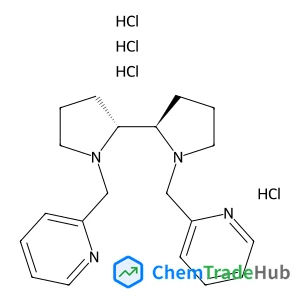
(2R,2'R)-1,1'-Bis(2-pyridinylmethyl)-2,2'-bipyrrolidine tetrahydrochloride
CAS Number:
1228077-88-0
Molecular Formula:
C20H30Cl4N4
Recommended Suppliers





Disclaimer
This page provides academic journal information for reference and research purposes only. We are not affiliated with any journal publishers and do not handle publication submissions. For publication-related inquiries, please contact the respective journal publishers directly.
If you notice any inaccuracies in the information displayed, please contact us at support@chemtradehub.com. We will promptly review and address your concerns.