













(4aS,10aS)-7-Isopropyl-1,4a-dimethyl-5,8-dioxo-3,4,4a,5,8,9,10,10a-octahydro-2-phenanthrenecarboxylic acid
CAS Number:
142950-86-5
Molecular Formula:
C20H24O4
Kamel Hammami, Nejm Eddine Jaidane, Mathieu Lanza, Yulia N. Kalugina, François Lique, Majdi Hochlaf
We closely compare the accuracy of multidimensional potential energy surfaces (PESs) generated by the recently developed explicitly correlated coupled cluster (CCSD(T)-F12) methods in connection with the cc-pVXZ-F12 (X = D, T) and aug-cc-pVTZ basis sets and those deduced using the well-established orbital-based coupled cluster techniques employing correlation consistent atomic basis sets (aug-cc-pVXZ, X = T, Q, 5) and extrapolated to the complete basis set (CBS) limit. This work is performed on the benchmark rare gas–hydrogen halide interaction (HCl–He) system. These PESs are then incorporated into quantum close-coupling scattering dynamical calculations in order to check the impact of the accuracy of the PES on the scattering calculations. For this system, we deduced inelastic collisional data including (de-)excitation collisional and pressure broadening cross sections. Our work shows that the CCSD(T)-F12/aug-cc-pVTZ PES describes correctly the repulsive wall, the van der Waals minimum and long range internuclear distances whereas cc-pVXZ-F12 (X = D,T) basis sets are not diffuse enough for that purposes. Interestingly, the collision cross sections deduced from the CCSD(T)-F12/aug-cc-pVTZ PES are in excellent agreement with those obtained with CCSD(T)/CBS methodology. The position of the resonances and the general shape of these cross sections almost coincide. Since the cost of the electronic structure computations is reduced by several orders of magnitude when using CCSD(T)-F12/aug-cc-pVTZ compared to CCSD(T)/CBS methodology, this approach can be recommended as an alternative for generation of PESs of molecular clusters and for the interpretation of accurate scattering experiments as well as for a wide production of collisional data to be included in astrophysical and atmospherical models.
Evgeny A. Uslamin, Nikolay A. Kosinov, Evgeny A. Pidko, Emiel J. M. Hensen
DOI: 10.1039/C8GC01528G
Brandon Reyneke, Sehaam Khan, Pilar Fernández-Ibáñez, Wesaal Khan
DOI: 10.1039/C9EW00896A
Lahcene Maachou, Kun Qi, Eddy Petit, Zhaodan Qin, Yang Zhang, Didier Cot, Valérie Flaud, Corine Reibel, Heba El-Maghrbi, Lei Li, Philippe Miele, Daniel Kaplan, Manish Chhowalla, Nicolas Onofrio, Damien Voiry
DOI: 10.1039/D0TA09045J
Songwei Li, Peipei Yang
DOI: 10.1039/C9TA04562G
Chen Zhao, Deng Li, Heng Guo, Feiyi Liao, Wei Cao, Xiaobin Niu, Yiying Zhao
DOI: 10.1039/C8TA10170A
Bindu Antil, Sasanka Deka
DOI: 10.1039/D0TA02734K
Anna Fedrigo, Davide Raspino, Francesco Grazzi, Antonella Scherillo
DOI: 10.1039/C9JA00300B
Jiu Wang, Pawan Kumar, Heng Zhao, Md Golam Kibria, Jinguang Hu
DOI: 10.1039/D1GC02307A
(5-Sulfamoyl-3-pyridinyl)boronic acid is primarily used in chemical synthesis, p...
Benzyl 2-methyl-2-(methylsulfonyl)-4-pentenoate is typically synthesized via est...
When handling 8-Fluoroquinolin-6-ol (CAS: 209353-22-0), it is important to use p...
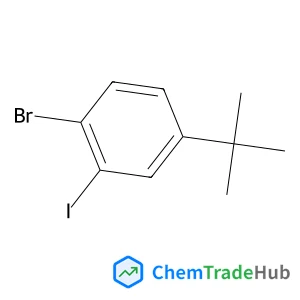
1,3-Dibromo-5-(2-methyl-2-propanyl)benzene (CAS: 129316-09-2) is a crystalline c...
Ethyl 7-chloro-4-oxo-1-(1,3-thiazol-2-yl)-1,4-dihydro-1,8-naphthyridine-3-carbox...
When handling Delta-7-Avenasterol (CAS: 23290-26-8), it is important to wear app...
Proper handling involves the use of personal protective equipment such as gloves...
When handling 2-Methyl-2-proanyl 4-[(2-aminophenyl)amino]-1-piperidinecarboxylat...
N-Methyl-4-chlorobenzylamine hydrochloride (CAS: 65542-24-7) is a organic compou...
[2-(Dodecyloxy)ethoxy]acetic acid (CAS: 27306-90-7) is generally considered safe...

Physical Chemistry Chemical Physics (PCCP) is an international journal co-owned by 19 physical chemistry and physics societies from around the world. This journal publishes original, cutting-edge research in physical chemistry, chemical physics and biophysical chemistry. To be suitable for publication in PCCP, articles must include significant innovation and/or insight into physical chemistry; this is the most important criterion that reviewers and Editors will judge against when evaluating submissions. The journal has a broad scope and welcomes contributions spanning experiment, theory, computation and data science. Topical coverage includes spectroscopy, dynamics, kinetics, statistical mechanics, thermodynamics, electrochemistry, catalysis, surface science, quantum mechanics, quantum computing and machine learning. Interdisciplinary research areas such as polymers and soft matter, materials, nanoscience, energy, surfaces/interfaces, and biophysical chemistry are welcomed if they demonstrate significant innovation and/or insight into physical chemistry. Joined experimental/theoretical studies are particularly appreciated when complementary and based on up-to-date approaches.
![(3E)-3-[4-Hydroxy-3,5-bis(2-methyl-2-propanyl)benzylidene]dihydro-2(3H)-furanone structure](https://static.chemtradehub.com/structs/102/102271-49-8-cba7.webp "(3E)-3-[4-Hydroxy-3,5-bis(2-methyl-2-propanyl)benzylidene]dihydro-2(3H)-furanone structure")
![N-[(6-Bromo-3-pyridinyl)methyl]ethanamine structure](https://static.chemtradehub.com/structs/120/120740-05-8-ca55.webp "N-[(6-Bromo-3-pyridinyl)methyl]ethanamine structure")





