













Structure and dynamics of solvent shells around photoexcited metal complexes
Literature Information
Publication Date
2013-03-06
DOI
10.1039/C3CP44465A
Impact Factor
3.676
Authors
Jaroslaw J. Szymczak, Franziska D. Hofmann
View Original
Abstract
Understanding the geometry, energetics and dynamics of solvated transition metal (TM) compounds is decisive in characterizing and optimizing their function. Here, we demonstrate that it is possible to quantify the structural dynamics of solvated [RuII(bpy)3], an important TM-complex for solar-energy harvesting research, by using state-of-the art force fields together with molecular simulations. Electronic excitation to [RuIII(bpy)3] leads to a nonequilibrium system in which excess energy is redistributed to the surrounding solvent following a cascade of dynamical effects that can be characterized by the simulations. The study reveals that the structure of the surrounding solvent relaxes towards the equilibrium on a sub-picosecond to a few-picosecond time scale. Analysis of solvent residence and rotational reorientation times during relaxation demonstrates increased dynamics in the inner solvation sphere on the picosecond time scale. Energy transfer to the solvent occurs on different time scales for the different degrees of freedom which range from a few hundred fs to several picoseconds.
Recommended Journals
Related Literature
Label-free fibre optic Raman spectroscopy with bounded simplex-structured matrix factorization for the serial study of serum in amyotrophic lateral sclerosis
Visakan Kadirkamanathan, Martin R. Turner, Andrea Malaspina, John C. C. Day
2022-09-28
Paper
DOI: 10.1039/D2AN00936F
Ultrasensitive Pb2+ detection based on fluorescence resonance energy transfer (FRET) between quantum dots and gold nanoparticles
Xin Wang, Xiangqun Guo
2009-04-01
Paper
DOI: 10.1039/B822744F
Specific detection of fusion transcripts based on a duplex-specific nuclease and isothermal exponential amplification reaction
Fengxia Su, Tian Li, Xiaofei He, Zhengping Li
2022-11-02
Paper
DOI: 10.1039/D2AN01665F
Vapor detection and vapor pressure measurements of fentanyl and fentanyl hydrochloride salt at ambient temperatures
Robert G. Ewing, Megan K. Nims, Kelsey A. Morrison, Garret L. Hart, Nancy M. Avalos, Elizabeth H. Denis
2022-09-28
Paper
DOI: 10.1039/D2AN01149B
Viral infection of cells in culture detected using infrared microscopy
Gary Hastings, Peter Krug, Ruili Wang, Jing Guo, Hari P. Lamichhane, Tian Tang, Yu-sheng Hsu, John Ward, David Katz, Julia Hilliard
2009-05-05
Paper
DOI: 10.1039/B902154J
Selective UV-filter detection with sensors based on stainless steel electrodes modified with polyaniline doped with metal tetrasulfonated phthalocyanine films
Luiz Fernando Moreira, Marcos Roberto de Vasconcelos Lanza, Auro Atsushi Tanaka, Maria Del Pilar Taboada Sotomayor
2009-04-28
Paper
DOI: 10.1039/B902273B
Phenotypic heterogeneity within microbial populations at the single-cell level investigated by confocal Raman microspectroscopy
Antje Hermelink, Angelika Brauer, Peter Lasch, Dieter Naumann
2009-03-25
Paper
DOI: 10.1039/B822574E
Sputter-induced chemical transformation in oxoanions by combination of C60+ and Ar+ ion beams analyzed with X-ray photoelectron spectrometry
Yu-Chin Lin, Ying-Yu Chen, Bang-Ying Yu, Wei-Chun Lin
2009-03-10
Paper
DOI: 10.1039/B814729A
Development of an azo functionalized oligomeric chitosan sensor for rapid visual, spectrophotometric and spectrofluorometric detection of KMnO4 up to micromolar concentrations
Madhvi Garg, Dhiraj Sud
2022-12-19
Paper
DOI: 10.1039/D2AN01873J
You might also like
Compound Q&A
What precautions should be taken when handling 4-(2-Furylmethyl)thiomorpholine 1,1-dioxide (CAS: 79206-94-3)?
When handling 4-(2-Furylmethyl)thiomorpholine 1,1-dioxide (CAS: 79206-94-3), it ...
79206-94-34-(2-Furylmethyl)thi...
Compound Q&A
What precautions should be taken when handling 4-Chloro-N-[2-(4-morpholinyl)ethyl]benzamide (CAS: 71320-77-9)?
When handling 4-Chloro-N-[2-(4-morpholinyl)ethyl]benzamide (CAS: 71320-77-9), it...
71320-77-94-Chloro-N-[2-(4-mor...
Compound Q&A
How should waste containing 2-[2-(2-Methoxyethoxy)ethoxy]ethyl 4-methylbenzenesulfonate (CAS: 62921-74-8) be handled?
Waste containing this compound (CAS: 62921-74-8) should be handled according to ...
62921-74-82-[2-(2-Methoxyethox...
Compound Q&A
How should waste containing (S)-Methyl 2-amino-3-cyclohexylpropanoate be handled?
Waste containing (S)-Methyl 2-amino-3-cyclohexylpropanoate should be collected i...
40056-18-6(S)-Methyl 2-amino-3...
Compound Q&A
How is 5-({4-[(2S,4R)-4-Hydroxy-2-methyltetrahydro-2H-pyran-4-yl]-2-thienyl}sulfanyl)-1-methyl-1,3-dihydro-2H-indol-2-one (CAS: 166882-70-8) typically synthesized?
This compound can be synthesized using a multi-step process involving the conjug...
166882-70-85-({4-[(2S,4R)-4-Hyd...
Compound Q&A
Are there alternatives to (2E)-3-(3,4-Dichlorophenyl)acrylic acid (CAS: 7312-27-8) in synthesis?
There are several alternatives to (2E)-3-(3,4-Dichlorophenyl)acrylic acid in syn...
7312-27-8(2E)-3-(3,4-Dichloro...
Compound Q&A
How should Ethyl 6-(2-nitrophenyl)imidazo[2,1-b][1,3]thiazole-3-carboxylate (CAS: 925437-84-9) be stored?
Ethyl 6-(2-nitrophenyl)imidazo[2,1-b][1,3]thiazole-3-carboxylate (CAS: 925437-84...
925437-84-9Ethyl 6-(2-nitrophen...
Compound Q&A
How should waste containing 2-(1,3-Thiazol-2-yl)ethanamine (CAS: 18453-07-1) be handled?
Waste containing 2-(1,3-Thiazol-2-yl)ethanamine (CAS: 18453-07-1) should be coll...
18453-07-12-(1,3-Thiazol-2-yl)...
Compound Q&A
How is Methyl 5-iodo-2-methylbenzoate (CAS: 103440-54-6) typically synthesized?
Methyl 5-iodo-2-methylbenzoate can be synthesized through the iodination of meth...
103440-54-6Methyl 5-iodo-2-meth...
Compound Q&A
How is 5-Chloro[1,2,4]triazolo[1,5-a]pyridine (CAS: 1427399-34-5) typically synthesized?
5-Chloro[1,2,4]triazolo[1,5-a]pyridine is commonly synthesized via the condensat...
1427399-34-55-Chloro[1,2,4]triaz...
Source Journal
Physical Chemistry Chemical Physics

CiteScore:
5.5
Self-citation Rate:
10.3%
Articles per Year:
3036
Physical Chemistry Chemical Physics (PCCP) is an international journal co-owned by 19 physical chemistry and physics societies from around the world. This journal publishes original, cutting-edge research in physical chemistry, chemical physics and biophysical chemistry. To be suitable for publication in PCCP, articles must include significant innovation and/or insight into physical chemistry; this is the most important criterion that reviewers and Editors will judge against when evaluating submissions. The journal has a broad scope and welcomes contributions spanning experiment, theory, computation and data science. Topical coverage includes spectroscopy, dynamics, kinetics, statistical mechanics, thermodynamics, electrochemistry, catalysis, surface science, quantum mechanics, quantum computing and machine learning. Interdisciplinary research areas such as polymers and soft matter, materials, nanoscience, energy, surfaces/interfaces, and biophysical chemistry are welcomed if they demonstrate significant innovation and/or insight into physical chemistry. Joined experimental/theoretical studies are particularly appreciated when complementary and based on up-to-date approaches.
Recommended Compounds

(1H-Benzotriazol-1-yloxy)(di-1-pyrrolidinyl)methylium hexafluorophosphate
CAS Number:
105379-24-6
Molecular Formula:
C15H21F6N5OP
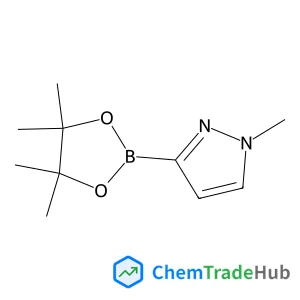
1-Methyl-3-(4,4,5,5-tetramethyl-1,3,2-dioxaborolan-2-yl)-1H-pyrazole
CAS Number:
1020174-04-2
Molecular Formula:
C10H17BN2O2


Recommended Suppliers





Disclaimer
This page provides academic journal information for reference and research purposes only. We are not affiliated with any journal publishers and do not handle publication submissions. For publication-related inquiries, please contact the respective journal publishers directly.
If you notice any inaccuracies in the information displayed, please contact us at support@chemtradehub.com. We will promptly review and address your concerns.