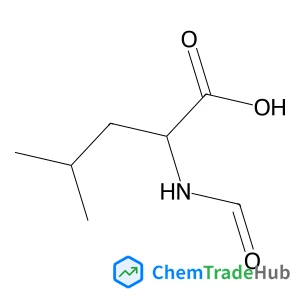
![4-{2-[4-(2-Methyl-2-propanyl)phenyl]ethoxy}quinazoline structure](https://static.chemtradehub.com/structs/120/120928-09-8-d3db.webp "4-{2-[4-(2-Methyl-2-propanyl)phenyl]ethoxy}quinazoline structure")
4-{2-[4-(2-Methyl-2-propanyl)phenyl]ethoxy}quinazoline
CAS Number:
120928-09-8
Molecular Formula:
C20H22N2O
Lacie V. Brownell, Kyoungmi Jang, Kathleen A. Robins, Ich C. Tran, Clemens Heske, Dong-Chan Lee
This paper reports novel pyrazine-acenes containing electron-deficient heteroaromatic π-extenders, such as pyridine, pyrazine, and benzothiadiazole, directly fused with pyrazine. Electronic properties of these systems were characterized by UV-Vis, fluorescence spectroscopy, and cyclic voltammetry. Computational electronic property evaluation of all experimentally synthesized compounds is provided, and is coupled with electronic calculations of closely related compounds that were not synthetically feasible. Our theoretical results provide insight into the overall analysis and interpretation of the experimentally observed trends. In this study, we found a systematic decrease in the LUMO energy (ELUMO) with an increasing number of imine functions in the π-extender. Additionally, when comparing the pyrazine-acene containing pyrazine π-extender to a reference compound with CN peripheral substituents, we found that the imine function is comparable to the CN substituent in lowering ELUMO. The most dramatic ELUMO lowering was experimentally observed using dibromobenzothiadiazole as a π-extender. In all cases, the HOMO energy (EHOMO) was negligibly affected, thus we found options for electronic property control based solely on ELUMO manipulation. This is computationally validated by an examination of the molecular orbitals in which the LUMO orbital was found predominantly on the π-extender section of the molecules, while the HOMO orbital was localized away from the π-extender. Interestingly, the self-assembly of all the experimentally synthesized compounds showed excellent one-dimensional fiber formation in spite of their large π-core framework. These fibers were characterized by atomic force microscopy and UV-Vis spectroscopy.
Na Li, Minhui Li, Mei Li
DOI: 10.1039/D2AN01798A
Łukasz Tymecki, Luiza Brodacka, Beata Rozum, Robert Koncki
DOI: 10.1039/B822025E
Matthias C. Jecklin, Gerardo Gamez, Renato Zenobi
DOI: 10.1039/B819560A
Ke-Peng Lai, Yu-Chen Su, Bo-Siang Fu, Kung-Hung Lin, Hwang-Shang Kou
DOI: 10.1039/D2AN01433E
M. Seray Ural, Emmanuel Dartois, Jérémie Mathurin, Didier Desmaële, Philippe Collery, Alexandre Dazzi, Ariane Deniset-Besseau, Ruxandra Gref
DOI: 10.1039/D2AN01079H
Kai-Chi Chang, Chan-Yu Chen, Li-Wei Lee
DOI: 10.1039/D2AN01201D
Guohua Qi, Xing Du, Xuan Yi, Minmin Wang, Hongyan Zhu, Dan Sun
DOI: 10.1039/D2AN01459A
Tim J. Causon, Robert A. Shellie, Emily F. Hilder
DOI: 10.1039/B815886J
Masato Saito, M. Mosharraf Hossain, S. Ramachandara Rao, Satoshi Furui, Akihiro Hino, Yuzuru Takamura, Masahiro Takagi, Eiichi Tamiya
DOI: 10.1039/B812569D
When handling 4-(2-Furylmethyl)thiomorpholine 1,1-dioxide (CAS: 79206-94-3), it ...
When handling 4-Chloro-N-[2-(4-morpholinyl)ethyl]benzamide (CAS: 71320-77-9), it...
Waste containing this compound (CAS: 62921-74-8) should be handled according to ...
Waste containing (S)-Methyl 2-amino-3-cyclohexylpropanoate should be collected i...
This compound can be synthesized using a multi-step process involving the conjug...
There are several alternatives to (2E)-3-(3,4-Dichlorophenyl)acrylic acid in syn...
Ethyl 6-(2-nitrophenyl)imidazo[2,1-b][1,3]thiazole-3-carboxylate (CAS: 925437-84...
Waste containing 2-(1,3-Thiazol-2-yl)ethanamine (CAS: 18453-07-1) should be coll...
Methyl 5-iodo-2-methylbenzoate can be synthesized through the iodination of meth...
5-Chloro[1,2,4]triazolo[1,5-a]pyridine is commonly synthesized via the condensat...

Physical Chemistry Chemical Physics (PCCP) is an international journal co-owned by 19 physical chemistry and physics societies from around the world. This journal publishes original, cutting-edge research in physical chemistry, chemical physics and biophysical chemistry. To be suitable for publication in PCCP, articles must include significant innovation and/or insight into physical chemistry; this is the most important criterion that reviewers and Editors will judge against when evaluating submissions. The journal has a broad scope and welcomes contributions spanning experiment, theory, computation and data science. Topical coverage includes spectroscopy, dynamics, kinetics, statistical mechanics, thermodynamics, electrochemistry, catalysis, surface science, quantum mechanics, quantum computing and machine learning. Interdisciplinary research areas such as polymers and soft matter, materials, nanoscience, energy, surfaces/interfaces, and biophysical chemistry are welcomed if they demonstrate significant innovation and/or insight into physical chemistry. Joined experimental/theoretical studies are particularly appreciated when complementary and based on up-to-date approaches.
![[4-(Heptyloxy)phenyl]boronic acid structure](https://static.chemtradehub.com/structs/136/136370-19-9-ad33.webp "[4-(Heptyloxy)phenyl]boronic acid structure")