












The STEP method (statistical test of equivalent pathways): application to pharmaceuticals
Literature Information
Publication Date
2005-10-10
DOI
10.1039/B510559E
Impact Factor
4.616
Authors
Mary L. Bandu, Heather Desaire
View Original
Abstract
The STEP method (Statistical Test of Equivalent Pathways), recently developed to determine primary and secondary fragmentation in the MS/MS of peptides and carbohydrates, is applied in the current study to common pharmaceutical antibiotics. The classification of product ions as primary or secondary is then utilized to construct genealogy diagrams that aid in the structural characterization of the product ions. Four compounds were subjected to the MS/MS conditions used for the STEP method, and the method was used to correctly identify primary and secondary ions in three of the four pharmaceuticals. Calculated STEP values for erythromycin did not match previously characterized fragmentation assignments. This provided an opportunity to explore potential limitations of STEP analysis. It was determined that inaccurate STEP assignments could result, if the starting compound is classified as “fragile”, because fragile ions, such as erythromycin can produce abnormally low STEP ratios. While this finding represents a limitation of using the STEP method to determine whether product ions are due to primary or secondary fragmentation for fragile ions, it suggests the possibility of identifying the presence of “fragile ions” by STEP analysis.
Related Literature
Thiocyanates as attractive redox-active electrolytes for high-energy and environmentally-friendly electrochemical capacitors
Barbara Gorska, Paulina Bujewska, Krzysztof Fic
2017-02-16
Paper
DOI: 10.1039/C7CP00722A
Slip on a particle surface as the possible origin of shear thinning in non-Brownian suspensions
Martin Kroupa, Miroslav Soos, Juraj Kosek
2017-01-25
Paper
DOI: 10.1039/C6CP07666A
Steam reforming of methanol over oxide decorated nanoporous gold catalysts: a combined in situ FTIR and flow reactor study‡
J. Shi, C. Mahr, M. M. Murshed, T. M. Gesing, A. Rosenauer, M. Bäumer, A. Wittstock
2017-03-07
Paper
DOI: 10.1039/C6CP08849J
Infrared spectra of HSCS+, c-HSCS, and HCS2− produced on electron bombardment of CS2 in solid para-hydrogen
Masashi Tsuge
2017-03-13
Paper
DOI: 10.1039/C7CP00988G
Hierarchical porous Ni@boehmite/nickel aluminum oxide flakes with enhanced microwave absorption ability
Junwei Liu, Xiaoqin Guo, Wanyu Zhao, Luyang Liang, Chao Ma, Rui Zhang
2017-03-06
Paper
DOI: 10.1039/C7CP00629B
Stability of reverse micelles in rare-earth separation: a chemical model based on a molecular approach
Yushu Chen, Magali Duvail, Philippe Guilbaud, Jean-François Dufrêche
2017-02-10
Paper
DOI: 10.1039/C6CP07843E
In situ spectroscopic studies on vapor phase catalytic decomposition of dimethyl oxalate
Shweta Hegde, Kalsang Tharpa, Satyanarayana Reddy Akuri, Rakesh K., Ajay Kumar, Raj Deshpande, Sreejit A. Nair
2017-02-23
Paper
DOI: 10.1039/C6CP07769B
Spectroscopic evidence for the origin of odd–even effects in self-assembled monolayers and effects of substrate roughness
Jian Liu, Ian D. Tevis, Richard S. Andino, Christina M. Miller, Lawrence D. Ziegler, Xin Chen
2017-02-15
Paper
DOI: 10.1039/C6CP07580K
In search of the best DFT functional for dealing with organic anionic species
José L. Borioni, Marcelo Puiatti, D. Mariano A. Vera, Adriana B. Pierini
2017-03-03
Paper
DOI: 10.1039/C6CP06163J
Partitioning of caffeine in lipid bilayers reduces membrane fluidity and increases membrane thickness
Adree Khondker, Alexander Dhaliwal, Richard J. Alsop, Jennifer Tang, An-Chang Shi, Maikel C. Rheinstädter
2017-02-13
Paper
DOI: 10.1039/C6CP08104E
You might also like
Compound Q&A
What are the main uses of 1H-Indazole-6-carbonitrile (CAS: 141290-59-7)?
1H-Indazole-6-carbonitrile finds applications in pharmaceuticals, where it serve...
141290-59-71H-Indazole-6-carbon...
Compound Q&A
How should waste containing Dioctyl (2E)-2-butenedioate (CAS: 2997-85-5) be handled?
Waste containing Dioctyl (2E)-2-butenedioate (CAS: 2997-85-5) should be collecte...
2997-85-5Dioctyl (2E)-2-buten...
Compound Q&A
What industries use Sodium [(1,2-benzoxazol-3-ylmethyl)sulfonyl]azanide (CAS: 68291-98-5)?
Sodium [(1,2-benzoxazol-3-ylmethyl)sulfonyl]azanide is primarily used in pharmac...
68291-98-5Sodium [(1,2-benzoxa...
Compound Q&A
Are there alternatives to Dimethyl 4-(4,4,5,5-tetramethyl-1,3,2-dioxaborolan-2-yl)-2,6-pyridinedicarboxylate (CAS: 741709-66-0) in synthesis?
Dimethyl 4-(4,4,5,5-tetramethyl-1,3,2-dioxaborolan-2-yl)-2,6-pyridinedicarboxyla...
741709-66-0Dimethyl 4-(4,4,5,5-...
Compound Q&A
How should waste containing 2-Fluoro-6-hydrazinopyridine (CAS: 80714-39-2) be handled?
Waste containing 2-Fluoro-6-hydrazinopyridine (CAS: 80714-39-2) should be manage...
80714-39-22-Fluoro-6-hydrazino...
Compound Q&A
What is 6-Formyl-2-pyridinecarboxylic acid (CAS: 499214-11-8)?
6-Formyl-2-pyridinecarboxylic acid is an organic compound with the molecular for...
499214-11-86-Formyl-2-pyridinec...
Compound Q&A
What is the market or research trend for 3-(3,4-dimethoxyphenyl)-2,5-dimethyl-N-(2-morpholin-4-ylethyl)pyrazolo[1,5-a]pyrimidin-7-amine (CAS: 900874-91-1)?
Research trends for this compound indicate a focus on its potential applications...
900874-91-13-(3,4-dimethoxyphen...
Compound Q&A
How is 9H-Tribenzo[b,d,f]azepine (CAS: 29875-73-8) typically synthesized?
9H-Tribenzo[b,d,f]azepine is typically synthesized via a multi-step process invo...
29875-73-89H-Tribenzo[b,d,f]az...
Compound Q&A
How is 1-Cyclopropyl-7-ethoxy-6-fluoro-8-methoxy-4-oxo-1,4-dihydro-3-quinolinecarboxylic acid (CAS: 1797982-51-4) typically synthesized?
1-Cyclopropyl-7-ethoxy-6-fluoro-8-methoxy-4-oxo-1,4-dihydro-3-quinolinecarboxyli...
1797982-51-41-Cyclopropyl-7-etho...
Compound Q&A
How should waste containing Methyl 3-oxo-1,2,3,4-tetrahydro-6-quinoxalinecarboxylate (CAS: 671820-52-3) be handled?
Waste containing Methyl 3-oxo-1,2,3,4-tetrahydro-6-quinoxalinecarboxylate (CAS: ...
671820-52-3Methyl 3-oxo-1,2,3,4...
Source Journal
Analyst

CiteScore:
7.8
Self-citation Rate:
5.6%
Articles per Year:
653
Analyst publishes analytical and bioanalytical research that reports premier fundamental discoveries and inventions, and the applications of those discoveries, unconfined by traditional discipline barriers.
Recommended Compounds
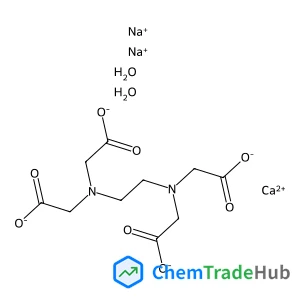
EthylenediaminetetraaceticacidcalciumDisodiumsalthydrate
CAS Number:
23411-34-9
Molecular Formula:
C10H16CaN2Na2O10
![Sodium 3-[(E)-(4-anilinophenyl)diazenyl]benzenesulfonate structure](https://static.chemtradehub.com/structs/587/587-98-4-035f.webp "Sodium 3-[(E)-(4-anilinophenyl)diazenyl]benzenesulfonate structure")
Sodium 3-[(E)-(4-anilinophenyl)diazenyl]benzenesulfonate
CAS Number:
587-98-4
Molecular Formula:
C18H14N3NaO3S

Recommended Suppliers




Disclaimer
This page provides academic journal information for reference and research purposes only. We are not affiliated with any journal publishers and do not handle publication submissions. For publication-related inquiries, please contact the respective journal publishers directly.
If you notice any inaccuracies in the information displayed, please contact us at support@chemtradehub.com. We will promptly review and address your concerns.