


Label-free selective impedimetric detection of Cu2+ ions using catalytic DNA
Literature Information
Publication Date
2013-02-04
DOI
10.1039/C3AN36778A
Impact Factor
4.616
Authors
Cristina Ocaña, Natalia Malashikhina, Manel del Valle, Valeri Pavlov
View Original
Abstract
Copper is an essential element for regulation of many biological processes, however, in excess it is considered to be toxic for human health. This metal is frequently accompanied by other elements such as cadmium, nickel and lead. Thus, developing a selective and simple method for determination of copper in a matrix containing other heavy metal ions is of great importance. In this work, a novel selective method for copper detection was developed using electrodes modified with the DNAzyme capturing Cu2+ ions. The DNAzyme reconstituted with copper catalyzes oxidation of ascorbic acid leading to the build-up and adsorption of oxidation products on the electrode surface and produces changes in the interfacial properties of the electrode. The increase in the interfacial electron-transfer resistance is probed with electrochemical impedance spectroscopy (EIS) in the presence of the reversible redox couple [Fe(CN)6]3−/[Fe(CN)6]4− as a marker. The DNAzyme based biosensor combines excellent selectivity against other heavy metal ions with sufficient sensitivity to Cu2+ in the range of 6.5–40 μM.
Recommended Journals

Angewandte Chemie International Edition

Faraday Discussions

Physical Chemistry Chemical Physics

Advanced Engineering Materials

Photochemical & Photobiological Sciences

Current Pharmaceutical Biotechnology

CrystEngComm

Mini-Reviews in Medicinal Chemistry

Molecular Diversity

European Journal of Organic Chemistry
Related Literature
Phase separation induced shell thickness variations in electrospun hollow Bioglass 45S5 fiber mats for drug delivery applications
D. Durgalakshmi, S. Balakumar
2015-05-06
Paper
DOI: 10.1039/C5CP01738F
Crystallographic dependence of photocatalytic activity of WO3 thin films prepared by molecular beam epitaxy
Tamas Varga, Pengfei Yan, Zhiguo Wang, Chongmin Wang, Scott A. Chambers, Yingge Du
2015-05-11
Paper
DOI: 10.1039/C5CP01344E
Surface oxygen-vacancy induced photocatalytic activity of La(OH)3 nanorods prepared by a fast and scalable method
Xiang Xiao, Guangming Jiang, Yuxin Zhang, Wen Cui, Jinzhu Ma
2015-05-22
Paper
DOI: 10.1039/C5CP02460A
Subsystem-DFT potential-energy curves for weakly interacting systems
Danny Schlüns, Kevin Klahr, Christian Mück-Lichtenfeld, Lucas Visscher, Johannes Neugebauer
2014-12-23
Paper
DOI: 10.1039/C4CP04936E
Phase inversion of ionomer-stabilized emulsions to form high internal phase emulsions (HIPEs)
Tao Zhang, Zhiguang Xu, Zengxiao Cai, Qipeng Guo
2015-05-18
Paper
DOI: 10.1039/C5CP01157D
Electric field control of proton-transfer molecular switching: molecular dynamics study on salicylidene aniline
Joanna Sadlej, Andrzej L. Sobolewski
2015-05-06
Communication
DOI: 10.1039/C5CP00686D
Interfacial thermal transport and structural preferences in carbon nanotube–polyamide-6,6 nanocomposites: how important are chemical functionalization effects?
Mohammad Reza Gharib-Zahedi, Mohsen Tafazzoli, Michael C. Böhm, Mohammad Alaghemandi
2015-04-23
Paper
DOI: 10.1039/C5CP00752F
An impurity intermediate band due to Pb doping induced promising thermoelectric performance of Ca5In2Sb6
Zhenzhen Feng, Yuli Yan, Guangbiao Zhang, Jueming Yang, Chao Wang
2015-05-13
Paper
DOI: 10.1039/C5CP00972C
Exploring the glass transition region: crowding effect, nonergodicity and thermorheological complexity
2015-05-26
Paper
DOI: 10.1039/C5CP00301F
You might also like
Compound Q&A
What are the main uses of (5-Sulfamoyl-3-pyridinyl)boronic acid (CAS: 951233-61-7)?
(5-Sulfamoyl-3-pyridinyl)boronic acid is primarily used in chemical synthesis, p...
951233-61-7(5-Sulfamoyl-3-pyrid...
Compound Q&A
How is Benzyl 2-methyl-2-(methylsulfonyl)-4-pentenoate (CAS: 1942858-50-5) typically synthesized?
Benzyl 2-methyl-2-(methylsulfonyl)-4-pentenoate is typically synthesized via est...
1942858-50-5Benzyl 2-methyl-2-(m...
Compound Q&A
What precautions should be taken when handling 8-Fluoroquinolin-6-ol (CAS: 209353-22-0)?
When handling 8-Fluoroquinolin-6-ol (CAS: 209353-22-0), it is important to use p...
209353-22-08-Fluoroquinolin-6-o...
Compound Q&A
What are the physical and chemical properties of 1,3-Dibromo-5-(2-methyl-2-propanyl)benzene (CAS: 129316-09-2)?
1,3-Dibromo-5-(2-methyl-2-propanyl)benzene (CAS: 129316-09-2) is a crystalline c...
129316-09-21,3-Dibromo-5-(2-met...
Compound Q&A
What industries use Ethyl 7-chloro-4-oxo-1-(1,3-thiazol-2-yl)-1,4-dihydro-1,8-naphthyridine-3-carboxylate (CAS: 174726-87-5)?
Ethyl 7-chloro-4-oxo-1-(1,3-thiazol-2-yl)-1,4-dihydro-1,8-naphthyridine-3-carbox...
174726-87-5Ethyl 7-chloro-4-oxo...
Compound Q&A
What precautions should be taken when handling Delta-7-Avenasterol (CAS: 23290-26-8)?
When handling Delta-7-Avenasterol (CAS: 23290-26-8), it is important to wear app...
23290-26-8Delta-7-Avenasterol
Compound Q&A
What precautions should be taken when handling N-({(5R)-3-[3-Fluoro-4-(4-morpholinyl)phenyl]-2-oxo-1,3-oxazolidin-5-yl}methyl)acetamide (CAS: 872992-20-6)?
Proper handling involves the use of personal protective equipment such as gloves...
872992-20-6N-({(5R)-3-[3-Fluoro...
Compound Q&A
What precautions should be taken when handling 2-Methyl-2-proanyl 4-[(2-aminophenyl)amino]-1-piperidinecarboxylate (CAS: 79099-00-6)?
When handling 2-Methyl-2-proanyl 4-[(2-aminophenyl)amino]-1-piperidinecarboxylat...
79099-00-62-Methyl-2-propanyl ...
Compound Q&A
What is N-Methyl-4-chlorobenzylamine hydrochloride (CAS: 65542-24-7)?
N-Methyl-4-chlorobenzylamine hydrochloride (CAS: 65542-24-7) is a organic compou...
65542-24-7N-Methyl-4-chloroben...
Compound Q&A
Is [2-(Dodecyloxy)ethoxy]acetic acid (CAS: 27306-90-7) safe?
[2-(Dodecyloxy)ethoxy]acetic acid (CAS: 27306-90-7) is generally considered safe...
27306-90-7[2-(Dodecyloxy)ethox...
Source Journal
Analyst

CiteScore:
7.8
Self-citation Rate:
5.6%
Articles per Year:
653
Analyst publishes analytical and bioanalytical research that reports premier fundamental discoveries and inventions, and the applications of those discoveries, unconfined by traditional discipline barriers.
Recommended Compounds
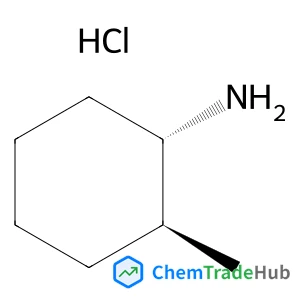
(1R,2R)-2-Methylcyclohexanamine hydrochloride (1:1)
CAS Number:
39558-31-1
Molecular Formula:
C7H16ClN
![2-Azaspiro[4.5]decane-3,8-dione structure](https://static.chemtradehub.com/structs/914/914780-96-4-e94b.webp "2-Azaspiro[4.5]decane-3,8-dione structure")
Recommended Suppliers








Disclaimer
This page provides academic journal information for reference and research purposes only. We are not affiliated with any journal publishers and do not handle publication submissions. For publication-related inquiries, please contact the respective journal publishers directly.
If you notice any inaccuracies in the information displayed, please contact us at support@chemtradehub.com. We will promptly review and address your concerns.