











Catalytic desulfitative homocoupling of sodium arylsulfinates in water using PdCl2 as the recyclable catalyst and O2 as the terminal oxidant
Literature Information
Publication Date
2012-10-18
DOI
10.1039/C2GC36550B
Impact Factor
10.182
Authors
Bin Rao, Weixi Zhang, Lan Hu, Meiming Luo
View Original
Abstract
A green and convenient approach to symmetrical biaryls has been developed. The catalytic desulfitative homocoupling of various inexpensive and readily available sodium arylsulfinates in environment-friendly solvent, water, and under clean oxidant, molecular O2, afforded symmetrical biaryls in good yields. What's more, water can hold the noble catalyst PdCl2 for recycling several times easily, and facilitate separating insoluble organic product.
Related Literature
Different routes to methanol: inelastic neutron scattering spectroscopy of adsorbates on supported copper catalysts
Timur Kandemir, Matthias Friedrich, Stewart F. Parker, Felix Studt, David Lennon, Robert Schlögl, Malte Behrens
2016-04-14
Paper
DOI: 10.1039/C6CP00967K
Molecular dynamics investigations of regioselectivity of anionic/aromatic substrates by a family of enzymes: a case study of diclofenac binding in CYP2C isoforms
Ying-Lu Cui, Fang Xu
2016-05-30
Paper
DOI: 10.1039/C6CP01128D
Stereochemical modulation of emission behaviour in E/Z isomers of diphenyldipyrroethene from aggregation induced emission to crystallization induced emission
K. Garg, E. Ganapathi, P. Rajakannu, M. Ravikanth
2015-06-24
Paper
DOI: 10.1039/C5CP02400E
The adsorbed state of a thiol on palladium nanoparticles
Antonios G. Kanaras
2016-04-05
Paper
DOI: 10.1039/C6CP00957C
Roles of adsorption sites in electron transfer from CdS quantum dots to molecular catalyst cobaloxime studied by time-resolved spectroscopy
Lei Huang, Zhaochi Feng, Xiuli Wang, Can Li
2016-06-01
Paper
DOI: 10.1039/C6CP02808J
Effect of extended strain fields on point defect phonon scattering in thermoelectric materials
Brenden R. Ortiz, Haowei Peng, Armando Lopez, Philip A. Parilla, Stephan Lany, Eric S. Toberer
2015-07-06
Paper
DOI: 10.1039/C5CP02174J
Characterization of dimethylsulfoxide/glycerol mixtures: a binary solvent system for the study of “friction-dependent” chemical reactivity
Gonzalo Angulo, Marta Brucka, Mario Gerecke, Günter Grampp, Damien Jeannerat, Jadwiga Milkiewicz, Yavor Mitrev, Arnulf Rosspeintner, Eric Vauthey
2016-06-10
Paper
DOI: 10.1039/C6CP02997C
Bulk nanostructure of the prototypical ‘good’ and ‘poor’ solvate ionic liquids [Li(G4)][TFSI] and [Li(G4)][NO3]
Thomas Murphy, Sam K. Callear, Nageshwar Yepuri, Karina Shimizu, Masayoshi Watanabe, José N. Canongia Lopes, Tamim Darwish, Gregory G. Warr, Rob Atkin
2016-01-28
Paper
DOI: 10.1039/C6CP00176A
Enhanced photocatalytic activity of a self-stabilized synthetic flavin anchored on a TiO2 surface
Manjula Pandiri, Mohammad S. Hossain, Frank W. Foss, Jr., Krishnan Rajeshwar, Yaron Paz
2016-06-13
Paper
DOI: 10.1039/C6CP02060G
You might also like
Compound Q&A
What regulatory guidelines apply to 4-Amino-3-bromophenol (CAS: 74440-80-5)?
4-Amino-3-bromophenol (CAS: 74440-80-5) falls under the classification of a haza...
74440-80-54-Amino-3-bromopheno...
Compound Q&A
How should (17beta)-3-Oxoestr-4-en-17-yl acetate (CAS: 1425-10-1) be stored?
(17beta)-3-Oxoestr-4-en-17-yl acetate should be stored in a cool, dry place away...
1425-10-1(17beta)-3-Oxoestr-4...
Compound Q&A
What are the physical and chemical properties of 2-[(2,2-Diethoxyethyl)disulfanyl]-1,1-diethoxyethane (CAS: 76505-71-0)?
2-[(2,2-Diethoxyethyl)disulfanyl]-1,1-diethoxyethane (CAS: 76505-71-0) is a colo...
76505-71-02-[(2,2-Diethoxyethy...
Compound Q&A
What is the market or research trend for 1-(β-D-ribofuranosyl)-1H-imidazo[4,5-c]pyridin-4-amine?
The market and research for 1-(β-D-ribofuranosyl)-1H-imidazo[4,5-c]pyridin-4-ami...
6736-58-91-(beta-D-Ribofurano...
Compound Q&A
How should waste containing Conjugated Estrogen (CAS: 12126-59-9) be handled?
Waste containing Conjugated Estrogen (CAS: 12126-59-9) should be collected and d...
12126-59-9Conjugated Estrogen
Compound Q&A
What is the market or research trend for Bis(2,2,2-trifluoroethyl) (methoxycarbonylmethyl)phosphonate?
The market for Bis(2,2,2-trifluoroethyl) (methoxycarbonylmethyl)phosphonate (CAS...
88738-78-7Bis(2,2,2-trifluoroe...
Compound Q&A
Are there alternatives to 3,4'-Di-O-methylellagic acid (CAS: 57499-59-9) in synthesis?
There are several alternatives to 3,4'-Di-O-methylellagic acid (CAS: 57499-59-9)...
57499-59-93,4'-Di-O-methylella...
Compound Q&A
What regulatory guidelines apply to 2-Chloro-N,N-dimethylpyridin-4-amine (CAS: 59047-70-0)?
2-Chloro-N,N-dimethylpyridin-4-amine (CAS: 59047-70-0) is regulated under the Gl...
59047-70-02-Chloro-N,N-dimethy...
Compound Q&A
What is cerium(3+);oxygen(2-);vanadium(5+) (CAS: 13597-19-8)?
Cerium(3+);oxygen(2-);vanadium(5+) (CAS: 13597-19-8) is a complex inorganic comp...
13597-19-8cerium(3+);oxygen(2-...
Compound Q&A
Is 7-Chloro-1-iodoisoquinoline (CAS: 1203579-27-4) safe?
7-Chloro-1-iodoisoquinoline (CAS: 1203579-27-4) is generally considered safe whe...
1203579-27-47-Chloro-1-iodoisoqu...
Source Journal
Green Chemistry

CiteScore:
16.1
Self-citation Rate:
7.5%
Articles per Year:
944
Green Chemistry provides a unique forum for the publication of innovative research on the development of alternative green and sustainable technologies. The scope of Green Chemistry is based on, but not limited to, the definition proposed by Anastas and Warner (Green Chemistry: Theory and Practice, P T Anastas and J C Warner, Oxford University Press, Oxford, 1998). Green chemistry is the utilisation of a set of principles that reduces or eliminates the use or generation of hazardous substances in the design, manufacture and application of chemical products. Green Chemistry is at the frontiers of this continuously-evolving interdisciplinary science and publishes research that attempts to reduce the environmental impact of the chemical enterprise by developing a technology base that is inherently non-toxic to living things and the environment. Submissions on all aspects of research relating to the endeavour are welcome. The journal publishes original and significant cutting-edge research that is likely to be of wide general appeal. To be published, work must present a significant advance in green chemistry. Papers must contain a comparison with existing methods and demonstrate advantages over those methods before publication can be considered. For more information please see this Editorial. Coverage includes the following, but is not limited to: Design (e.g. biomimicry, design for degradation/recycling/reduced toxicity…) Reagents & Feedstocks (e.g. renewables, CO2, solvents, auxiliary agents, waste utilization…) Synthesis (e.g. organic, inorganic, synthetic biology…) Catalysis (e.g. homogeneous, heterogeneous, enzyme, whole cell…) Process (e.g. process design, intensification, separations, recycling, efficiency…) Energy (e.g. renewable energy, fuels, photovoltaics, fuel cells, energy storage, energy carriers…) Applications (e.g. electronics, dyes, consumer products, coatings, pharmaceuticals, preservatives, building materials, chemicals for industry/agriculture/mining…) Impact (e.g. safety, metrics, LCA, sustainability, (eco)toxicology…) Green chemistry is, by definition, a continuously-evolving frontier. Therefore, the inclusion of a particular material or technology does not, of itself, guarantee that a paper is suitable for the journal. To be suitable, the novel advance should have the potential for reduced environmental impact relative to the state of the art. Green Chemistry does not normally deal with research associated with 'end-of-pipe' or remediation issues.
Recommended Compounds
![5,10-Dihydro-11H-dibenzo[b,e][1,4]diazepin-11-one structure](https://static.chemtradehub.com/structs/581/5814-41-5-0b01.webp "5,10-Dihydro-11H-dibenzo[b,e][1,4]diazepin-11-one structure")
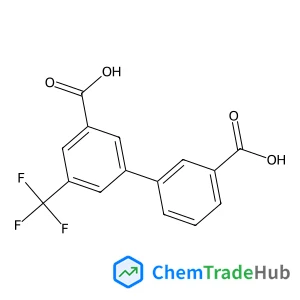
3-(3-Carboxyphenyl)-5-(trifluoromethyl)benzoic acid
CAS Number:
1261930-96-4
Molecular Formula:
C15H9F3O4
![N-[(1R,2R)-2-Amino-1,2-diphenylethyl]-1,1,1-trifluoromethanesulfonamide structure](https://static.chemtradehub.com/structs/852/852212-89-6-5ef9.webp "N-[(1R,2R)-2-Amino-1,2-diphenylethyl]-1,1,1-trifluoromethanesulfonamide structure")
N-[(1R,2R)-2-Amino-1,2-diphenylethyl]-1,1,1-trifluoromethanesulfonamide
CAS Number:
852212-89-6
Molecular Formula:
C15H15F3N2O2S
Recommended Suppliers





Disclaimer
This page provides academic journal information for reference and research purposes only. We are not affiliated with any journal publishers and do not handle publication submissions. For publication-related inquiries, please contact the respective journal publishers directly.
If you notice any inaccuracies in the information displayed, please contact us at support@chemtradehub.com. We will promptly review and address your concerns.