












![3-(6-Nitrobenzo[d][1,3]dioxol-5-yl)acrylic acid structure](https://static.chemtradehub.com/structs/631/6315-90-8-6b36.webp "3-(6-Nitrobenzo[d][1,3]dioxol-5-yl)acrylic acid structure")
Cascade [4 + 1] annulation via more environmentally friendly nitrogen ylides in water: synthesis of bicyclic and tricyclic fused dihydrofurans
Literature Information
Publication Date
2012-10-04
DOI
10.1039/C2GC36276G
Impact Factor
10.182
Authors
Atul Kumar, Suman Srivastava, Garima Gupta
View Original
Abstract
A novel imidazolium ylide activated [4 + 1] annulation approach is described for the diastereoselective synthesis of bicyclic and tricyclic fused dihydrofurans in water. This cascade annulation presumably proceeds via a Michael reaction triggered zwitterion enolate followed by concomitant intramolecular cyclization. The methodology has distinction of being the first report on imidazolium ylide mediated [4 + 1] annulation in water as a unified greener approach involving an in situ base regeneration system and an alternative to pyridine ylide.
Recommended Journals
Related Literature
Ultrafast and slow charge recombination dynamics of diketopyrrolopyrrole–NiO dye sensitized solar cells
Lei Zhang, Ludovic Favereau, Yoann Farré, Edgar Mijangos, Yann Pellegrin, Errol Blart, Fabrice Odobel, Leif Hammarström
2016-06-10
Paper
DOI: 10.1039/C6CP01762B
Functionalized SPIONs: the surfactant nature modulates the self-assembly and cluster formation
Richard K. Heenan
2016-06-09
Paper
DOI: 10.1039/C6CP01694D
Effect of extended strain fields on point defect phonon scattering in thermoelectric materials
Brenden R. Ortiz, Haowei Peng, Armando Lopez, Philip A. Parilla, Stephan Lany, Eric S. Toberer
2015-07-06
Paper
DOI: 10.1039/C5CP02174J
Heads or tails: how do chemically substituted fullerenes melt?
2016-04-12
Paper
DOI: 10.1039/C6CP01333C
The application of inelastic neutron scattering to investigate the interaction of methyl propanoate with silica
Andrew R. McFarlane, Hannah Geller, Ian P. Silverwood, Richard I. Cooper, David J. Watkin, Stewart F. Parker, John M. Winfield, David Lennon
2016-05-09
Paper
DOI: 10.1039/C6CP01276K
Characterization of dimethylsulfoxide/glycerol mixtures: a binary solvent system for the study of “friction-dependent” chemical reactivity
Gonzalo Angulo, Marta Brucka, Mario Gerecke, Günter Grampp, Damien Jeannerat, Jadwiga Milkiewicz, Yavor Mitrev, Arnulf Rosspeintner, Eric Vauthey
2016-06-10
Paper
DOI: 10.1039/C6CP02997C
Dynamic mechanoelectrochemistry of polypyrrole membranes via shear-force tracking
Robert G. Northcutt, Christian Heinemann, Vishnu Baba Sundaresan
2016-06-01
Paper
DOI: 10.1039/C6CP03071H
Distortions of ethyne when complexed with a cuprous or argentous halide: the rotational spectrum of C2H2⋯CuF
Daniel P. Zaleski, Susanna L. Stephens, David P. Tew, Dror M. Bittner, Nicholas R. Walker, Anthony C. Legon
2015-06-18
Paper
DOI: 10.1039/C5CP02248G
Surface adsorption of sulfonated poly(phenylene sulfone)/C14TAB mixtures and its correlation with foam film stability
Martin Uhlig, Reinhard Miller, Regine von Klitzing
2016-06-17
Paper
DOI: 10.1039/C6CP02256A
Phosphorane lifetime and stereo-electronic effects along the alkaline hydrolysis of phosphate esters
Eufrásia S. Pereira, Júlio C. S. Da Silva, Tiago A. S. Brandão, Willian R. Rocha
2016-06-07
Paper
DOI: 10.1039/C6CP01536K
You might also like
Compound Q&A
Is 4-Benzyl-2,2-dimethylmorpholine (CAS: 84761-04-6) safe?
4-Benzyl-2,2-dimethylmorpholine is generally considered safe when handled under ...
84761-04-64-Benzyl-2,2-dimethy...
Compound Q&A
What is (5,6-Dimethoxy-3-pyridinyl)boronic acid (CAS: 1346526-61-1)?
(5,6-Dimethoxy-3-pyridinyl)boronic acid is a chemical compound with the molecula...
1346526-61-1(5,6-Dimethoxy-3-pyr...
Compound Q&A
How is 1,1,3,3-Tetramethyl-1,3-bis(2-methyl-2-propanyl)disiloxane (CAS: 67875-55-2) typically synthesized?
1,1,3,3-Tetramethyl-1,3-bis(2-methyl-2-propanyl)disiloxane is synthesized throug...
67875-55-21,1,3,3-Tetramethyl-...
Compound Q&A
What are the main uses of (2R,4S)-1-Boc-4-methylpyrrolidine-2-carboxylic acid (CAS: 1018818-04-6)?
(2R,4S)-1-Boc-4-methylpyrrolidine-2-carboxylic acid is primarily used as a build...
1018818-04-6(2R,4S)-1-Boc-4-meth...
Compound Q&A
What precautions should be taken when handling 2,3-Dichloroacrylonitrile (CAS: 22410-58-8)?
When handling 2,3-Dichloroacrylonitrile, it is crucial to wear appropriate perso...
22410-58-82,3-Dichloroacryloni...
Compound Q&A
How should (S)-1-(o-Tolyl)ethanamine hydrochloride (CAS: 1332832-16-2) be stored?
(S)-1-(o-Tolyl)ethanamine hydrochloride should be stored in a cool, dry place to...
1332832-16-2(S)-1-(o-Tolyl)ethan...
Compound Q&A
What are the physical and chemical properties of Benzyl [1-(hydroxyamino)-1-imino-2-methyl-2-propanyl]carbamate (CAS: 518047-98-8)?
Benzyl [1-(hydroxyamino)-1-imino-2-methyl-2-propanyl]carbamate (CAS: 518047-98-8...
518047-98-8Benzyl [1-(hydroxyam...
Compound Q&A
What industries use 2-Methyloxazole-5-carbaldehyde (CAS: 885273-42-7)?
2-Methyloxazole-5-carbaldehyde is used in the pharmaceutical industry for the sy...
885273-42-72-Methyloxazole-5-ca...
Compound Q&A
What is the market or research trend for 2-Methyl-2-propanyl 4-[(1S)-1-hydroxyethyl]-1-piperidinecarboxylate (CAS: 389889-82-1)?
The market for 2-Methyl-2-propanyl 4-[(1S)-1-hydroxyethyl]-1-piperidinecarboxyla...
389889-82-12-Methyl-2-propanyl ...
Compound Q&A
Is 1-Butyl-3-methylpyridinium bromide (CAS: 26576-85-2) safe?
1-Butyl-3-methylpyridinium bromide is generally considered safe for laboratory u...
26576-85-21-Butyl-3-methylpyri...
Source Journal
Green Chemistry

CiteScore:
16.1
Self-citation Rate:
7.5%
Articles per Year:
944
Green Chemistry provides a unique forum for the publication of innovative research on the development of alternative green and sustainable technologies. The scope of Green Chemistry is based on, but not limited to, the definition proposed by Anastas and Warner (Green Chemistry: Theory and Practice, P T Anastas and J C Warner, Oxford University Press, Oxford, 1998). Green chemistry is the utilisation of a set of principles that reduces or eliminates the use or generation of hazardous substances in the design, manufacture and application of chemical products. Green Chemistry is at the frontiers of this continuously-evolving interdisciplinary science and publishes research that attempts to reduce the environmental impact of the chemical enterprise by developing a technology base that is inherently non-toxic to living things and the environment. Submissions on all aspects of research relating to the endeavour are welcome. The journal publishes original and significant cutting-edge research that is likely to be of wide general appeal. To be published, work must present a significant advance in green chemistry. Papers must contain a comparison with existing methods and demonstrate advantages over those methods before publication can be considered. For more information please see this Editorial. Coverage includes the following, but is not limited to: Design (e.g. biomimicry, design for degradation/recycling/reduced toxicity…) Reagents & Feedstocks (e.g. renewables, CO2, solvents, auxiliary agents, waste utilization…) Synthesis (e.g. organic, inorganic, synthetic biology…) Catalysis (e.g. homogeneous, heterogeneous, enzyme, whole cell…) Process (e.g. process design, intensification, separations, recycling, efficiency…) Energy (e.g. renewable energy, fuels, photovoltaics, fuel cells, energy storage, energy carriers…) Applications (e.g. electronics, dyes, consumer products, coatings, pharmaceuticals, preservatives, building materials, chemicals for industry/agriculture/mining…) Impact (e.g. safety, metrics, LCA, sustainability, (eco)toxicology…) Green chemistry is, by definition, a continuously-evolving frontier. Therefore, the inclusion of a particular material or technology does not, of itself, guarantee that a paper is suitable for the journal. To be suitable, the novel advance should have the potential for reduced environmental impact relative to the state of the art. Green Chemistry does not normally deal with research associated with 'end-of-pipe' or remediation issues.
Recommended Compounds
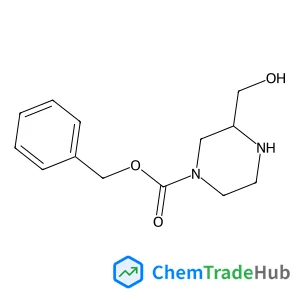
Benzyl 3-(hydroxymethyl)-1-piperazinecarboxylate
CAS Number:
191739-40-9
Molecular Formula:
C13H18N2O3

Recommended Suppliers





Disclaimer
This page provides academic journal information for reference and research purposes only. We are not affiliated with any journal publishers and do not handle publication submissions. For publication-related inquiries, please contact the respective journal publishers directly.
If you notice any inaccuracies in the information displayed, please contact us at support@chemtradehub.com. We will promptly review and address your concerns.