












Magnetism in undoped ZnS nanotetrapods
Literature Information
Publication Date
2012-12-07
DOI
10.1039/C2CP44136E
Impact Factor
3.676
Authors
Wei Liu, Rongming Wang, Chinping Chen
View Original
Abstract
The magnetism of undoped ZnS nanotetrapods, synthesized by a solvothermal method, has been investigated by magnetization measurements and first principle numerical calculations. The background magnetic impurity concentrations of Fe, Co and Ni were determined at ppm level by inductively coupled plasma mass spectrometry (ICP-MS). Hysteresis loops of weak ferromagnetism were observed, attributable to the magnetic impurities. However, the total magnetic moments analyzed from the paramagnetism are far beyond the explanations from the presence of these magnetic impurities, by about two orders of magnitude larger. It implies a different origin of the magnetic moments. Electron microscopy analysis reveals that there are defects in the sample. Numerical simulations indicate that the excessive magnetic moments might arise from the local band structure of polarized electrons associated with the defects of cation deficiency. This study elaborates on the understanding of magnetic properties in the non-magnetic II–VI semiconductor nanomaterials.
Recommended Journals
Related Literature
A highly efficient method for the construction of cyclopropane-containing dihydroindole derivatives from indolemethylenecyclopropanes with DIAD and DEAD
Mintao Chen, Wenqing Zang, Yin Wei, Min Shi
2019-12-10
Paper
DOI: 10.1039/C9OB02520K
Regioselective catalytic asymmetric N-alkylation of isoxazol-5-ones with para-quinone methides
Suo-Suo Qi, Zhen-Hui Jiang, Ming-Ming Chu, Yi-Feng Wang, Xue-Yang Chen, Wan-Zhen Ju, Dan-Qian Xu
2020-03-14
Communication
DOI: 10.1039/D0OB00393J
Recent advances in cobalt-catalysed C–H functionalizations
Alessio Baccalini, Stefania Vergura, Pravas Dolui, Giuseppe Zanoni, Debabrata Maiti
2019-11-07
Review Article
DOI: 10.1039/C9OB01994D
Iron-catalyzed regioselective alkylation of 1,4-quinones and coumarins with functionalized alkyl bromides
Dengke Li, Xianfu Shen
2019-12-23
Paper
DOI: 10.1039/C9OB02289A
Phenylboronic acid-catalyzed tandem construction of S–S and C–S bonds: a new method for the synthesis of benzyl disulfanylsulfone derivatives from S-benzyl thiosulfonates
Raju Jannapu Reddy, Md. Waheed, Gamidi Rama Krishna
2020-04-03
Communication
DOI: 10.1039/D0OB00442A
β-Selective xylulofuranosylation via a conformationally-restricted glycosyl donor
Bo-Shun Huang, Todd L. Lowary
2020-02-28
Paper
DOI: 10.1039/D0OB00260G
Toward the total synthesis of grayanane diterpene mollanol A by a Prins [3 + 2] strategy
Jianzhuang Miao, Yi-Xuan Zheng, Shi-Chao Lu, Shi-Peng Zhang, Ya-Ling Gong, Shu Xu
2020-02-15
Communication
DOI: 10.1039/D0OB00160K
Base-controlled divergent synthesis of vinyl sulfones from (benzylsulfonyl)benzenes and paraformaldehyde
Fuhong Xiao, Yangling Hu, Huawen Huang, Fen Xu, Guo-Jun Deng
2020-04-22
Paper
DOI: 10.1039/D0OB00362J
Mechanism and stereoselectivity of benzylic C–H hydroxylation by Ru–porphyrin: a computational study
Xiahe Chen, Qunmin Wang, Haimin Shen, Guijie Li, Yun-Fang Yang, Yuan-Bin She
2019-12-09
Paper
DOI: 10.1039/C9OB02415H
Effect of n-alkyl substitution on Cu(ii)-selective chemosensing of rhodamine B derivatives
Santosh Kumar Mishra
2019-12-04
Paper
DOI: 10.1039/C9OB02439E
You might also like
Compound Q&A
What regulatory guidelines apply to 6-Bromo-2-methylimidazo[1,2-a]pyrimidine (CAS: 1111638-05-1)?
6-Bromo-2-methylimidazo[1,2-a]pyrimidine (CAS: 1111638-05-1) falls under various...
1111638-05-16-Bromo-2-methylimid...
Compound Q&A
Are there alternatives to 1-Pyrrolidineethanol, β-methyl-α-phenyl-, (αS,βR) (CAS: 123620-80-4) in synthesis?
While there are no direct alternatives, similar compounds like 1-Pyrrolidineetha...
123620-80-41-Pyrrolidineethanol...
Compound Q&A
Is 4-Methyl-2,6-bis(2-methyl-2-propanyl)phenyl methylcarbamate (CAS: 1918-11-2) safe?
4-Methyl-2,6-bis(2-methyl-2-propanyl)phenyl methylcarbamate (CAS: 1918-11-2) is ...
1918-11-24-Methyl-2,6-bis(2-m...
Compound Q&A
How should 2-(3-Bromo-4-fluorophenyl)-1,3-dioxolane (CAS: 77771-04-1) be stored?
2-(3-Bromo-4-fluorophenyl)-1,3-dioxolane (CAS: 77771-04-1) should be stored in a...
77771-04-12-(3-Bromo-4-fluorop...
Compound Q&A
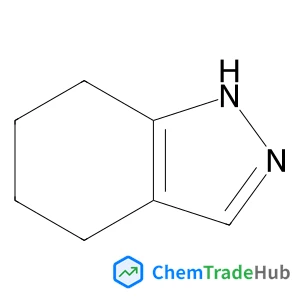
What are the physical and chemical properties of 4,5,6,7-Tetrahydro-1H-indazole hydrochloride (CAS: 18161-11-0)?
4,5,6,7-Tetrahydro-1H-indazole hydrochloride is a white crystalline solid with a...
18161-11-04,5,6,7-Tetrahydro-1...
Compound Q&A
What is (2R)-1-Methoxy-3-phenyl-2-propanamine (CAS: 59919-07-2)?
(2R)-1-Methoxy-3-phenyl-2-propanamine is a chiral organic compound with the CAS ...
59919-07-2(2R)-1-Methoxy-3-phe...
Compound Q&A
What industries use Ethyl 1-(1-phenylethyl)-1H-imidazole-5-carboxylate (CAS: 56649-47-9)?
Ethyl 1-(1-phenylethyl)-1H-imidazole-5-carboxylate is used in various industries...
56649-47-9Ethyl 1-(1-phenyleth...
Compound Q&A
What regulatory guidelines apply to 4-[(1E,3S)-1-(4-Hydroxyphenyl)-1,4-pentadien-3-yl]phenol (CAS: 17676-24-3)?
4-[(1E,3S)-1-(4-Hydroxyphenyl)-1,4-pentadien-3-yl]phenol (CAS: 17676-24-3) falls...
17676-24-34-[(1E,3S)-1-(4-Hydr...
Compound Q&A
What industries use (S)-3-Amino-5-phenylpentanoic acid hydrochloride (CAS: 331846-97-0)?
(S)-3-Amino-5-phenylpentanoic acid hydrochloride is primarily used in the pharma...
331846-97-0(S)-3-Amino-5-phenyl...
Compound Q&A
How is 7-methoxy-1-benzothiophene-2-carboxylic acid (CAS: 88791-07-5) typically synthesized?
7-Methoxy-1-benzothiophene-2-carboxylic acid is typically synthesized by reactin...
88791-07-57-methoxy-1-benzothi...
Source Journal
Physical Chemistry Chemical Physics

CiteScore:
5.5
Self-citation Rate:
10.3%
Articles per Year:
3036
Physical Chemistry Chemical Physics (PCCP) is an international journal co-owned by 19 physical chemistry and physics societies from around the world. This journal publishes original, cutting-edge research in physical chemistry, chemical physics and biophysical chemistry. To be suitable for publication in PCCP, articles must include significant innovation and/or insight into physical chemistry; this is the most important criterion that reviewers and Editors will judge against when evaluating submissions. The journal has a broad scope and welcomes contributions spanning experiment, theory, computation and data science. Topical coverage includes spectroscopy, dynamics, kinetics, statistical mechanics, thermodynamics, electrochemistry, catalysis, surface science, quantum mechanics, quantum computing and machine learning. Interdisciplinary research areas such as polymers and soft matter, materials, nanoscience, energy, surfaces/interfaces, and biophysical chemistry are welcomed if they demonstrate significant innovation and/or insight into physical chemistry. Joined experimental/theoretical studies are particularly appreciated when complementary and based on up-to-date approaches.
Recommended Compounds
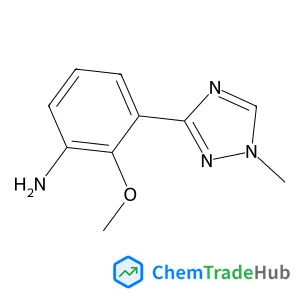
2-Methoxy-3-(1-methyl-1H-1,2,4-triazol-3-yl)aniline
CAS Number:
1609394-10-6
Molecular Formula:
C10H12N4O
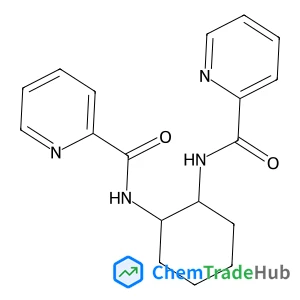
N,N'-(1R,2R)-1,2-Cyclohexanediyldi(2-pyridinecarboxamide)
CAS Number:
218290-24-5
Molecular Formula:
C18H20N4O2
Recommended Suppliers




Disclaimer
This page provides academic journal information for reference and research purposes only. We are not affiliated with any journal publishers and do not handle publication submissions. For publication-related inquiries, please contact the respective journal publishers directly.
If you notice any inaccuracies in the information displayed, please contact us at support@chemtradehub.com. We will promptly review and address your concerns.