


First-principles simulation of the absorption bands of fluorenone in zeolite L
Literature Information
Publication Date
2012-10-18
DOI
10.1039/C2CP42750H
Impact Factor
3.676
Authors
Xiuwen Zhou, Tomasz A. Wesolowski, Gloria Tabacchi, Ettore Fois, Gion Calzaferri, André Devaux
View Original
Abstract
The absorption spectrum of fluorenone in zeolite L is calculated from first-principles simulations. The broadening of each band is obtained from the explicit treatment of the interactions between the chromophore and its environment in the statistical ensemble. The comparison between the simulated and measured spectra reveals the main factors affecting the spectrum of the chromophore in hydrated zeolite L. Whereas each distinguishable band is found to originate from a single electronic transition, the bandwidth is determined by the statistical nature of the environment of the fluorenone molecule. The K+⋯OC motif is retained in all conformations. Although the interactions between K+ and the fluorenone carbonyl group result in an average lengthening of the CO bond and in a redshift of the lowest energy absorption band compared to gas phase or non-polar solvents, the magnitude of this shift is noticeably smaller than the total shift. An important factor affecting the shape of the band is fluorenone's orientation, which is strongly affected by the presence of water. The effect of direct interactions between fluorenone and water is, however, negligible.
Recommended Journals

Proceedings of the National Academy of Sciences of the United States of America

Nature

Israel Journal of Chemistry

Journal of Organometallic Chemistry

Pure and Applied Chemistry

Organic Preparations and Procedures International

Pharmacological Reviews

Helvetica Chimica Acta

European Journal of Wood and Wood Products

Journal of Physics and Chemistry of Solids
Related Literature
Quantification and classification of substituent effects in organic chemistry: a theoretical molecular electrostatic potential study‡
Geetha S. Remya, Cherumuttathu H. Suresh
2016-07-04
Paper
DOI: 10.1039/C6CP02936A
On the fractality of the Freundlich adsorption isotherm in equilibrium and non-equilibrium cases
Przemysław Borys, Zbigniew J. Grzywna
2016-07-04
Paper
DOI: 10.1039/C6CP03356C
Quantum mechanical study of the β- and δ-lyase reactions during the base excision repair process: application to FPG
Shahin Sowlati-Hashjin, Stacey D. Wetmore
2015-09-02
Paper
DOI: 10.1039/C5CP04250J
Thermodynamic and redox properties of graphene oxides for lithium-ion battery applications: a first principles density functional theory modeling approach
Ki Chul Kim
2016-07-04
Paper
DOI: 10.1039/C6CP02692C
Computational insights into CdSe quantum dots' interactions with acetate ligands
Patrick K. Tamukong, Wadumesthrige D. N. Peiris, Svetlana Kilina
2016-07-04
Paper
DOI: 10.1039/C6CP01665K
Complexation dynamics of CH3SCN and Li+ in acetonitrile studied by two-dimensional infrared spectroscopy
YoungAh Kwon
2015-08-18
Paper
DOI: 10.1039/C5CP02833G
Replica exchange reactive molecular dynamics simulations of initial reactions in zeolite synthesis
Zhifeng Jing
2015-08-25
Paper
DOI: 10.1039/C5CP03063C
A chemical chaperone induces inhomogeneous conformational changes in flexible proteins
Djemel Hamdane, Christophe Velours, David Cornu, Magali Nicaise, Murielle Lombard, Marc Fontecave
2016-07-01
Paper
DOI: 10.1039/C6CP03635J
First-principles analysis of the spectroscopic limited maximum efficiency of photovoltaic absorber layers for CuAu-like chalcogenides and silicon
Marnik Bercx, Nasrin Sarmadian, Rolando Saniz, Bart Partoens, Dirk Lamoen
2016-07-07
Paper
DOI: 10.1039/C6CP03468C
The evolution of the surface of the mineral schreibersite in prebiotic chemistry
Nikita L. La Cruz, Danna Qasim, Heather Abbott-Lyon, Claire Pirim, Aaron D. McKee, Thomas Orlando, Maheen Gull, Danny Lindsay, Matthew A. Pasek
2016-05-04
Paper
DOI: 10.1039/C6CP00836D
You might also like
Compound Q&A
What precautions should be taken when handling 4-Methyl-6-(trifluoromethyl)quinoline (CAS: 40716-16-3)?
When handling 4-Methyl-6-(trifluoromethyl)quinoline (CAS: 40716-16-3), safety go...
40716-16-34-Methyl-6-(trifluor...
Compound Q&A
What is 4-(3,5-Difluorophenyl)aniline (CAS: 405058-00-6)?
4-(3,5-Difluorophenyl)aniline is an aromatic organic compound with the CAS numbe...
405058-00-64-(3,5-Difluoropheny...
Compound Q&A
How is 5-{[4-(Trifluoromethyl)phenyl]sulfanyl}-1,2,3-thiadiazole-4-carboxylic acid (CAS: 338982-07-3) typically synthesized?
5-{[4-(Trifluoromethyl)phenyl]sulfanyl}-1,2,3-thiadiazole-4-carboxylic acid can ...
338982-07-35-{[4-(Trifluorometh...
Compound Q&A
What is the market or research trend for 4-Benzylaniline hydrochloride (CAS: 6317-57-3)?
The market for 4-Benzylaniline hydrochloride (CAS: 6317-57-3) is steadily growin...
6317-57-34-Benzylaniline hydr...
Compound Q&A
Is [3-(Diethylsulfamoyl)phenyl]boronic acid (CAS: 871329-58-7) safe?
[3-(Diethylsulfamoyl)phenyl]boronic acid is generally considered safe when handl...
871329-58-7[3-(Diethylsulfamoyl...
Compound Q&A
What are the main uses of 3-Bromo-2,5-dimethoxyaniline (CAS: 115929-62-9)?
3-Bromo-2,5-dimethoxyaniline is mainly used in the pharmaceutical and chemical i...
115929-62-93-Bromo-2,5-dimethox...
Compound Q&A
What regulatory guidelines apply to N-Methyl-1-(5-methyl-1H-indol-3-yl)methanamine (CAS: 915922-67-7)?
N-Methyl-1-(5-methyl-1H-indol-3-yl)methanamine (CAS: 915922-67-7) is subject to ...
915922-67-7N-Methyl-1-(5-methyl...
Compound Q&A
What industries use Carbamic acid, N-[(5S)-5,6-diamino-6-oxohexyl]-, 1,1-dimethylethyl ester (CAS: 24828-96-4)?
This compound is primarily used in the pharmaceutical industry for the synthesis...
24828-96-4Carbamic acid, N-[(5...
Compound Q&A
How should 2-Methyl-2-propanyl [(1S,3R)-3-aminocyclohexyl]carbamate (CAS: 1298101-47-9) be stored?
2-Methyl-2-propanyl [(1S,3R)-3-aminocyclohexyl]carbamate (CAS: 1298101-47-9) sho...
1298101-47-92-Methyl-2-propanyl ...
Compound Q&A
What industries use Ethyl 2-bromo-4,4,4-trifluorobutanoate (CAS: 367-33-9)?
Ethyl 2-bromo-4,4,4-trifluorobutanoate (CAS: 367-33-9) is utilized in the pharma...
367-33-9Ethyl 2-bromo-4,4,4-...
Source Journal
Physical Chemistry Chemical Physics

CiteScore:
5.5
Self-citation Rate:
10.3%
Articles per Year:
3036
Physical Chemistry Chemical Physics (PCCP) is an international journal co-owned by 19 physical chemistry and physics societies from around the world. This journal publishes original, cutting-edge research in physical chemistry, chemical physics and biophysical chemistry. To be suitable for publication in PCCP, articles must include significant innovation and/or insight into physical chemistry; this is the most important criterion that reviewers and Editors will judge against when evaluating submissions. The journal has a broad scope and welcomes contributions spanning experiment, theory, computation and data science. Topical coverage includes spectroscopy, dynamics, kinetics, statistical mechanics, thermodynamics, electrochemistry, catalysis, surface science, quantum mechanics, quantum computing and machine learning. Interdisciplinary research areas such as polymers and soft matter, materials, nanoscience, energy, surfaces/interfaces, and biophysical chemistry are welcomed if they demonstrate significant innovation and/or insight into physical chemistry. Joined experimental/theoretical studies are particularly appreciated when complementary and based on up-to-date approaches.
Recommended Compounds
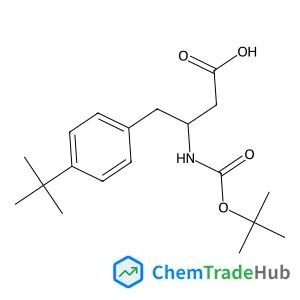
(S)-3-((tert-Butoxycarbonyl)amino)-4-(4-(tert-butyl)phenyl)butanoic acid
CAS Number:
403661-85-8
Molecular Formula:
C19H29NO4
![N-{3-[Benzyl(methyl)amino]propyl}-9-chloro-5,6,7,8-tetrahydro-2-acridinecarboxamide structure](https://static.chemtradehub.com/structs/142/1426944-49-1-1e4c.webp "N-{3-[Benzyl(methyl)amino]propyl}-9-chloro-5,6,7,8-tetrahydro-2-acridinecarboxamide structure")
N-{3-[Benzyl(methyl)amino]propyl}-9-chloro-5,6,7,8-tetrahydro-2-acridinecarboxamide
CAS Number:
1426944-49-1
Molecular Formula:
C25H28ClN3O
Recommended Suppliers





Disclaimer
This page provides academic journal information for reference and research purposes only. We are not affiliated with any journal publishers and do not handle publication submissions. For publication-related inquiries, please contact the respective journal publishers directly.
If you notice any inaccuracies in the information displayed, please contact us at support@chemtradehub.com. We will promptly review and address your concerns.