












Dynamics of the reactions of muonium and deuterium atoms with vibrationally excited hydrogen molecules: tunneling and vibrational adiabaticity
Literature Information
Publication Date
2012-09-04
DOI
10.1039/C2CP42130E
Impact Factor
3.676
Authors
P. G. Jambrina, E. García, V. J. Herrero, V. Sáez-Rábanos, F. J. Aoiz
View Original
Abstract
Quantum mechanical (QM) and quasiclassical trajectory (QCT) calculations have been carried out for the exchange reactions of D and Mu (Mu = muonium) with hydrogen molecules in their ground and first vibrational states. In all the cases considered, the QM rate coefficients, k(T), are in very good agreement with the available experimental results. In particular, QM calculations on the most accurate potential energy surfaces (PESs) predict a rate coefficient for the Mu + H2 (ν = 1) reaction which is very close to the preliminary estimate of its experimental value at 300 K. In contrast to the D + H2 (ν = 0,1) and the Mu + H2 (ν = 0) reactions, the QCT calculations for Mu + H2 (ν = 1) predict a much smaller k(T) than that obtained with the accurate QM method. This behaviour is indicative of tunneling. The QM reaction probabilities and total reactive cross sections show that the total energy thresholds for the reactions of Mu with H2 in ν = 0 and ν = 1 are very similar, whereas for the corresponding reaction with D the ν = 0 total energy threshold is about 0.3 eV lower than that for ν = 1. The results just mentioned can be explained by considering the vibrational adiabatic potentials along the minimum energy path. The threshold for the reaction of Mu with H2 in both ν = 0 and ν = 1 states is the same and is given by the height of the ground vibrational adiabatic collinear potential, whereas for the D + H2 reaction the adiabaticity is preserved and the threshold for the reaction in ν = 1 is very close to the height of the ν = 1 adiabatic collinear barrier. For Mu + H2 (ν = 1) the reaction takes place by crossing from the ν = 1 to the ν = 0 adiabat, since the exit channel leading to MuH (ν = 1) is not energetically accessible. At the lowest possible energies, the non-adiabatic vibrational crossing implies a strong tunneling effect through the ν = 1 adiabatic barrier. Absence of tunneling in the classical calculations results in a threshold that coincides with the height of the ν = 1 adiabatic barrier. Most interestingly, the expected tunneling effect in the reaction of Mu with hydrogen molecules occurs for H2 (ν = 1) but not for H2 (ν = 0) where zero-point-energy effects clearly dominate.
Related Literature
Phosphoryl transfer reaction catalyzed by membrane diacylglycerol kinase: a theoretical mechanism study
Yafei Jiang, Hongwei Tan, Jimin Zheng, Xichen Li, Guangju Chen, Zongchao Jia
2015-08-24
Paper
DOI: 10.1039/C5CP03342J
Chemical-shift tensors of heavy nuclei in network solids: a DFT/ZORA investigation of 207Pb chemical-shift tensors using the bond-valence method
Fahri Alkan, C. Dybowski
2015-09-02
Paper
DOI: 10.1039/C5CP03348A
Nuclear quantum fluctuations in ice Ih
Pedro Augusto Franco Pinheiro Moreira, Maurice de Koning
2015-07-17
Paper
DOI: 10.1039/C5CP03346B
Concave or convex π-dimers: the role of the pancake bond in substituted phenalenyl radical dimers
Zhong-hua Cui, Abhinav Gupta, Miklos Kertesz
2015-08-11
Paper
DOI: 10.1039/C5CP03759J
On the fractality of the Freundlich adsorption isotherm in equilibrium and non-equilibrium cases
Przemysław Borys, Zbigniew J. Grzywna
2016-07-04
Paper
DOI: 10.1039/C6CP03356C
The role of alkoxy radicals in the heterogeneous reaction of two structural isomers of dimethylsuccinic acid
Chiu Tung Cheng, Kevin R. Wilson
2015-08-27
Paper
DOI: 10.1039/C5CP03791C
Mechano-switchable, luminescent gels derived from salts of a long-chained, fatty-acid gelator
Mohan Zhang
2016-07-12
Paper
DOI: 10.1039/C6CP03435G
Interaction of l-alanyl-l-valine and l-valyl-l-alanine with organic vapors: thermal stability of clathrates, sorption capacity and the change in the morphology of dipeptide films
Marat A. Ziganshin, Nadezhda S. Gubina, Alexander V. Gerasimov, Valery V. Gorbatchuk, Sufia A. Ziganshina, Anton P. Chuklanov, Anastas A. Bukharaev
2015-07-08
Paper
DOI: 10.1039/C5CP03309H
A novel crystalline SiCO compound
Miriam Marqués, Angel Morales-García, José Manuel Menéndez, Valentín G. Baonza, José Manuel Recio
2015-08-20
Paper
DOI: 10.1039/C5CP03673A
Electrical impedance spectroscopy of a PET chip sandwiched between two disk electrodes: understanding the contribution of the polymer/electrode interface
L. Chaal, V. Vivier, B. Tribollet, J. Gamby
2016-06-29
Paper
DOI: 10.1039/C6CP03042D
You might also like
Compound Q&A
What precautions should be taken when handling 4-Methyl-6-(trifluoromethyl)quinoline (CAS: 40716-16-3)?
When handling 4-Methyl-6-(trifluoromethyl)quinoline (CAS: 40716-16-3), safety go...
40716-16-34-Methyl-6-(trifluor...
Compound Q&A
What is 4-(3,5-Difluorophenyl)aniline (CAS: 405058-00-6)?
4-(3,5-Difluorophenyl)aniline is an aromatic organic compound with the CAS numbe...
405058-00-64-(3,5-Difluoropheny...
Compound Q&A
How is 5-{[4-(Trifluoromethyl)phenyl]sulfanyl}-1,2,3-thiadiazole-4-carboxylic acid (CAS: 338982-07-3) typically synthesized?
5-{[4-(Trifluoromethyl)phenyl]sulfanyl}-1,2,3-thiadiazole-4-carboxylic acid can ...
338982-07-35-{[4-(Trifluorometh...
Compound Q&A
What is the market or research trend for 4-Benzylaniline hydrochloride (CAS: 6317-57-3)?
The market for 4-Benzylaniline hydrochloride (CAS: 6317-57-3) is steadily growin...
6317-57-34-Benzylaniline hydr...
Compound Q&A
Is [3-(Diethylsulfamoyl)phenyl]boronic acid (CAS: 871329-58-7) safe?
[3-(Diethylsulfamoyl)phenyl]boronic acid is generally considered safe when handl...
871329-58-7[3-(Diethylsulfamoyl...
Compound Q&A
What are the main uses of 3-Bromo-2,5-dimethoxyaniline (CAS: 115929-62-9)?
3-Bromo-2,5-dimethoxyaniline is mainly used in the pharmaceutical and chemical i...
115929-62-93-Bromo-2,5-dimethox...
Compound Q&A
What regulatory guidelines apply to N-Methyl-1-(5-methyl-1H-indol-3-yl)methanamine (CAS: 915922-67-7)?
N-Methyl-1-(5-methyl-1H-indol-3-yl)methanamine (CAS: 915922-67-7) is subject to ...
915922-67-7N-Methyl-1-(5-methyl...
Compound Q&A
What industries use Carbamic acid, N-[(5S)-5,6-diamino-6-oxohexyl]-, 1,1-dimethylethyl ester (CAS: 24828-96-4)?
This compound is primarily used in the pharmaceutical industry for the synthesis...
24828-96-4Carbamic acid, N-[(5...
Compound Q&A
How should 2-Methyl-2-propanyl [(1S,3R)-3-aminocyclohexyl]carbamate (CAS: 1298101-47-9) be stored?
2-Methyl-2-propanyl [(1S,3R)-3-aminocyclohexyl]carbamate (CAS: 1298101-47-9) sho...
1298101-47-92-Methyl-2-propanyl ...
Compound Q&A
What industries use Ethyl 2-bromo-4,4,4-trifluorobutanoate (CAS: 367-33-9)?
Ethyl 2-bromo-4,4,4-trifluorobutanoate (CAS: 367-33-9) is utilized in the pharma...
367-33-9Ethyl 2-bromo-4,4,4-...
Source Journal
Physical Chemistry Chemical Physics

CiteScore:
5.5
Self-citation Rate:
10.3%
Articles per Year:
3036
Physical Chemistry Chemical Physics (PCCP) is an international journal co-owned by 19 physical chemistry and physics societies from around the world. This journal publishes original, cutting-edge research in physical chemistry, chemical physics and biophysical chemistry. To be suitable for publication in PCCP, articles must include significant innovation and/or insight into physical chemistry; this is the most important criterion that reviewers and Editors will judge against when evaluating submissions. The journal has a broad scope and welcomes contributions spanning experiment, theory, computation and data science. Topical coverage includes spectroscopy, dynamics, kinetics, statistical mechanics, thermodynamics, electrochemistry, catalysis, surface science, quantum mechanics, quantum computing and machine learning. Interdisciplinary research areas such as polymers and soft matter, materials, nanoscience, energy, surfaces/interfaces, and biophysical chemistry are welcomed if they demonstrate significant innovation and/or insight into physical chemistry. Joined experimental/theoretical studies are particularly appreciated when complementary and based on up-to-date approaches.
Recommended Compounds
![2,4-Dichloro-6-isopropyl-5H-pyrrolo[3,4-d]pyrimidin-7(6H)-one structure](https://static.chemtradehub.com/structs/107/1079649-94-7-ad4a.webp "2,4-Dichloro-6-isopropyl-5H-pyrrolo[3,4-d]pyrimidin-7(6H)-one structure")
2,4-Dichloro-6-isopropyl-5H-pyrrolo[3,4-d]pyrimidin-7(6H)-one
CAS Number:
1079649-94-7
Molecular Formula:
C9H9Cl2N3O
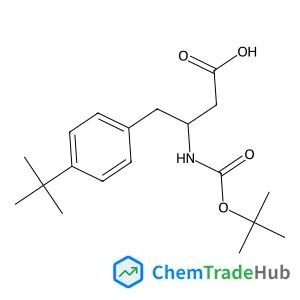
(S)-3-((tert-Butoxycarbonyl)amino)-4-(4-(tert-butyl)phenyl)butanoic acid
CAS Number:
403661-85-8
Molecular Formula:
C19H29NO4
Recommended Suppliers






Disclaimer
This page provides academic journal information for reference and research purposes only. We are not affiliated with any journal publishers and do not handle publication submissions. For publication-related inquiries, please contact the respective journal publishers directly.
If you notice any inaccuracies in the information displayed, please contact us at support@chemtradehub.com. We will promptly review and address your concerns.