












Solvatochromic investigation of highly fluorescent 2-aminobithiophene derivatives
Literature Information
Publication Date
2012-03-28
DOI
10.1039/C2CP40293A
Impact Factor
3.676
Authors
Andréanne Bolduc, Yanmei Dong, Amélie Guérin, W. G. Skene
View Original
Abstract
The solvatochromic and electrochemical properties of electronic push–pull 2-aminobithiophenes consisting of an aldehyde and nitro withdrawing groups were examined. With the use of an integrating sphere, the absolute quantum yields of the bithiophenes were measured. They were found to be highly fluorescent (Φfl > 70%), provided the nitro group was not located in the 4′-position. High fluorescence yields were observed regardless of solvent, except for alcohols, notably methanol and ethanol. Cryofluorescence was used to probe the bithiophene temperature dependent excited state deactivation modes. The singlet excited state deactivation mode other than fluorescence was found to be internal conversion involving rotation around the thiophene–thiophene bond. Deactivation by intersystem crossing to the triplet state occurred in ca. 40% only for the unsubstituted 2-aminobithiophene. In contrast, the fluorescence was quenched by photoinduced intramolecular electron transfer when the nitro group was located in the 4′-position of the bithiophene. Both the absorbance and fluorescence of the bithiophenes were found to be solvatochromic with more pronounced solvent dependent shifts being observed with the fluorescence. In fact, both the fluorescence and Stokes shifts were linearly dependent on the ET(30) solvent parameter. Deviations from the linear trend of the Stokes shift with ET(30) were observed in ethanol and methanol as a result of intermolecular hydrogen abstraction from the solvent and by the excited nitro group. The oxidation potential of the bithiophenes was also highly dependent on the type and number of the electron withdrawing substituents, with values ranging between 0.8 and 1.2 V vs. SCE.
Related Literature
Radiation treatment response and hypoxia biomarkers revealed by machine learning assisted Raman spectroscopy in tumour cells and xenograft tissues
Xinchen Deng, Kirsty Milligan, Alexandre Brolo, Jeffrey L. Andrews, Andrew Jirasek
2022-09-26
Paper
DOI: 10.1039/D2AN01222G
Chronocoulometric signalling of BNP using a novel quantum dot aptasensor
Samantha F. Douman, Onyinyechi V. Uhuo, Kefilwe V. Mokwebo, Nelia Sanga, Emmanuel I. Iwuoha
2022-09-15
Paper
DOI: 10.1039/D2AN01357F
Ultra-thin silica shell-guarded nanoflares for high-fidelity live cell miRNA-21 imaging by fully avoiding the interference of biothiols
Yuze Luo, Zefeng Wang, Junqin Li, Wenhua Yi, Ke Yang, Chunlei Ou, Le Deng, Dinggeng He
2022-11-07
Communication
DOI: 10.1039/D2AN01441F
A SERS and fluorescence dual-channel microfluidic droplet platform for exploring telomerase activity at the single-cell level
Guohua Qi, Xing Du, Xuan Yi, Minmin Wang, Hongyan Zhu, Dan Sun
2022-09-14
Paper
DOI: 10.1039/D2AN01459A
Spectroscopic signatures of single, isolated cancer cell nuclei using synchrotron infrared microscopy
Jacek Klaudiusz Pijanka, Ying Yang, Paul Dumas, Sirinart Chio-Srichan, Michel Manfait, Ganesh Dhruvananda Sockalingum
2009-03-11
Paper
DOI: 10.1039/B821112D
Reflection contributions to the dispersion artefact in FTIR spectra of single biological cells
Paul Bassan, Hugh J. Byrne, Joe Lee, Franck Bonnier, Colin Clarke, Paul Dumas, Ehsan Gazi, Michael D. Brown, Peter Gardner
2009-04-09
Paper
DOI: 10.1039/B821349F
Association between ageing, brain chemistry and white matter volume revealed with complementary MRI and FTIR brain imaging
Juliette Phillips, Elizabeth Harrild, Rebecca J. Tidy, Lincoln Codd, Kirsty Richardson, Liesl Celliers
2022-11-02
Communication
DOI: 10.1039/D2AN01271E
UV dosimeter based on dichloroindophenol and tin(IV) oxide
Andrew Mills, Pauline Grosshans
2009-02-27
Paper
DOI: 10.1039/B820288E
You might also like
Compound Q&A
What precautions should be taken when handling 4-(2-Furylmethyl)thiomorpholine 1,1-dioxide (CAS: 79206-94-3)?
When handling 4-(2-Furylmethyl)thiomorpholine 1,1-dioxide (CAS: 79206-94-3), it ...
79206-94-34-(2-Furylmethyl)thi...
Compound Q&A
What precautions should be taken when handling 4-Chloro-N-[2-(4-morpholinyl)ethyl]benzamide (CAS: 71320-77-9)?
When handling 4-Chloro-N-[2-(4-morpholinyl)ethyl]benzamide (CAS: 71320-77-9), it...
71320-77-94-Chloro-N-[2-(4-mor...
Compound Q&A
How should waste containing 2-[2-(2-Methoxyethoxy)ethoxy]ethyl 4-methylbenzenesulfonate (CAS: 62921-74-8) be handled?
Waste containing this compound (CAS: 62921-74-8) should be handled according to ...
62921-74-82-[2-(2-Methoxyethox...
Compound Q&A
How should waste containing (S)-Methyl 2-amino-3-cyclohexylpropanoate be handled?
Waste containing (S)-Methyl 2-amino-3-cyclohexylpropanoate should be collected i...
40056-18-6(S)-Methyl 2-amino-3...
Compound Q&A
How is 5-({4-[(2S,4R)-4-Hydroxy-2-methyltetrahydro-2H-pyran-4-yl]-2-thienyl}sulfanyl)-1-methyl-1,3-dihydro-2H-indol-2-one (CAS: 166882-70-8) typically synthesized?
This compound can be synthesized using a multi-step process involving the conjug...
166882-70-85-({4-[(2S,4R)-4-Hyd...
Compound Q&A
Are there alternatives to (2E)-3-(3,4-Dichlorophenyl)acrylic acid (CAS: 7312-27-8) in synthesis?
There are several alternatives to (2E)-3-(3,4-Dichlorophenyl)acrylic acid in syn...
7312-27-8(2E)-3-(3,4-Dichloro...
Compound Q&A
How should Ethyl 6-(2-nitrophenyl)imidazo[2,1-b][1,3]thiazole-3-carboxylate (CAS: 925437-84-9) be stored?
Ethyl 6-(2-nitrophenyl)imidazo[2,1-b][1,3]thiazole-3-carboxylate (CAS: 925437-84...
925437-84-9Ethyl 6-(2-nitrophen...
Compound Q&A
How should waste containing 2-(1,3-Thiazol-2-yl)ethanamine (CAS: 18453-07-1) be handled?
Waste containing 2-(1,3-Thiazol-2-yl)ethanamine (CAS: 18453-07-1) should be coll...
18453-07-12-(1,3-Thiazol-2-yl)...
Compound Q&A
How is Methyl 5-iodo-2-methylbenzoate (CAS: 103440-54-6) typically synthesized?
Methyl 5-iodo-2-methylbenzoate can be synthesized through the iodination of meth...
103440-54-6Methyl 5-iodo-2-meth...
Compound Q&A
How is 5-Chloro[1,2,4]triazolo[1,5-a]pyridine (CAS: 1427399-34-5) typically synthesized?
5-Chloro[1,2,4]triazolo[1,5-a]pyridine is commonly synthesized via the condensat...
1427399-34-55-Chloro[1,2,4]triaz...
Source Journal
Physical Chemistry Chemical Physics

CiteScore:
5.5
Self-citation Rate:
10.3%
Articles per Year:
3036
Physical Chemistry Chemical Physics (PCCP) is an international journal co-owned by 19 physical chemistry and physics societies from around the world. This journal publishes original, cutting-edge research in physical chemistry, chemical physics and biophysical chemistry. To be suitable for publication in PCCP, articles must include significant innovation and/or insight into physical chemistry; this is the most important criterion that reviewers and Editors will judge against when evaluating submissions. The journal has a broad scope and welcomes contributions spanning experiment, theory, computation and data science. Topical coverage includes spectroscopy, dynamics, kinetics, statistical mechanics, thermodynamics, electrochemistry, catalysis, surface science, quantum mechanics, quantum computing and machine learning. Interdisciplinary research areas such as polymers and soft matter, materials, nanoscience, energy, surfaces/interfaces, and biophysical chemistry are welcomed if they demonstrate significant innovation and/or insight into physical chemistry. Joined experimental/theoretical studies are particularly appreciated when complementary and based on up-to-date approaches.
Recommended Compounds
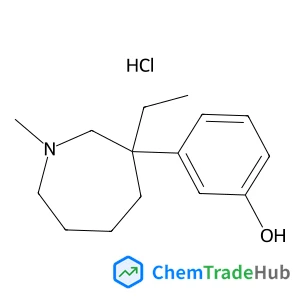
3-(3-Ethyl-1-methyl-3-azepanyl)phenol hydrochloride (1:1)
CAS Number:
59263-76-2
Molecular Formula:
C15H24ClNO
![[4-(Heptyloxy)phenyl]boronic acid structure](https://static.chemtradehub.com/structs/136/136370-19-9-ad33.webp "[4-(Heptyloxy)phenyl]boronic acid structure")
Recommended Suppliers




Disclaimer
This page provides academic journal information for reference and research purposes only. We are not affiliated with any journal publishers and do not handle publication submissions. For publication-related inquiries, please contact the respective journal publishers directly.
If you notice any inaccuracies in the information displayed, please contact us at support@chemtradehub.com. We will promptly review and address your concerns.