












Dynamic structures of aqueous oxalate and the effects of counterions seen by 2D IR
Literature Information
Publication Date
2012-01-13
DOI
10.1039/C2CP23892F
Impact Factor
3.676
Authors
Daniel G. Kuroda, Robin M. Hochstrasser
View Original
Abstract
Two dimensional vibrational echo spectra of oxalate in the carboxylate asymmetric stretch region in D2O show two transitions having anomalously slow spectral diffusion and a third transition having relaxation properties typical of the free carboxylate ion. Quantitative analysis of the frequency shifts of the carboxylate asymmetric stretch modes caused by a singly charged cation in the oxalate hydration shell supports that ion pairs can be responsible for these new transitions. Experimental evidence and DFT calculations are consistent with oxalate forming a mixture of “side-on” and “end on” contact ion pairs wherein the carboxylate groups are protected from mobile heavy water molecules.
Recommended Journals
Related Literature
Development of a rapid biolistic assay to determine changes in relative levels of intracellular calcium in leaves following tetracycline uptake by pinto bean plants
Michael H. Farkas, Elmer-Rico E. Mojica, Minesh Patel, Diana S. Aga, James O. Berry
2009-06-02
Paper
DOI: 10.1039/B902147G
Mass spectrometry tools and metabolite-specific databases for molecular identification in metabolomics
M. Brown, W. B. Dunn, P. Dobson, Y. Patel, C. L. Winder, S. Francis-McIntyre, P. Begley, K. Carroll, D. Broadhurst, A. Tseng, N. Swainston, I. Spasic
2009-04-09
Paper
DOI: 10.1039/B901179J
Chemiluminescence resonance energy transfer as a simple and sensitive readout mode for a CRISPR/Cas12a-based biosensing platform
Yuyuan Zhang, Jing Lei, Wei Liu, Yan Jin, Baoxin Li
2022-11-16
Paper
DOI: 10.1039/D2AN01735K
Development of a voltammetric technique for monitoring brain dopamine metabolism: compensation for interference caused by DOPAC electrogenerated during homovanillic acid detection
Ismael AL Mulla, John P. Lowry, Pier Andrea Serra, Robert D. O'Neill
2009-03-05
Paper
DOI: 10.1039/B810227A
Sensitive and selective detection ofcysteine using gold nanoparticles as colorimetric probes
Li Li, Baoxin Li
2009-04-02
Paper
DOI: 10.1039/B819842J
Quantitative assessment of intracellular/extracellular dimethyl sulfoxide concentrations during freezing with low-temperature confocal Raman micro-spectroscopy
Taijie Zhan, Wenya Niu, Mengdong Cui, Hengxin Han, Ding Wang, Yi Xu
2022-10-19
Paper
DOI: 10.1039/D2AN01288J
Association between ageing, brain chemistry and white matter volume revealed with complementary MRI and FTIR brain imaging
Juliette Phillips, Elizabeth Harrild, Rebecca J. Tidy, Lincoln Codd, Kirsty Richardson, Liesl Celliers
2022-11-02
Communication
DOI: 10.1039/D2AN01271E
You might also like
Compound Q&A
What precautions should be taken when handling 4-(2-Furylmethyl)thiomorpholine 1,1-dioxide (CAS: 79206-94-3)?
When handling 4-(2-Furylmethyl)thiomorpholine 1,1-dioxide (CAS: 79206-94-3), it ...
79206-94-34-(2-Furylmethyl)thi...
Compound Q&A
What precautions should be taken when handling 4-Chloro-N-[2-(4-morpholinyl)ethyl]benzamide (CAS: 71320-77-9)?
When handling 4-Chloro-N-[2-(4-morpholinyl)ethyl]benzamide (CAS: 71320-77-9), it...
71320-77-94-Chloro-N-[2-(4-mor...
Compound Q&A
How should waste containing 2-[2-(2-Methoxyethoxy)ethoxy]ethyl 4-methylbenzenesulfonate (CAS: 62921-74-8) be handled?
Waste containing this compound (CAS: 62921-74-8) should be handled according to ...
62921-74-82-[2-(2-Methoxyethox...
Compound Q&A
How should waste containing (S)-Methyl 2-amino-3-cyclohexylpropanoate be handled?
Waste containing (S)-Methyl 2-amino-3-cyclohexylpropanoate should be collected i...
40056-18-6(S)-Methyl 2-amino-3...
Compound Q&A
How is 5-({4-[(2S,4R)-4-Hydroxy-2-methyltetrahydro-2H-pyran-4-yl]-2-thienyl}sulfanyl)-1-methyl-1,3-dihydro-2H-indol-2-one (CAS: 166882-70-8) typically synthesized?
This compound can be synthesized using a multi-step process involving the conjug...
166882-70-85-({4-[(2S,4R)-4-Hyd...
Compound Q&A
Are there alternatives to (2E)-3-(3,4-Dichlorophenyl)acrylic acid (CAS: 7312-27-8) in synthesis?
There are several alternatives to (2E)-3-(3,4-Dichlorophenyl)acrylic acid in syn...
7312-27-8(2E)-3-(3,4-Dichloro...
Compound Q&A
How should Ethyl 6-(2-nitrophenyl)imidazo[2,1-b][1,3]thiazole-3-carboxylate (CAS: 925437-84-9) be stored?
Ethyl 6-(2-nitrophenyl)imidazo[2,1-b][1,3]thiazole-3-carboxylate (CAS: 925437-84...
925437-84-9Ethyl 6-(2-nitrophen...
Compound Q&A
How should waste containing 2-(1,3-Thiazol-2-yl)ethanamine (CAS: 18453-07-1) be handled?
Waste containing 2-(1,3-Thiazol-2-yl)ethanamine (CAS: 18453-07-1) should be coll...
18453-07-12-(1,3-Thiazol-2-yl)...
Compound Q&A
How is Methyl 5-iodo-2-methylbenzoate (CAS: 103440-54-6) typically synthesized?
Methyl 5-iodo-2-methylbenzoate can be synthesized through the iodination of meth...
103440-54-6Methyl 5-iodo-2-meth...
Compound Q&A
How is 5-Chloro[1,2,4]triazolo[1,5-a]pyridine (CAS: 1427399-34-5) typically synthesized?
5-Chloro[1,2,4]triazolo[1,5-a]pyridine is commonly synthesized via the condensat...
1427399-34-55-Chloro[1,2,4]triaz...
Source Journal
Physical Chemistry Chemical Physics

CiteScore:
5.5
Self-citation Rate:
10.3%
Articles per Year:
3036
Physical Chemistry Chemical Physics (PCCP) is an international journal co-owned by 19 physical chemistry and physics societies from around the world. This journal publishes original, cutting-edge research in physical chemistry, chemical physics and biophysical chemistry. To be suitable for publication in PCCP, articles must include significant innovation and/or insight into physical chemistry; this is the most important criterion that reviewers and Editors will judge against when evaluating submissions. The journal has a broad scope and welcomes contributions spanning experiment, theory, computation and data science. Topical coverage includes spectroscopy, dynamics, kinetics, statistical mechanics, thermodynamics, electrochemistry, catalysis, surface science, quantum mechanics, quantum computing and machine learning. Interdisciplinary research areas such as polymers and soft matter, materials, nanoscience, energy, surfaces/interfaces, and biophysical chemistry are welcomed if they demonstrate significant innovation and/or insight into physical chemistry. Joined experimental/theoretical studies are particularly appreciated when complementary and based on up-to-date approaches.
Recommended Compounds

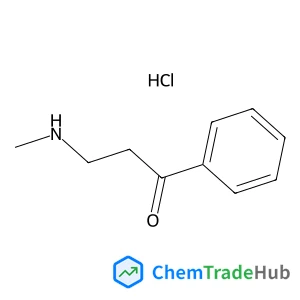
3-(Methylamino)-1-phenyl-1-propanone hydrochloride (1:1)
CAS Number:
2538-50-3
Molecular Formula:
C10H14ClNO
Recommended Suppliers




Disclaimer
This page provides academic journal information for reference and research purposes only. We are not affiliated with any journal publishers and do not handle publication submissions. For publication-related inquiries, please contact the respective journal publishers directly.
If you notice any inaccuracies in the information displayed, please contact us at support@chemtradehub.com. We will promptly review and address your concerns.