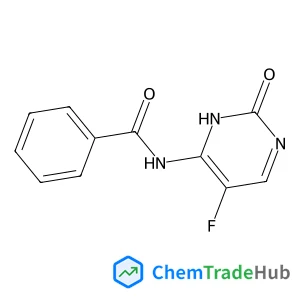
N-(5-Fluoro-2-oxo-2,3-dihydro-4-pyrimidinyl)benzamide
CAS Number:
10357-07-0
Molecular Formula:
C11H8FN3O2
Marco Sacchi, Martin C. E. Galbraith, Stephen J. Jenkins
Sulphide materials, in particular MoS2, have recently received great attention from the surface science community due to their extraordinary catalytic properties. Interestingly, the chemical activity of iron pyrite (FeS2) (the most common sulphide mineral on Earth), and in particular its potential for catalytic applications, has not been investigated so thoroughly. In this study, we use density functional theory (DFT) to investigate the surface interactions of fundamental atmospheric components such as oxygen and nitrogen, and we have explored the adsorption and dissociation of nitrogen monoxide (NO) and nitrogen dioxide (NO2) on the FeS2(100) surface. Our results show that both those environmentally important NOx species chemisorb on the surface Fe sites, while the S sites are basically unreactive for all the molecular species considered in this study and even prevent NO2 adsorption onto one of the non-equivalent Fe–Fe bridge sites of the (1 × 1)–FeS2(100) surface. From the calculated high barrier for NO and NO2 direct dissociation on this surface, we can deduce that both nitrogen oxides species are adsorbed molecularly on pyrite surfaces.
Youngwoon Choi, Jeon Woong Kang, Zahid Yaqoob, Peter T. C. So, Tomomi Fujii, Shota Kuwahara, Kiyohide Takado, Tomiki Ikeda
DOI: 10.1039/C4CP04602A
Vedi Kuyil Azhagan
DOI: 10.1039/C4CP01497A
G. P. Tang, Z. H. Zhang, X. Q. Deng, Z. Q. Fan, H. L. Zhu
DOI: 10.1039/C4CP03837A
Nikolay Enkin, Guoquan Liu, Igor Tkach, Marina Bennati
DOI: 10.1039/C4CP00854E
Lukasz Poltorak, Manuel Dossot, Grégoire Herzog, Alain Walcarius
DOI: 10.1039/C4CP03254C
Benjamin G. Harvey, Heather A. Meylemans, Raina V. Gough, Roxanne L. Quintana, Michael D. Garrison, Thomas J. Bruno
DOI: 10.1039/C3CP55349C
Emilia Iglesias, Rafael Prado-Gotor
DOI: 10.1039/C4CP03969F
Jessica W. Lu, Andrew M. J. Rickards, Jim S. Walker, Kerry J. Knox, Rachael E. H. Miles, Jonathan P. Reid
DOI: 10.1039/C3CP54233E
Marcus V. P. dos Santos, Yaicel G. Proenza, Ricardo L. Longo
DOI: 10.1039/C4CP02279C
Vojtěch Mlýnský, Nils G. Walter
DOI: 10.1039/C4CP03857F
Waste containing N-Methoxy-N-methyl-1,3-thiazole-5-carboxamide (CAS: 898825-89-3...
N-(4-Biphenylyl)dibenzo[b,d]furan-4-amine should be stored in a tightly sealed c...
The market for 3-Acetamido-5-amino-2,4,6-triiodobenzoic acid (CAS: 1713-07-1) is...
Benzyl 2-O-acetyl-3,4,6-tri-O-benzyl-beta-D-galactopyranoside (CAS: 61820-03-9) ...
2-Ethylpiperazine dihydrochloride (CAS: 438050-52-3) is regulated under the Glob...
1,1'-[1,3-Phenylenebis(methylene)]bis(3-methyl-1H-pyrrole-2,5-dione) (CAS: 11946...
Several alternatives can be used in the synthesis of 5-Fluoro-2-(1-pyrrolidinyl)...
Proper personal protective equipment (PPE) must be worn when handling this compo...
When handling 6-Bromoimidazo[1,2-a]pyridin-8-amine, it is important to wear appr...
Alternatives to (2S,4R)-4-(4-Nitrobenzyl)pyrrolidine-2-carboxylic acid hydrochlo...

Physical Chemistry Chemical Physics (PCCP) is an international journal co-owned by 19 physical chemistry and physics societies from around the world. This journal publishes original, cutting-edge research in physical chemistry, chemical physics and biophysical chemistry. To be suitable for publication in PCCP, articles must include significant innovation and/or insight into physical chemistry; this is the most important criterion that reviewers and Editors will judge against when evaluating submissions. The journal has a broad scope and welcomes contributions spanning experiment, theory, computation and data science. Topical coverage includes spectroscopy, dynamics, kinetics, statistical mechanics, thermodynamics, electrochemistry, catalysis, surface science, quantum mechanics, quantum computing and machine learning. Interdisciplinary research areas such as polymers and soft matter, materials, nanoscience, energy, surfaces/interfaces, and biophysical chemistry are welcomed if they demonstrate significant innovation and/or insight into physical chemistry. Joined experimental/theoretical studies are particularly appreciated when complementary and based on up-to-date approaches.