


Influence of hydrogen bonding on excitonic coupling and hierarchal structure of a light-harvesting porphyrin aggregate
Literature Information
Publication Date
2011-12-19
DOI
10.1039/C2CP23362B
Impact Factor
3.676
Authors
Christopher C. Rich, Jeanne L. McHale
View Original
Abstract
Helical porphyrin nanotubes of tetrakis(4-sulfonatophenyl)porphyrin (TSPP) were examined in DCl/D2O solution using resonance Raman and resonance light scattering spectroscopy to probe the influence of hydrogen bonding on the excitonic states. Atomic force microscopy reveals similar morphology for aggregates deposited from DCl/D2O and from HCl/H2O solution. Deuteration results in subtle changes to the aggregate absorption spectrum but large changes in the relative intensities of Raman modes in the J-band excited resonance Raman spectra, revealing relatively more reorganization along lower-frequency vibrational modes in the protiated aggregate. Depolarization ratio dispersion and changes in the relative Raman intensities for excitation wavelengths spanning the J-band demonstrate interference from overlapping excitonic transitions. Distinctly different Raman excitation profiles for the protiated and deuterated aggregates reveal that isotopic substitution influences the excitonic structure of the J-band. The deuterated aggregate exhibits a nearly two-fold increase in intensity of resonance light scattering as a result of an increase in the coherence number, attributed to decreased exciton-phonon scattering. We propose that strongly coupled cyclic N-mers, roughly independent of isotopic substitution, largely decide the optical absorption spectrum, while water-mediated hydrogen bonding influences the further coherent coupling among them when they are assembled into nanotubes. The results show that, similar to natural light-harvesting complexes such as chlorosomes, hydrogen bonding can have a critical influence on exciton dynamics.
Recommended Journals

Electroanalysis

Topics in Catalysis

Biocatalysis and Biotransformation

Critical Reviews in Solid State and Materials Sciences

Main Group Chemistry

Journal of Asian Natural Products Research

Atomization and Sprays

Medicinal Chemistry Research

Bioorganic & Medicinal Chemistry Letters

Polycyclic Aromatic Compounds
Related Literature
Water-wetting surfaces as hydrate promoters during transport of carbon dioxide with impurities
Tatiana Kuznetsova, Bjørnar Jensen, Bjørn Kvamme, Sara Sjøblom
2015-04-13
Paper
DOI: 10.1039/C5CP00660K
A class of rare antiferromagnetic metallic oxides: double perovskite AMn3V4O12 (A = Na+, Ca2+, and La3+) and the site-selective doping effect
Guangbiao Zhang, Yuanxu Wang, Yuli Yan, Chengxiao Peng, Chao Wang, Shuai Dong
2015-04-15
Paper
DOI: 10.1039/C5CP00186B
Tuning the magnetic properties of Co-ferrite nanoparticles through the 1,2-hexadecanediol concentration in the reaction mixture
Carlos Moya, María del Puerto Morales, Xavier Batlle, Amílcar Labarta
2015-04-17
Paper
DOI: 10.1039/C5CP01052G
A molecular dynamics study of guest–host hydrogen bonding in alcohol clathrate hydrates
Masaki Hiratsuka, Ryo Ohmura, Amadeu K. Sum, Saman Alavi, Kenji Yasuoka
2015-03-25
Paper
DOI: 10.1039/C4CP05732E
Temperature-induced molecular transport through polymer multilayers coated with PNIPAM microgels
S. T. Aleed, T. Paulraj, Yu. A. Vladimirov, C. Duschl, R. von Klitzing, D. Volodkin
2015-04-14
Paper
DOI: 10.1039/C5CP01213A
Tuning the switching behavior of binary oxide-based resistive memory devices by inserting an ultra-thin chemically active metal nanolayer: a case study on the Ta2O5–Ta system
Shuang Gao, Fei Zeng, Minjuan Wang, Guangyue Wang, Cheng Song, Feng Pan
2015-04-17
Paper
DOI: 10.1039/C5CP01235J
(Hollow Au–Ag nanoparticles)–TiO2 composites for improved photocatalytic activity prepared from block copolymer-stabilized bimetallic nanoparticles
Na Li, Xiaoyu Zhang, Shulong Yuan, Xiaokai Zhang, Yuzhen Yuan, Xue Li
2015-04-01
Paper
DOI: 10.1039/C4CP06093H
Theoretical study of electronic and tribological properties of h-BNC2/graphene, h-BNC2/h-BN and h-BNC2/h-BNC2 bilayers
Narjes Ansari, Francesc Illas
2015-03-20
Paper
DOI: 10.1039/C5CP00381D
New particle formation and growth from methanesulfonic acid, trimethylamine and water
Haihan Chen, Michael J. Ezell, Kristine D. Arquero, Mychel E. Varner, Matthew L. Dawson, R. Benny Gerber, Barbara J. Finlayson-Pitts
2015-04-27
Paper
DOI: 10.1039/C5CP00838G
Self-assembly and coverage dependent thermally induced conformational changes of Ni(ii)-meso-tetrakis (4-tert-butylphenyl) benzoporphyrin on Cu(111)
2015-04-20
Paper
DOI: 10.1039/C5CP01490E
You might also like
Compound Q&A
How should waste containing N-Methoxy-N-methyl-1,3-thiazole-5-carboxamide (CAS: 898825-89-3) be handled?
Waste containing N-Methoxy-N-methyl-1,3-thiazole-5-carboxamide (CAS: 898825-89-3...
898825-89-3N-Methoxy-N-methyl-1...
Compound Q&A
How should N-(4-Biphenylyl)dibenzo[b,d]furan-4-amine (CAS: 1318338-47-4) be stored?
N-(4-Biphenylyl)dibenzo[b,d]furan-4-amine should be stored in a tightly sealed c...
1318338-47-4N-(4-Biphenylyl)dibe...
Compound Q&A
What is the market or research trend for 3-Acetamido-5-amino-2,4,6-triiodobenzoic acid (CAS: 1713-07-1)?
The market for 3-Acetamido-5-amino-2,4,6-triiodobenzoic acid (CAS: 1713-07-1) is...
1713-07-13-Acetamido-5-amino-...
Compound Q&A
How should Benzyl 2-O-acetyl-3,4,6-tri-O-benzyl-beta-D-galactopyranoside (CAS: 61820-03-9) be stored?
Benzyl 2-O-acetyl-3,4,6-tri-O-benzyl-beta-D-galactopyranoside (CAS: 61820-03-9) ...
61820-03-9Benzyl 2-O-acetyl-3,...
Compound Q&A
What regulatory guidelines apply to 2-Ethylpiperazine dihydrochloride (CAS: 438050-52-3)?
2-Ethylpiperazine dihydrochloride (CAS: 438050-52-3) is regulated under the Glob...
438050-52-32-Ethylpiperazine di...
Compound Q&A
What regulatory guidelines apply to 1,1'-[1,3-Phenylenebis(methylene)]bis(3-methyl-1H-pyrrole-2,5-dione) (CAS: 119462-56-5)?
1,1'-[1,3-Phenylenebis(methylene)]bis(3-methyl-1H-pyrrole-2,5-dione) (CAS: 11946...
119462-56-51,1'-[1,3-Phenyleneb...
Compound Q&A
Are there alternatives to 5-Fluoro-2-(1-pyrrolidinyl)pyridine (CAS: 1287217-79-1) in synthesis?
Several alternatives can be used in the synthesis of 5-Fluoro-2-(1-pyrrolidinyl)...
1287217-79-15-Fluoro-2-(1-pyrrol...
Compound Q&A
What precautions should be taken when handling 1-((2R,3R,4R,5R)-5-((bis(4-methoxyphenyl)(phenyl)methoxy)methyl)-4-hydroxy-3-methoxytetrahydrofuran-2-yl)-5-methylpyrimidine-2,4(1H,3H)-dione (CAS: 153631-19-7)?
Proper personal protective equipment (PPE) must be worn when handling this compo...
153631-19-71-((2R,3R,4R,5R)-5-(...
Compound Q&A
What precautions should be taken when handling 6-Bromoimidazo[1,2-a]pyridin-8-amine (CAS: 676371-00-9)?
When handling 6-Bromoimidazo[1,2-a]pyridin-8-amine, it is important to wear appr...
676371-00-96-Bromoimidazo[1,2-a...
Compound Q&A
Are there alternatives to (2S,4R)-4-(4-Nitrobenzyl)pyrrolidine-2-carboxylic acid hydrochloride (CAS: 1049740-22-8) in synthesis?
Alternatives to (2S,4R)-4-(4-Nitrobenzyl)pyrrolidine-2-carboxylic acid hydrochlo...
1049740-22-8(2S,4R)-4-(4-Nitrobe...
Source Journal
Physical Chemistry Chemical Physics

CiteScore:
5.5
Self-citation Rate:
10.3%
Articles per Year:
3036
Physical Chemistry Chemical Physics (PCCP) is an international journal co-owned by 19 physical chemistry and physics societies from around the world. This journal publishes original, cutting-edge research in physical chemistry, chemical physics and biophysical chemistry. To be suitable for publication in PCCP, articles must include significant innovation and/or insight into physical chemistry; this is the most important criterion that reviewers and Editors will judge against when evaluating submissions. The journal has a broad scope and welcomes contributions spanning experiment, theory, computation and data science. Topical coverage includes spectroscopy, dynamics, kinetics, statistical mechanics, thermodynamics, electrochemistry, catalysis, surface science, quantum mechanics, quantum computing and machine learning. Interdisciplinary research areas such as polymers and soft matter, materials, nanoscience, energy, surfaces/interfaces, and biophysical chemistry are welcomed if they demonstrate significant innovation and/or insight into physical chemistry. Joined experimental/theoretical studies are particularly appreciated when complementary and based on up-to-date approaches.
Recommended Compounds
![2-(7,7-Difluorobicyclo[4.1.0]hept-1-yl)ethanamine structure](https://static.chemtradehub.com/structs/209/2098065-08-6-ff24.webp "2-(7,7-Difluorobicyclo[4.1.0]hept-1-yl)ethanamine structure")
2-(7,7-Difluorobicyclo[4.1.0]hept-1-yl)ethanamine
CAS Number:
2098065-08-6
Molecular Formula:
C9H15F2N
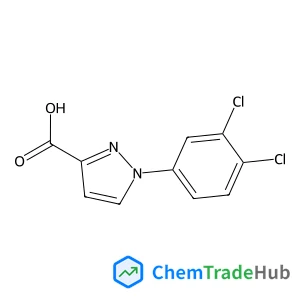
1-(3,4-Dichlorophenyl)-1H-pyrazole-3-carboxylic acid
CAS Number:
1152949-12-6
Molecular Formula:
C10H6Cl2N2O2
Recommended Suppliers






Disclaimer
This page provides academic journal information for reference and research purposes only. We are not affiliated with any journal publishers and do not handle publication submissions. For publication-related inquiries, please contact the respective journal publishers directly.
If you notice any inaccuracies in the information displayed, please contact us at support@chemtradehub.com. We will promptly review and address your concerns.