


Redox and photoisomerization switching of the second-order optical nonlinearity of a tetrathiafulvalene derivative of spiropyran across five states: a DFT study
Literature Information
Publication Date
2012-02-20
DOI
10.1039/C2CP23293F
Impact Factor
3.676
Authors
Chun-Guang Liu, Xiao-Hui Guan
View Original
Abstract
Second-order nonlinear optical properties of a tetrathiafulvalene (TTF) derivative of spiropyran have been studied based on density functional theory (DFT) combined with the finite field (FF) calculations. Our DFT-FF calculations confirm a switching behavior of the static first hyperpolarizability caused by the redox and photochromic reaction. The photochromic reaction generates spiropyran–merocyanine conversion by reversible cleavage of the C–O bond, which is relative to the close- and open-ring forms 1-c and 1-o. The open-ring form 1-o displays the large static first hyperpolarizability relative to its close-ring form 1-c according to our DFT-FF calculations with three functionals. The electronic structure analysis and spin unrestricted calculations show that the redox processes significantly affect the geometrical structure of the TTF unit, and thus enhance the static first hyperpolarizabilities. The one-electron-oxidized species having good planar structure of the TTF unit are ∼30 and ∼200 times as large as that of the neutral compounds 1-c and 1-o, respectively. But the difference in the static first hyperpolarizability between one- and two-electron-oxidized states of spiropyran species is not substantial according to our DFT-FF calculations, and the spiropyran–merocyanine conversion of two-electron-oxidized species does not largely affect their static first hyperpolarizability. On the basis of the large change in the static first hyperpolarizability, our DFT-FF calculations support a five-state switching of the static first hyperpolarizability based on the redox and photoisomerization.
Recommended Journals

Russian Chemical Bulletin

Organic Process Research & Development

Russian Journal of Bioorganic Chemistry

Current Opinion in Colloid & Interface Science

Journal of Natural Medicines

New Journal of Chemistry

Chemistry Education Research and Practice

Russian Journal of Coordination Chemistry

Acta Materialia

Journal of Peptide Science
Related Literature
Total synthesis of nafuredin B
Gour Hari Mandal, Dhiman Saha, Rajib Kumar Goswami
2020-03-05
Paper
DOI: 10.1039/D0OB00370K
Wagner–Meerwein type rearrangement in 5-oxohomoadamantane series
Ilya M. Tkachenko, Polina A. Mankova, Victor B. Rybakov, Evgeniy V. Golovin, Yuri N. Klimochkin
2019-12-17
Paper
DOI: 10.1039/C9OB02060H
Rhodium(iii)-catalyzed ortho-C–H amidation of 2-arylindazoles with a dioxazolone as an amidating reagent
Payel Ghosh, Sadhanendu Samanta, Alakananda Hajra
2020-01-27
Communication
DOI: 10.1039/C9OB02756D
Bifunctional squaramide catalyzed stereoselective Mannich reaction of α-azido ketones with isatin-derived ketimines
Seda Karahan, Cihangir Tanyeli
2019-12-11
Paper
DOI: 10.1039/C9OB02208B
Phenylboronic acid-catalyzed tandem construction of S–S and C–S bonds: a new method for the synthesis of benzyl disulfanylsulfone derivatives from S-benzyl thiosulfonates
Raju Jannapu Reddy, Md. Waheed, Gamidi Rama Krishna
2020-04-03
Communication
DOI: 10.1039/D0OB00442A
Dearomatization of 3-cyanoindoles by (3 + 2) cycloaddition: from batch to flow chemistry
Maxime Manneveau, Saori Tanii, Fanny Gens, Julien Legros
2020-04-20
Communication
DOI: 10.1039/D0OB00582G
Iron-catalyzed regioselective alkylation of 1,4-quinones and coumarins with functionalized alkyl bromides
Dengke Li, Xianfu Shen
2019-12-23
Paper
DOI: 10.1039/C9OB02289A
You might also like
Compound Q&A
What regulatory guidelines apply to 6-Bromo-2-methylimidazo[1,2-a]pyrimidine (CAS: 1111638-05-1)?
6-Bromo-2-methylimidazo[1,2-a]pyrimidine (CAS: 1111638-05-1) falls under various...
1111638-05-16-Bromo-2-methylimid...
Compound Q&A
Are there alternatives to 1-Pyrrolidineethanol, β-methyl-α-phenyl-, (αS,βR) (CAS: 123620-80-4) in synthesis?
While there are no direct alternatives, similar compounds like 1-Pyrrolidineetha...
123620-80-41-Pyrrolidineethanol...
Compound Q&A
Is 4-Methyl-2,6-bis(2-methyl-2-propanyl)phenyl methylcarbamate (CAS: 1918-11-2) safe?
4-Methyl-2,6-bis(2-methyl-2-propanyl)phenyl methylcarbamate (CAS: 1918-11-2) is ...
1918-11-24-Methyl-2,6-bis(2-m...
Compound Q&A
How should 2-(3-Bromo-4-fluorophenyl)-1,3-dioxolane (CAS: 77771-04-1) be stored?
2-(3-Bromo-4-fluorophenyl)-1,3-dioxolane (CAS: 77771-04-1) should be stored in a...
77771-04-12-(3-Bromo-4-fluorop...
Compound Q&A
What are the physical and chemical properties of 4,5,6,7-Tetrahydro-1H-indazole hydrochloride (CAS: 18161-11-0)?
4,5,6,7-Tetrahydro-1H-indazole hydrochloride is a white crystalline solid with a...
18161-11-04,5,6,7-Tetrahydro-1...
Compound Q&A
What is (2R)-1-Methoxy-3-phenyl-2-propanamine (CAS: 59919-07-2)?
(2R)-1-Methoxy-3-phenyl-2-propanamine is a chiral organic compound with the CAS ...
59919-07-2(2R)-1-Methoxy-3-phe...
Compound Q&A
What industries use Ethyl 1-(1-phenylethyl)-1H-imidazole-5-carboxylate (CAS: 56649-47-9)?
Ethyl 1-(1-phenylethyl)-1H-imidazole-5-carboxylate is used in various industries...
56649-47-9Ethyl 1-(1-phenyleth...
Compound Q&A
What regulatory guidelines apply to 4-[(1E,3S)-1-(4-Hydroxyphenyl)-1,4-pentadien-3-yl]phenol (CAS: 17676-24-3)?
4-[(1E,3S)-1-(4-Hydroxyphenyl)-1,4-pentadien-3-yl]phenol (CAS: 17676-24-3) falls...
17676-24-34-[(1E,3S)-1-(4-Hydr...
Compound Q&A
What industries use (S)-3-Amino-5-phenylpentanoic acid hydrochloride (CAS: 331846-97-0)?
(S)-3-Amino-5-phenylpentanoic acid hydrochloride is primarily used in the pharma...
331846-97-0(S)-3-Amino-5-phenyl...
Compound Q&A
How is 7-methoxy-1-benzothiophene-2-carboxylic acid (CAS: 88791-07-5) typically synthesized?
7-Methoxy-1-benzothiophene-2-carboxylic acid is typically synthesized by reactin...
88791-07-57-methoxy-1-benzothi...
Source Journal
Physical Chemistry Chemical Physics

CiteScore:
5.5
Self-citation Rate:
10.3%
Articles per Year:
3036
Physical Chemistry Chemical Physics (PCCP) is an international journal co-owned by 19 physical chemistry and physics societies from around the world. This journal publishes original, cutting-edge research in physical chemistry, chemical physics and biophysical chemistry. To be suitable for publication in PCCP, articles must include significant innovation and/or insight into physical chemistry; this is the most important criterion that reviewers and Editors will judge against when evaluating submissions. The journal has a broad scope and welcomes contributions spanning experiment, theory, computation and data science. Topical coverage includes spectroscopy, dynamics, kinetics, statistical mechanics, thermodynamics, electrochemistry, catalysis, surface science, quantum mechanics, quantum computing and machine learning. Interdisciplinary research areas such as polymers and soft matter, materials, nanoscience, energy, surfaces/interfaces, and biophysical chemistry are welcomed if they demonstrate significant innovation and/or insight into physical chemistry. Joined experimental/theoretical studies are particularly appreciated when complementary and based on up-to-date approaches.
Recommended Compounds
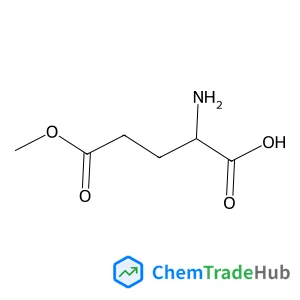
![Benzeneacetic acid, 2-[(2,6-dichlorophenyl)amino]-, compd. with 1-pyrrolidineethanol (1:1) structure](https://static.chemtradehub.com/structs/119/119623-66-4-5301.webp "Benzeneacetic acid, 2-[(2,6-dichlorophenyl)amino]-, compd. with 1-pyrrolidineethanol (1:1) structure")
Benzeneacetic acid, 2-[(2,6-dichlorophenyl)amino]-, compd. with 1-pyrrolidineethanol (1:1)
CAS Number:
119623-66-4
Molecular Formula:
C20H24Cl2N2O3
Recommended Suppliers






Disclaimer
This page provides academic journal information for reference and research purposes only. We are not affiliated with any journal publishers and do not handle publication submissions. For publication-related inquiries, please contact the respective journal publishers directly.
If you notice any inaccuracies in the information displayed, please contact us at support@chemtradehub.com. We will promptly review and address your concerns.