












The development of an indirect competitive immunomagnetic-proximity ligation assay for small-molecule detection
Literature Information
Publication Date
2012-11-22
DOI
10.1039/C2AN36447F
Impact Factor
4.616
Authors
Xuecheng Jiang, Zhihao Sun, Luming Wang, Lixiao Zhou, Hanqiang Miao, Zhengting Zhang, Feng Shi, Chenggang Zhu
View Original
Abstract
The development of an indirect competitive immunomagnetic-proximity ligation assay (ICIPLA), which is a novel method for detecting small molecules, is described in this report. Free small molecules in samples can be detected using a proximity ligation assay (PLA); the detection is based on the proximity effect caused by a high concentration of small molecule–BSA conjugates bound to streptavidin magnetic beads. As an indirect format competitive immunoassay, the ICIPLA method has the advantage in that the quantity of monoclonal antibody (mAb) used for small-molecule detection is 8-fold lower than that required for the competitive immunomagnetic-proximity ligation assay (CIPLA) described in our previous work. Small molecules can be detected using a single monoclonal antibody, and the PLA method can be used to amplify high-performance signals. In this work, the small molecular compound ractopamine (RAC) was selected as a target for ICIPLA. The limit of detection (LOD) was 0.01 ng ml−1, and the method exhibited a broad dynamic range of up to six orders of magnitude. We also employed the ICIPLA method to detect RAC in serum, urine, and muscle extracts; the results indicated that the LOD and dynamic range were not altered. The cross-reactivity studies showed that the cross-reactivity values for all RAC analogs were below 0.01%. These results suggest that ICIPLA is a sensitive, specific and practical method for small-molecule detection. This is the first report of the improved PLA technology for small-molecule detection by indirect competitive formats in the biological samples.
Related Literature
Molecular and ionic diffusion in aqueous – deep eutectic solvent mixtures: probing inter-molecular interactions using PFG NMR
Carmine D’Agostino, Lynn F. Gladden, Mick D. Mantle, Andrew P. Abbott, Essa, I. Ahmed, Azhar Y. M. Al-Murshedi, Robert C. Harris
2015-05-15
Paper
DOI: 10.1039/C5CP01493J
Eu2+ luminescence in strontium aluminates
T. Jüstel, C. Ronda, A. Meijerink
2015-05-12
Paper
DOI: 10.1039/C5CP01095K
Ab initio modeling of Fe(ii) adsorption and interfacial electron transfer at goethite (α-FeOOH) surfaces
Vitaly Alexandrov, Kevin M. Rosso
2015-05-06
Paper
DOI: 10.1039/C5CP00921A
Understanding the role of the dye/oxide interface via SnO2-based MK-2 dye-sensitized solar cells
Dae-Yong Son, Chang-Ryul Lee, Hee-Won Shin, In-Hyuk Jang, Hyun Suk Jung, Tae Kyu Ahn
2015-05-06
Paper
DOI: 10.1039/C5CP01816A
Flexible two-dimensional Tin+1Cn (n = 1, 2 and 3) and their functionalized MXenes predicted by density functional theories
Jian Zhou, Chen Si, Zhimei Sun
2015-05-07
Paper
DOI: 10.1039/C5CP00775E
Effect of sodium salicylate and sodium deoxycholate on fibrillation of bovine serum albumin: comparison of fluorescence, SANS and DLS techniques
J. Dey, S. Kumar, V. K. Aswal, L. V. Panicker, K. Ismail, P. A. Hassan
2015-05-12
Paper
DOI: 10.1039/C5CP01666E
Tuning of electron transfer reactions in pluronic–surfactant supramolecular assemblies
Poonam Verma, Haridas Pal
2015-05-18
Paper
DOI: 10.1039/C5CP01480H
Anion resonances and above-threshold dynamics of coenzyme Q0
James N. Bull, Christopher W. West, Jan R. R. Verlet
2015-05-27
Paper
DOI: 10.1039/C5CP02145F
Structural effects on the photophysical properties of mono-β-diketonate and bis-β-diketonate EuIII complexes
Tianyu Zhu, Peng Chen, Hongfeng Li, Wenbin Sun, Ting Gao, Pengfei Yan
2015-05-18
Paper
DOI: 10.1039/C5CP01392E
You might also like
Compound Q&A
What are the main uses of (5-Sulfamoyl-3-pyridinyl)boronic acid (CAS: 951233-61-7)?
(5-Sulfamoyl-3-pyridinyl)boronic acid is primarily used in chemical synthesis, p...
951233-61-7(5-Sulfamoyl-3-pyrid...
Compound Q&A
How is Benzyl 2-methyl-2-(methylsulfonyl)-4-pentenoate (CAS: 1942858-50-5) typically synthesized?
Benzyl 2-methyl-2-(methylsulfonyl)-4-pentenoate is typically synthesized via est...
1942858-50-5Benzyl 2-methyl-2-(m...
Compound Q&A
What precautions should be taken when handling 8-Fluoroquinolin-6-ol (CAS: 209353-22-0)?
When handling 8-Fluoroquinolin-6-ol (CAS: 209353-22-0), it is important to use p...
209353-22-08-Fluoroquinolin-6-o...
Compound Q&A
What are the physical and chemical properties of 1,3-Dibromo-5-(2-methyl-2-propanyl)benzene (CAS: 129316-09-2)?
1,3-Dibromo-5-(2-methyl-2-propanyl)benzene (CAS: 129316-09-2) is a crystalline c...
129316-09-21,3-Dibromo-5-(2-met...
Compound Q&A
What industries use Ethyl 7-chloro-4-oxo-1-(1,3-thiazol-2-yl)-1,4-dihydro-1,8-naphthyridine-3-carboxylate (CAS: 174726-87-5)?
Ethyl 7-chloro-4-oxo-1-(1,3-thiazol-2-yl)-1,4-dihydro-1,8-naphthyridine-3-carbox...
174726-87-5Ethyl 7-chloro-4-oxo...
Compound Q&A
What precautions should be taken when handling Delta-7-Avenasterol (CAS: 23290-26-8)?
When handling Delta-7-Avenasterol (CAS: 23290-26-8), it is important to wear app...
23290-26-8Delta-7-Avenasterol
Compound Q&A
What precautions should be taken when handling N-({(5R)-3-[3-Fluoro-4-(4-morpholinyl)phenyl]-2-oxo-1,3-oxazolidin-5-yl}methyl)acetamide (CAS: 872992-20-6)?
Proper handling involves the use of personal protective equipment such as gloves...
872992-20-6N-({(5R)-3-[3-Fluoro...
Compound Q&A
What precautions should be taken when handling 2-Methyl-2-proanyl 4-[(2-aminophenyl)amino]-1-piperidinecarboxylate (CAS: 79099-00-6)?
When handling 2-Methyl-2-proanyl 4-[(2-aminophenyl)amino]-1-piperidinecarboxylat...
79099-00-62-Methyl-2-propanyl ...
Compound Q&A
What is N-Methyl-4-chlorobenzylamine hydrochloride (CAS: 65542-24-7)?
N-Methyl-4-chlorobenzylamine hydrochloride (CAS: 65542-24-7) is a organic compou...
65542-24-7N-Methyl-4-chloroben...
Compound Q&A
Is [2-(Dodecyloxy)ethoxy]acetic acid (CAS: 27306-90-7) safe?
[2-(Dodecyloxy)ethoxy]acetic acid (CAS: 27306-90-7) is generally considered safe...
27306-90-7[2-(Dodecyloxy)ethox...
Source Journal
Analyst

CiteScore:
7.8
Self-citation Rate:
5.6%
Articles per Year:
653
Analyst publishes analytical and bioanalytical research that reports premier fundamental discoveries and inventions, and the applications of those discoveries, unconfined by traditional discipline barriers.
Recommended Compounds
![4,10-Dihydroxy-3H-pyrano[3,4,5-kl]xanthen-3-one structure](https://static.chemtradehub.com/structs/125/1259330-61-4-de48.webp "4,10-Dihydroxy-3H-pyrano[3,4,5-kl]xanthen-3-one structure")
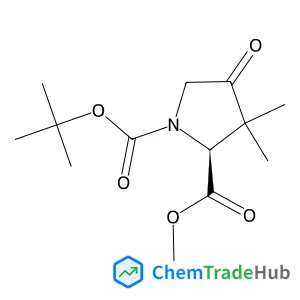
2-Methyl 1-(2-methyl-2-propanyl) (2S)-3,3-dimethyl-4-oxo-1,2-pyrrolidinedicarboxylate
CAS Number:
478698-30-5
Molecular Formula:
C13H21NO5
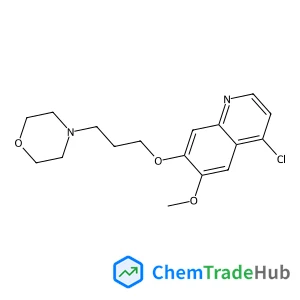
4-(3-((4-Chloro-6-methoxyquinolin-7-yl)oxy)propyl)morpholine
CAS Number:
205448-32-4
Molecular Formula:
C17H21ClN2O3
![2-(5-Bromo-1H-pyrrolo[2,3-B]pyridin-3-YL)acetic acid structure](https://static.chemtradehub.com/structs/106/1060795-03-0-0589.webp "2-(5-Bromo-1H-pyrrolo[2,3-B]pyridin-3-YL)acetic acid structure")
2-(5-Bromo-1H-pyrrolo[2,3-B]pyridin-3-YL)acetic acid
CAS Number:
1060795-03-0
Molecular Formula:
C9H7BrN2O2
Recommended Suppliers






Disclaimer
This page provides academic journal information for reference and research purposes only. We are not affiliated with any journal publishers and do not handle publication submissions. For publication-related inquiries, please contact the respective journal publishers directly.
If you notice any inaccuracies in the information displayed, please contact us at support@chemtradehub.com. We will promptly review and address your concerns.