













Anion resonances and above-threshold dynamics of coenzyme Q0
Literature Information
Publication Date
2015-05-27
DOI
10.1039/C5CP02145F
Impact Factor
3.676
Authors
James N. Bull, Christopher W. West, Jan R. R. Verlet
View Original
Abstract
Temporary radical anions (resonances) of isolated co enzyme Q0 (CQ0) and their associated above-threshold dynamics have been studied using frequency-, angle-, and time-resolved photoelectron imaging (FAT-PI). Experimental energetics and dynamics are supported with ab initio calculations. All results support that CQ0 exhibits similar resonances and energetics compared with the smaller para-benzoquinone subunit, which is commonly considered as a prototype electrophore for larger biological para-quinone species. However, the above-threshold dynamics in CQ0 relative to para-benzoquinone show significantly enhanced prompt detachment compared with internal conversion, particularly around the photoexcitation energy of 3.10 eV. The change in dynamics can be attributed to a combination of an increase in the shape character of the optically-accessible resonance at this energy, a decrease in the autodetachment lifetime due to the higher density of states in the neutral, and a decrease in the probability that the wavepacket formed in the Franck–Condon window can access the local conical intersection in CQ0 over the timescale of autodetachment. Overall, this study serves as a clear example in understanding the trends in spectroscopy and dynamics in relating a simple prototypical para-quinone electrophore to a more complex biochemical species.
Related Literature
The stabilization mechanism and size effect of nonpolar-to-polar crystallography facet tailored ZnO nano/micro rods via a top-down strategy
Xiangyang Duan, Chao Ma, Wentao Jin, Xiaoman Ma, Su-Huai Wei, Jinying Yu
2018-06-13
Paper
DOI: 10.1039/C8CP02494D
Enhanced sulfurization reaction of molybdenum using a thermal cracker for forming two-dimensional MoS2 layers
Woo-Jung Lee, Jae-Hyung Wi, Won Seok Han, Byungha Shin
2018-05-23
Paper
DOI: 10.1039/C8CP02390E
Li+-Induced fluorescent metallogel: a case of ESIPT-CHEF and ICT phenomenon
Manish Kumar Dixit, Mrigendra Dubey
2018-08-10
Paper
DOI: 10.1039/C8CP04579H
Molecular dynamics modeling of Pseudomonas aeruginosa outer membranes
Ao Li
2018-08-31
Paper
DOI: 10.1039/C8CP04278K
Ferroelectric-mediated filamentary resistive switching in P(VDF-TrFE)/ZnO nanocomposite films
Tae Yeon Kim, Gopinathan Anoop, Yeong Jun Son, Soo Hyeon Kim, Eunji Lee, Ji Young Jo
2018-04-30
Paper
DOI: 10.1039/C8CP02024H
Reversible DNA compaction induced by partial intercalation of 16-Ph-16 gemini surfactants: evidence of triple helix formation
Elia Grueso, Emilio Roldan, Pilar Perez-Tejeda, Edyta Kuliszewska, Blanca Molero, Lothar Brecker, R. M. Giráldez-Pérez
2018-09-14
Paper
DOI: 10.1039/C8CP02791A
White-light generation from all-solution-processed OLEDs using a benzothiazole–salophen derivative reactive to the ESIPT process
José Carlos Germino, Jônatas Faleiro Berbigier, Cristina Aparecida Barboza, Marcelo Meira Faleiros, Deborah de Alencar Simoni, Miguel Tayar Galante, Matheus Serra de Holanda, Fabiano Severo Rodembusch, Teresa Dib Zambon Atvars
2018-11-27
Paper
DOI: 10.1039/C8CP06485G
Model – free approach to quadrupole spin relaxation in solid 209Bi-aryl compounds
Danuta Kruk, Christian Goesweiner, Elzbieta Masiewicz, Evrim Umut, Carina Sampl, Hermann Scharfetter
2018-09-04
Paper
DOI: 10.1039/C8CP03848A
Ion collision-induced chemistry in pure and mixed loosely bound clusters of coronene and C60 molecules
Alicja Domaracka, Rudy Delaunay, Arkadiusz Mika, Michael Gatchell, Henning Zettergren, Henrik Cederquist, Patrick Rousseau, Bernd A. Huber
2018-05-02
Paper
DOI: 10.1039/C8CP01179F
Most favorable cumulenic structures in iron-capped linear carbon chains are short singlet odd-carbon dications: a theoretical view
Liang Pu, Zhong Zhang, R. Bruce King, Wesley D. Allen
2018-05-21
Paper
DOI: 10.1039/C7CP08673C
You might also like
Compound Q&A
How should 2-Methylbenzene-1,4-diamine dihydrochloride (CAS: 615-45-2) be stored?
2-Methylbenzene-1,4-diamine dihydrochloride (CAS: 615-45-2) should be stored in ...
615-45-22-Methylbenzene-1,4-...
Compound Q&A
Is (1S,4S)-2,5-Diazabicyclo[2.2.1]heptane dihydrobromide (CAS: 132747-20-7) safe?
(1S,4S)-2,5-Diazabicyclo[2.2.1]heptane dihydrobromide is generally considered sa...
132747-20-7(1S,4S)-2,5-Diazabic...
Compound Q&A
What industries use (6-Chloropyridazin-3-YL)methanamine (CAS: 871826-15-2)?
(6-Chloropyridazin-3-YL)methanamine finds applications in the pharmaceutical ind...
871826-15-2(6-Chloropyridazin-3...
Compound Q&A
What are the main uses of 2-Fluoro-3-methylphenol (CAS: 77772-72-6)?
2-Fluoro-3-methylphenol is primarily used in the synthesis of pharmaceuticals, p...
77772-72-62-Fluoro-3-methylphe...
Compound Q&A
What precautions should be taken when handling 3-Methoxy-4-nitrobenzonitrile (CAS: 177476-75-4)?
When handling 3-Methoxy-4-nitrobenzonitrile, it is important to wear appropriate...
177476-75-43-Methoxy-4-nitroben...
Compound Q&A
What precautions should be taken when handling 1,3-Oxazolo[4,5-b]pyridine-2(3H)-thione (CAS: 211949-57-4)?
When handling 1,3-Oxazolo[4,5-b]pyridine-2(3H)-thione (CAS: 211949-57-4), it is ...
211949-57-4[1,3]Oxazolo[4,5-b]p...
Compound Q&A
What regulatory guidelines apply to 4-Ethynylbenzamide (CAS: 90347-86-7)?
4-Ethynylbenzamide (CAS: 90347-86-7) falls under various regulatory guidelines i...
90347-86-74-Ethynylbenzamide
Compound Q&A
What are the main uses of 3-(2-Ethylphenyl)-2-thioxo-4-imidazolidinone (CAS: 186822-57-1)?
3-(2-Ethylphenyl)-2-thioxo-4-imidazolidinone is primarily used as an intermediat...
186822-57-13-(2-Ethylphenyl)-2-...
Compound Q&A
What is (2-Fluoro-6-methoxyphenyl)acetic acid (CAS: 500912-19-6)?
(2-Fluoro-6-methoxyphenyl)acetic acid, also known as 4-fluoro-3-methoxybenzoic a...
500912-19-6(2-Fluoro-6-methoxyp...
Compound Q&A
What is the market or research trend for 2-[4-(Hydroxymethyl)phenoxy]ethanol (CAS: 102196-18-9)?
Market trends for 2-[4-(Hydroxymethyl)phenoxy]ethanol (CAS: 102196-18-9) indicat...
102196-18-92-[4-(Hydroxymethyl)...
Source Journal
Physical Chemistry Chemical Physics

CiteScore:
5.5
Self-citation Rate:
10.3%
Articles per Year:
3036
Physical Chemistry Chemical Physics (PCCP) is an international journal co-owned by 19 physical chemistry and physics societies from around the world. This journal publishes original, cutting-edge research in physical chemistry, chemical physics and biophysical chemistry. To be suitable for publication in PCCP, articles must include significant innovation and/or insight into physical chemistry; this is the most important criterion that reviewers and Editors will judge against when evaluating submissions. The journal has a broad scope and welcomes contributions spanning experiment, theory, computation and data science. Topical coverage includes spectroscopy, dynamics, kinetics, statistical mechanics, thermodynamics, electrochemistry, catalysis, surface science, quantum mechanics, quantum computing and machine learning. Interdisciplinary research areas such as polymers and soft matter, materials, nanoscience, energy, surfaces/interfaces, and biophysical chemistry are welcomed if they demonstrate significant innovation and/or insight into physical chemistry. Joined experimental/theoretical studies are particularly appreciated when complementary and based on up-to-date approaches.
Recommended Compounds

(S)-1-(3-(Benzyloxy)phenyl)-3-(dimethylamino)-2-methylpropan-1-one (2r,3r)-2,3-bis(benzoyloxy)succinate
CAS Number:
1004315-81-4
Molecular Formula:
C37H37NO10
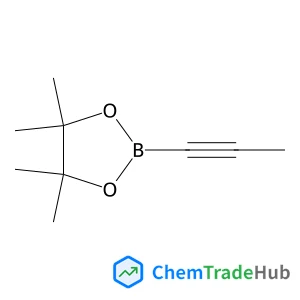
4,4,5,5-Tetramethyl-2-(1-propyn-1-YL)-1,3,2-dioxaborolane
CAS Number:
347389-75-7
Molecular Formula:
C9H15BO2

BIS(I-PROPYLCYCLOPENTADIENYL)TITANIUM DICHLORIDE
CAS Number:
12130-65-3
Molecular Formula:
C16H22Cl2Ti

Recommended Suppliers



Disclaimer
This page provides academic journal information for reference and research purposes only. We are not affiliated with any journal publishers and do not handle publication submissions. For publication-related inquiries, please contact the respective journal publishers directly.
If you notice any inaccuracies in the information displayed, please contact us at support@chemtradehub.com. We will promptly review and address your concerns.