












Phenothiazine-based small-molecule organic solar cells with power conversion efficiency over 7% and open circuit voltage of about 1.0 V using solvent vapor annealing
Literature Information
Publication Date
2018-01-30
DOI
10.1039/C7CP08308D
Impact Factor
3.676
Authors
Yogajivan Rout, Rajneesh Misra, Rahul Singhal, Subhayan Biswas, Ganesh D. Sharma
View Original
Abstract
We have used two unsymmetrical small molecules, named phenothiazine 1 and 2 with a D–A–D–π–D configuration, where phenothiazine is used as a central unit, triphenylamine is used as a terminal unit and TCBD and cyclohexa-2,5-diene-1,4-diylidene-expanded TCBD are used as an acceptor between the phenothiazine and triphenylamine units, as a small molecule donor along with PC71BM as an acceptor for solution processed bulk heterojunction solar cells. The variation of acceptors in the phenothiazine derivatives makes an exciting change in the photophysical and electrochemical properties, hole mobility and therefore photovoltaic performance. The optimized device based on phenothiazine 2 exhibited a high power conversion efficiency of 7.35% (Jsc = 11.98 mA cm−2, Voc = 0.99 V and FF = 0.62), while the device based on phenothiazine 1 showed a low PCE of 4.81% (Jsc = 8.73 mA cm−2, Voc = 0.95 V and FF = 0.58) after solvent vapour annealing (SVA) treatment. The higher value of power conversion efficiency of the 2 based devices irrespective of the processing conditions may be related to the broader absorption and lower band gap of 2 as compared to 1. The improvement in the SVA treated active layer may be related to the enhanced crystallinity, molecular ordering and aggregation and shorter π–π stacking distance of the small molecule donors.
Related Literature
Organic/inorganic hybrid mesoporous silica membrane rapidly synthesized by a microwave-assisted method and its application in enzyme adsorption and electrocatalysis
Shujuan Bian, Kui Gao, Huijie Shen, Xuheng Jiang, Yafeng Long, Yong Chen
2013-05-07
Paper
DOI: 10.1039/C3TB20169D
V-shaped pyranylidene/triphenylamine-based chromophores with enhanced photophysical, electrochemical and nonlinear optical properties
Sergio Gámez-Valenzuela, David Neusser, Belén Villacampa, Rocío Ponce Ortiz, Sabine Ludwigs, Raquel Andreu, M. Carmen Ruiz Delgado
2021-05-25
Paper
DOI: 10.1039/D1MA00415H
Self-assembled, cogged hexameric nanotubes formed from pyrogallol[4]arenes with a unique branched side chain
Oleg V. Kulikov, Megan M. Daschbach, Carl R. Yamnitz, Nigam Rath
2009-11-12
Communication
DOI: 10.1039/B917431A
Desulfurization of diesel oil by selective oxidation and extraction of sulfur compounds by ionic liquids—a contribution to a competitive process design
Andreas Seeberger, Andreas Jess
2010-02-03
Paper
DOI: 10.1039/B918724C
Synthesis of transition metal isocyanide compounds from carbonyl complexes via reaction with Li[Me3SiNR]‡
Wesley Sattler, Gerard Parkin
2009-11-12
Communication
DOI: 10.1039/B917156H
Highly ordered transparent mesoporous TiO2 thin films: an attractive matrix for efficient immobilization and spectroelectrochemical characterization of cytochrome c
Christophe Renault, Véronique Balland, Eugenia Martinez-Ferrero, Lionel Nicole, Clément Sanchez, Benoît Limoges
2009-11-12
Communication
DOI: 10.1039/B919976D
The development of poly(ethylene oxide) reinforced with a nanocellulose-based nanocomposite polymer electrolyte in dye-sensitized solar cells
Mohd Saiful Asmal Rani, Nur Athirah Abdullah, Muhammad Hanif Sainorudin, Masita Mohammad, Salmiah Ibrahim
2021-07-27
Paper
DOI: 10.1039/D1MA00206F
Effects of acidity and immiscibility of lactam-based Brønsted-acidic ionic liquids on their catalytic performance for esterification
Hancheng Zhou, Jing Yang, Linmin Ye, Haiqiang Lin, Youzhu Yuan
2010-02-19
Paper
DOI: 10.1039/B921081D
Engineering poly(lactic-co-glycolic acid)/calcium carbonate microspheres with controllable topography and their cell response
2013-05-30
Paper
DOI: 10.1039/C3TB20284D
You might also like
Compound Q&A
What precautions should be taken when handling 4-Methyl-6-(trifluoromethyl)quinoline (CAS: 40716-16-3)?
When handling 4-Methyl-6-(trifluoromethyl)quinoline (CAS: 40716-16-3), safety go...
40716-16-34-Methyl-6-(trifluor...
Compound Q&A
What is 4-(3,5-Difluorophenyl)aniline (CAS: 405058-00-6)?
4-(3,5-Difluorophenyl)aniline is an aromatic organic compound with the CAS numbe...
405058-00-64-(3,5-Difluoropheny...
Compound Q&A
How is 5-{[4-(Trifluoromethyl)phenyl]sulfanyl}-1,2,3-thiadiazole-4-carboxylic acid (CAS: 338982-07-3) typically synthesized?
5-{[4-(Trifluoromethyl)phenyl]sulfanyl}-1,2,3-thiadiazole-4-carboxylic acid can ...
338982-07-35-{[4-(Trifluorometh...
Compound Q&A
What is the market or research trend for 4-Benzylaniline hydrochloride (CAS: 6317-57-3)?
The market for 4-Benzylaniline hydrochloride (CAS: 6317-57-3) is steadily growin...
6317-57-34-Benzylaniline hydr...
Compound Q&A
Is [3-(Diethylsulfamoyl)phenyl]boronic acid (CAS: 871329-58-7) safe?
[3-(Diethylsulfamoyl)phenyl]boronic acid is generally considered safe when handl...
871329-58-7[3-(Diethylsulfamoyl...
Compound Q&A
What are the main uses of 3-Bromo-2,5-dimethoxyaniline (CAS: 115929-62-9)?
3-Bromo-2,5-dimethoxyaniline is mainly used in the pharmaceutical and chemical i...
115929-62-93-Bromo-2,5-dimethox...
Compound Q&A
What regulatory guidelines apply to N-Methyl-1-(5-methyl-1H-indol-3-yl)methanamine (CAS: 915922-67-7)?
N-Methyl-1-(5-methyl-1H-indol-3-yl)methanamine (CAS: 915922-67-7) is subject to ...
915922-67-7N-Methyl-1-(5-methyl...
Compound Q&A
What industries use Carbamic acid, N-[(5S)-5,6-diamino-6-oxohexyl]-, 1,1-dimethylethyl ester (CAS: 24828-96-4)?
This compound is primarily used in the pharmaceutical industry for the synthesis...
24828-96-4Carbamic acid, N-[(5...
Compound Q&A
How should 2-Methyl-2-propanyl [(1S,3R)-3-aminocyclohexyl]carbamate (CAS: 1298101-47-9) be stored?
2-Methyl-2-propanyl [(1S,3R)-3-aminocyclohexyl]carbamate (CAS: 1298101-47-9) sho...
1298101-47-92-Methyl-2-propanyl ...
Compound Q&A
What industries use Ethyl 2-bromo-4,4,4-trifluorobutanoate (CAS: 367-33-9)?
Ethyl 2-bromo-4,4,4-trifluorobutanoate (CAS: 367-33-9) is utilized in the pharma...
367-33-9Ethyl 2-bromo-4,4,4-...
Source Journal
Physical Chemistry Chemical Physics

CiteScore:
5.5
Self-citation Rate:
10.3%
Articles per Year:
3036
Physical Chemistry Chemical Physics (PCCP) is an international journal co-owned by 19 physical chemistry and physics societies from around the world. This journal publishes original, cutting-edge research in physical chemistry, chemical physics and biophysical chemistry. To be suitable for publication in PCCP, articles must include significant innovation and/or insight into physical chemistry; this is the most important criterion that reviewers and Editors will judge against when evaluating submissions. The journal has a broad scope and welcomes contributions spanning experiment, theory, computation and data science. Topical coverage includes spectroscopy, dynamics, kinetics, statistical mechanics, thermodynamics, electrochemistry, catalysis, surface science, quantum mechanics, quantum computing and machine learning. Interdisciplinary research areas such as polymers and soft matter, materials, nanoscience, energy, surfaces/interfaces, and biophysical chemistry are welcomed if they demonstrate significant innovation and/or insight into physical chemistry. Joined experimental/theoretical studies are particularly appreciated when complementary and based on up-to-date approaches.
Recommended Compounds
![2,4-Dichloro-6-isopropyl-5H-pyrrolo[3,4-d]pyrimidin-7(6H)-one structure](https://static.chemtradehub.com/structs/107/1079649-94-7-ad4a.webp "2,4-Dichloro-6-isopropyl-5H-pyrrolo[3,4-d]pyrimidin-7(6H)-one structure")
2,4-Dichloro-6-isopropyl-5H-pyrrolo[3,4-d]pyrimidin-7(6H)-one
CAS Number:
1079649-94-7
Molecular Formula:
C9H9Cl2N3O
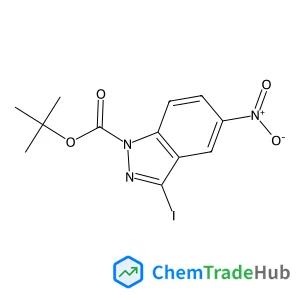
Tert-butyl 3-iodo-5-nitro-1H-indazole-1-carboxylate
CAS Number:
459133-69-8
Molecular Formula:
C12H12IN3O4
Recommended Suppliers






Disclaimer
This page provides academic journal information for reference and research purposes only. We are not affiliated with any journal publishers and do not handle publication submissions. For publication-related inquiries, please contact the respective journal publishers directly.
If you notice any inaccuracies in the information displayed, please contact us at support@chemtradehub.com. We will promptly review and address your concerns.