












Sub-μL measurements of the thermal conductivity and heat capacity of liquids
Literature Information
Publication Date
2018-02-08
DOI
10.1039/C8CP00165K
Impact Factor
3.676
Authors
C. López-Bueno, D. Bugallo, V. Leborán, F. Rivadulla
View Original
Abstract
We present the analysis of the thermal conductivity, κ, and heat capacity, Cp, of a wide variety of liquids, covering organic molecular solvents, ionic liquids and water–polymer mixtures. These data were obtained from ≈0.6 μL samples, using an experimental development based on the 3ω method, capable of the simultaneous measurement of κ and Cp. In spite of the different type and strength of interactions, expected in a priori so different systems, the ratio of κ to the sound velocity is approximately constant for all of them. This is the consequence of a similar atomic density for all these liquids, notwithstanding their different molecular structures. This was corroborated experimentally by the observation of a Cp/V ≈ 1.89 × 10⁶ J K−1 m−3 (≈3R/2 per atom), for all liquids studied in this work. Finally, the very small volume of the sample required in this experimental method is an important advantage for the characterization of systems like nanofluids, in which having a large amount of the dispersed phase is sometimes extremely challenging.
Related Literature
In situ trapping of bismuthine in externally heated quartz tube atomizers for atomic absorption spectrometry
Jan Kratzer, Jiří Dědina
2005-12-08
Technical Note
DOI: 10.1039/B513924D
Thermal decarboxylation for the generation of hierarchical porosity in isostructural metal–organic frameworks containing open metal sites
Zhifeng Xiao, Shaik Waseem Vali, Wenmiao Chen, Qi Wang, Yutao Huang, Tian-Hao Yan, Jason E. Kuszynski, Paul A. Lindahl, Matthew R. Ryder
2021-07-14
Paper
DOI: 10.1039/D1MA00163A
Design of ternary Pt–CoZn alloy catalysts coated with N-doped carbon towards acidic oxygen reduction
Xieweiyi Ye, Yakun Xue, Kaijia Li, Wen Tang, Xiao Han, Xibo Zhang, Zhijia Song, Zhiping Zheng, Qin Kuang
2021-07-12
Paper
DOI: 10.1039/D1MA00475A
Retracted article: Hydrophilic hybrid materials with magnetism & NIR fluorescence via surface-initiated RAFT polymerization
Weiwei He, Lifen Zhang, Bing Han, Liang Cheng, Nianchen Zhou, Zhuang Liu, Zhenping Cheng
2013-05-24
Paper
DOI: 10.1039/C3TB20262C
Organic/inorganic hybrid mesoporous silica membrane rapidly synthesized by a microwave-assisted method and its application in enzyme adsorption and electrocatalysis
Shujuan Bian, Kui Gao, Huijie Shen, Xuheng Jiang, Yafeng Long, Yong Chen
2013-05-07
Paper
DOI: 10.1039/C3TB20169D
History and recent developments in divergent electrolytes towards high-efficiency lithium–sulfur batteries – a review
Srikanth Ponnada, Maryam Sadat Kiai, Demudu Babu Gorle, Annapurna Nowduri
2021-06-16
Review Article
DOI: 10.1039/D1MA00332A
A one-step and biocompatible cellulose functionalization for covalent antibody immobilization on immunoassay membranes
Hervé Volland, Julie Dano, Thomas Berthelot
2013-05-01
Paper
DOI: 10.1039/C3TB20380H
You might also like
Compound Q&A
What precautions should be taken when handling 4-Methyl-6-(trifluoromethyl)quinoline (CAS: 40716-16-3)?
When handling 4-Methyl-6-(trifluoromethyl)quinoline (CAS: 40716-16-3), safety go...
40716-16-34-Methyl-6-(trifluor...
Compound Q&A
What is 4-(3,5-Difluorophenyl)aniline (CAS: 405058-00-6)?
4-(3,5-Difluorophenyl)aniline is an aromatic organic compound with the CAS numbe...
405058-00-64-(3,5-Difluoropheny...
Compound Q&A
How is 5-{[4-(Trifluoromethyl)phenyl]sulfanyl}-1,2,3-thiadiazole-4-carboxylic acid (CAS: 338982-07-3) typically synthesized?
5-{[4-(Trifluoromethyl)phenyl]sulfanyl}-1,2,3-thiadiazole-4-carboxylic acid can ...
338982-07-35-{[4-(Trifluorometh...
Compound Q&A
What is the market or research trend for 4-Benzylaniline hydrochloride (CAS: 6317-57-3)?
The market for 4-Benzylaniline hydrochloride (CAS: 6317-57-3) is steadily growin...
6317-57-34-Benzylaniline hydr...
Compound Q&A
Is [3-(Diethylsulfamoyl)phenyl]boronic acid (CAS: 871329-58-7) safe?
[3-(Diethylsulfamoyl)phenyl]boronic acid is generally considered safe when handl...
871329-58-7[3-(Diethylsulfamoyl...
Compound Q&A
What are the main uses of 3-Bromo-2,5-dimethoxyaniline (CAS: 115929-62-9)?
3-Bromo-2,5-dimethoxyaniline is mainly used in the pharmaceutical and chemical i...
115929-62-93-Bromo-2,5-dimethox...
Compound Q&A
What regulatory guidelines apply to N-Methyl-1-(5-methyl-1H-indol-3-yl)methanamine (CAS: 915922-67-7)?
N-Methyl-1-(5-methyl-1H-indol-3-yl)methanamine (CAS: 915922-67-7) is subject to ...
915922-67-7N-Methyl-1-(5-methyl...
Compound Q&A
What industries use Carbamic acid, N-[(5S)-5,6-diamino-6-oxohexyl]-, 1,1-dimethylethyl ester (CAS: 24828-96-4)?
This compound is primarily used in the pharmaceutical industry for the synthesis...
24828-96-4Carbamic acid, N-[(5...
Compound Q&A
How should 2-Methyl-2-propanyl [(1S,3R)-3-aminocyclohexyl]carbamate (CAS: 1298101-47-9) be stored?
2-Methyl-2-propanyl [(1S,3R)-3-aminocyclohexyl]carbamate (CAS: 1298101-47-9) sho...
1298101-47-92-Methyl-2-propanyl ...
Compound Q&A
What industries use Ethyl 2-bromo-4,4,4-trifluorobutanoate (CAS: 367-33-9)?
Ethyl 2-bromo-4,4,4-trifluorobutanoate (CAS: 367-33-9) is utilized in the pharma...
367-33-9Ethyl 2-bromo-4,4,4-...
Source Journal
Physical Chemistry Chemical Physics

CiteScore:
5.5
Self-citation Rate:
10.3%
Articles per Year:
3036
Physical Chemistry Chemical Physics (PCCP) is an international journal co-owned by 19 physical chemistry and physics societies from around the world. This journal publishes original, cutting-edge research in physical chemistry, chemical physics and biophysical chemistry. To be suitable for publication in PCCP, articles must include significant innovation and/or insight into physical chemistry; this is the most important criterion that reviewers and Editors will judge against when evaluating submissions. The journal has a broad scope and welcomes contributions spanning experiment, theory, computation and data science. Topical coverage includes spectroscopy, dynamics, kinetics, statistical mechanics, thermodynamics, electrochemistry, catalysis, surface science, quantum mechanics, quantum computing and machine learning. Interdisciplinary research areas such as polymers and soft matter, materials, nanoscience, energy, surfaces/interfaces, and biophysical chemistry are welcomed if they demonstrate significant innovation and/or insight into physical chemistry. Joined experimental/theoretical studies are particularly appreciated when complementary and based on up-to-date approaches.
Recommended Compounds
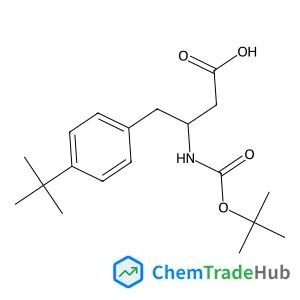
(S)-3-((tert-Butoxycarbonyl)amino)-4-(4-(tert-butyl)phenyl)butanoic acid
CAS Number:
403661-85-8
Molecular Formula:
C19H29NO4
Recommended Suppliers




Disclaimer
This page provides academic journal information for reference and research purposes only. We are not affiliated with any journal publishers and do not handle publication submissions. For publication-related inquiries, please contact the respective journal publishers directly.
If you notice any inaccuracies in the information displayed, please contact us at support@chemtradehub.com. We will promptly review and address your concerns.