












Distinct Young's modulus of nanostructured materials in comparison with nanocrystals
Literature Information
Publication Date
2011-10-31
DOI
10.1039/C1CP22748C
Impact Factor
3.676
Authors
Y. F. Zhu, W. T. Zheng, Q. Jiang
View Original
Abstract
Young's modulus (Y) of nanostructured materials (NSs) free of porosity is modeled with regard to the coordination number imperfection at grain boundaries. In light of it, Y of NSs is suppressed substantially in the whole solid temperature range, differing from the case of nanocrystals (NCs) where Y is enhanced at lower temperature (T) but weakened at higher T. It is found that, similar to NCs, the thermally-driven decline associated with the melting point depression plays an increasing role in suppressing Y of NSs on raising T. On the other hand, the lattice expansion and the bond weakening lead to a further suppression in Y of NSs independent of T, while the lattice contraction and the reinforced bonding strength result in an enhancement in Y of NCs, which should be responsible for the distinction in Y between NSs and NCs. The established functions were supported by available experimental and computer simulation results.
Related Literature
The role of ceria/precious metal interfaces in catalysis
Michele Melchionna
2023-11-29
Perspective
DOI: 10.1039/D3LF00202K
New sources of genipin-rich substances for crosslinking future manufactured bio-based materials
Maryam Nejati, Yuan Fang, Boyang Guo, Amparo Jiménez-Quero, Antonio J. Capezza, Marcos A. Sabino
2023-11-09
Paper
DOI: 10.1039/D3SU00303E
Effects of different microwave power on the drying kinetics and physicochemical quality of brown shrimp (Metapenaeus dobsoni)
Sumit Kumar Verma, Remya Sasikala, Pankaj Kishore, C. O. Mohan, P. Ganesan, Pandurengan Padmavathy, Nagarajan Muralidharan, Bindu Jaganath, Soottawat Benjakul
2023-10-17
Paper
DOI: 10.1039/D3FB00144J
The critical role of H2 reduction roasting for enhancing the recycling of spent Li-ion battery cathodes in the subsequent neutral water electrolysis
Jiayin Zhou, Jihong Ni, Xiaofei Guan
2023-09-26
Paper
DOI: 10.1039/D3SU00201B
Comparative study of different particle sizes of added olive leaves for the content of target polyphenols in virgin olive oil
2023-09-25
Paper
DOI: 10.1039/D3FB00108C
Food waste: environmental impact and possible solutions
Ravindra Prajapati, Raj Shah, Mrinaleni Das, Brajendra K. Sharma
2023-12-05
Review Article
DOI: 10.1039/D3FB00141E
Development of strong and high-barrier food packaging films from cyclic-anhydride modified bacterial cellulose
Zhuolun Jiang, Ka Man Cheung, To Ngai
2023-10-23
Paper
DOI: 10.1039/D3SU00219E
Alkali and alkaline earth metals in liquid salts for supercapatteries
Peiying Fan, Yuhan Zhang, Li Guan, Han Wang, George Zheng Chen
2023-11-29
Tutorial Review
DOI: 10.1039/D3SU00197K
Highly efficient oil-fouling and foam removal achieved by surfactant mixed systems
Jiling Yue
2023-09-28
Paper
DOI: 10.1039/D3LF00145H
You might also like
Compound Q&A
What industries use (1R,3S)-1,3-Cyclopentanediol (CAS: 16326-97-9)?
(1R,3S)-1,3-Cyclopentanediol finds applications in various industries. In the ph...
16326-97-9(1R,3S)-1,3-Cyclopen...
Compound Q&A
What precautions should be taken when handling N'-[4-(Dimethylamino)phenyl]-N,N-dimethyl-1,4-benzenediamine (CAS: 637-31-0)?
When handling N'-[4-(Dimethylamino)phenyl]-N,N-dimethyl-1,4-benzenediamine, it i...
637-31-0N'-[4-(Dimethylamino...
Compound Q&A
Are there alternatives to 5-(2,4-Difluorophenyl)-2-methoxypyrimidine (CAS: 1352318-16-1) in synthesis?
There are several alternatives to 5-(2,4-Difluorophenyl)-2-methoxypyrimidine in ...
1352318-16-15-(2,4-Difluoropheny...
Compound Q&A
What regulatory guidelines apply to 1-(3-Methoxyphenoxy)propan-2-ol (CAS: 382141-68-6)?
1-(3-Methoxyphenoxy)propan-2-ol (CAS: 382141-68-6) must comply with the Globally...
382141-68-61-(3-Methoxyphenoxy)...
Compound Q&A
Is Tetrodotoxin Citrate (CAS: 18660-81-6) safe?
Tetrodotoxin Citrate is extremely dangerous and should be handled with extreme c...
18660-81-6Tetrodotoxin Citrate
Compound Q&A
What are the main uses of 2-Methyl-2-propanyl [(1R,3S)-3-hydroxycyclopentyl]carbamate (CAS: 225641-84-9)?
2-Methyl-2-propanyl [(1R,3S)-3-hydroxycyclopentyl]carbamate (CAS: 225641-84-9) i...
225641-84-92-Methyl-2-propanyl ...
Compound Q&A
How should waste containing 4-(2-Hydroxyhexafluoroisopropyl)Benzoic Acid (CAS: 16261-80-6) be handled?
Waste containing 4-(2-Hydroxyhexafluoroisopropyl)Benzoic Acid (CAS: 16261-80-6) ...
16261-80-64-(2-Hydroxyhexafluo...
Compound Q&A
How is 2-Methyl-2-proanyl {(2S)-1-[(benzyloxy)amino]-3-hydroxy-3-methyl-1-oxo-2-butanyl}carbamate (CAS: 102507-19-7) typically synthesized?
2-Methyl-2-proanyl {(2S)-1-[(benzyloxy)amino]-3-hydroxy-3-methyl-1-oxo-2-butanyl...
102507-19-72-Methyl-2-propanyl ...
Compound Q&A
What is Benzeneethanamine, α-ethyl-, hydrochloride (1:1) (CAS: 20735-15-3)?
Benzeneethanamine, α-ethyl-, hydrochloride (1:1) is an organic compound with the...
20735-15-3Benzeneethanamine, α...
Compound Q&A
Are there alternatives to 3-{(E)-[4-(Dimethylamino)phenyl]diazenyl}benzoic acid (CAS: 20691-84-3) in synthesis?
In the synthesis of compounds similar to 3-{(E)-[4-(Dimethylamino)phenyl]diazeny...
20691-84-33-{(E)-[4-(Dimethyla...
Source Journal
Physical Chemistry Chemical Physics

CiteScore:
5.5
Self-citation Rate:
10.3%
Articles per Year:
3036
Physical Chemistry Chemical Physics (PCCP) is an international journal co-owned by 19 physical chemistry and physics societies from around the world. This journal publishes original, cutting-edge research in physical chemistry, chemical physics and biophysical chemistry. To be suitable for publication in PCCP, articles must include significant innovation and/or insight into physical chemistry; this is the most important criterion that reviewers and Editors will judge against when evaluating submissions. The journal has a broad scope and welcomes contributions spanning experiment, theory, computation and data science. Topical coverage includes spectroscopy, dynamics, kinetics, statistical mechanics, thermodynamics, electrochemistry, catalysis, surface science, quantum mechanics, quantum computing and machine learning. Interdisciplinary research areas such as polymers and soft matter, materials, nanoscience, energy, surfaces/interfaces, and biophysical chemistry are welcomed if they demonstrate significant innovation and/or insight into physical chemistry. Joined experimental/theoretical studies are particularly appreciated when complementary and based on up-to-date approaches.
Recommended Compounds
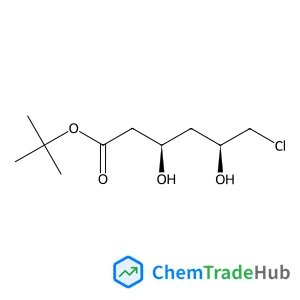
2-Methyl-2-propanyl (3R,5S)-6-chloro-3,5-dihydroxyhexanoate
CAS Number:
154026-93-4
Molecular Formula:
C10H19ClO4
Recommended Suppliers



Disclaimer
This page provides academic journal information for reference and research purposes only. We are not affiliated with any journal publishers and do not handle publication submissions. For publication-related inquiries, please contact the respective journal publishers directly.
If you notice any inaccuracies in the information displayed, please contact us at support@chemtradehub.com. We will promptly review and address your concerns.