












The specific vibrational modes of GTP in solution and bound to Ras: a detailed theoretical analysis by QM/MM simulations
Literature Information
Publication Date
2011-11-02
DOI
10.1039/C1CP22741F
Impact Factor
3.676
Authors
Fei Xia, Till Rudack, Carsten Kötting, Jürgen Schlitter
View Original
Abstract
The hydrolysis of guanosine triphosphate (GTP) in general, and especially by GTPases like the Ras protein, is in the focus of biological investigations. A huge amount of experimental data from Fourier-transformed infrared studies is currently available, and many vibrational bands of free GTP, GTP·Mg2+, and Ras·GTP·Mg2+ in solution have been assigned by isotopic labeling. In the Ras environment, bands between 800 cm−1 and 1300 cm−1 have already been assigned, but not those below 800 cm−1. The combination of quantum and molecular mechanics (QM/MM) methods takes the quantum effects for selected relevant atoms into account. This provides structural details, vibrational frequencies and electron distributions of the region of interest. We therefore used MM and QM/MM simulations to investigate the normal vibrational modes of GTP, GTP·Mg2+, and Ras·GTP·Mg2+ in solution, and assigned the vibrational frequencies for each normal vibration mode. In this study, the quantum box contains the nucleoside and the Mg2+. The comparison of calculated and experimental vibrational spectra provides a very good control for the quality of the calculations. Structurally, MM and QM/MM simulations reveal a stable tridentate coordination of the Mg2+ by GTP in water, and a stable bidentate coordination by GTP in complex with Ras. For validation, we compare the calculated frequencies and isotopic shifts with the experimental results available in the range of 800 cm−1 to 1300 cm−1. For the first time we suggest band assignments of the vibrational modes below 800 cm−1 by comparison of calculated and experimental spectra.
Recommended Journals
Related Literature
A mechanistic study on the regioselective Ni-catalyzed methylation–alkenylation of alkyne with AlMe3 and allylic alcohol
Jiao Liu, Deguang Liu, Wan Nie, Haizhu Yu, Jing Shi
2021-11-17
Research Article
DOI: 10.1039/D1QO01580J
Intramolecularly enhanced molecular tweezers with unusually strong binding for aromatic guests in unfavorable solvents
Xiaoyu Xing, Yan Zhao
2018-05-07
Communication
DOI: 10.1039/C8OB00786A
Thermally-induced intramolecular [2 + 2] cycloaddition of acrylamide-tethered alkylidenecyclopropanes
Xiao-Yu Zhang, Song Yang, Yin Wei
2018-08-22
Communication
DOI: 10.1039/C8OB01765D
Tetra-substituted furans by a gold-catalysed tandem C(sp3)–H alkynylation/oxy-alkynylation reaction
Chunyu Han, Xianhai Tian, Lina Song, Yaowen Liu
2021-10-05
Research Article
DOI: 10.1039/D1QO01401C
Chelation-assisted C–N cross-coupling of phosphinamides and aryl boronic acids with copper powder at room temperature
Yao Peng, Jian Lei, Renhua Qiu, Lingteng Peng, Chak-Tong Au, Shuang-Feng Yin
2018-05-10
Communication
DOI: 10.1039/C8OB00907D
Palladium-catalyzed direct construction of oxazoline-containing polycyclic scaffolds via tandem addition/cyclization of nitriles and arylboronic acids
Shu-Qiang Cui, Na Cheng, Qian-Qian Ma, Zhong-Lin Wei
2021-11-15
Research Article
DOI: 10.1039/D1QO01260F
Preparation of π-extended fullerene derivatives through addition of phenylenediamine to open-cage fullerene derivatives
Zeyu Liu, Zhen Liu, Rui Gao, Jie Su, Yi Qiu, Liangbing Gan
2021-11-18
Research Article
DOI: 10.1039/D1QO01593A
Radical alkylation of para-quinone methides with 4-substituted Hantzsch esters/nitriles via organic photoredox catalysis
Qing-Yan Wu, Qing-Qiang Min, Gui-Zhen Ao
2018-08-20
Communication
DOI: 10.1039/C8OB01641K
You might also like
Compound Q&A
What industries use (1R,3S)-1,3-Cyclopentanediol (CAS: 16326-97-9)?
(1R,3S)-1,3-Cyclopentanediol finds applications in various industries. In the ph...
16326-97-9(1R,3S)-1,3-Cyclopen...
Compound Q&A
What precautions should be taken when handling N'-[4-(Dimethylamino)phenyl]-N,N-dimethyl-1,4-benzenediamine (CAS: 637-31-0)?
When handling N'-[4-(Dimethylamino)phenyl]-N,N-dimethyl-1,4-benzenediamine, it i...
637-31-0N'-[4-(Dimethylamino...
Compound Q&A
Are there alternatives to 5-(2,4-Difluorophenyl)-2-methoxypyrimidine (CAS: 1352318-16-1) in synthesis?
There are several alternatives to 5-(2,4-Difluorophenyl)-2-methoxypyrimidine in ...
1352318-16-15-(2,4-Difluoropheny...
Compound Q&A
What regulatory guidelines apply to 1-(3-Methoxyphenoxy)propan-2-ol (CAS: 382141-68-6)?
1-(3-Methoxyphenoxy)propan-2-ol (CAS: 382141-68-6) must comply with the Globally...
382141-68-61-(3-Methoxyphenoxy)...
Compound Q&A
Is Tetrodotoxin Citrate (CAS: 18660-81-6) safe?
Tetrodotoxin Citrate is extremely dangerous and should be handled with extreme c...
18660-81-6Tetrodotoxin Citrate
Compound Q&A
What are the main uses of 2-Methyl-2-propanyl [(1R,3S)-3-hydroxycyclopentyl]carbamate (CAS: 225641-84-9)?
2-Methyl-2-propanyl [(1R,3S)-3-hydroxycyclopentyl]carbamate (CAS: 225641-84-9) i...
225641-84-92-Methyl-2-propanyl ...
Compound Q&A
How should waste containing 4-(2-Hydroxyhexafluoroisopropyl)Benzoic Acid (CAS: 16261-80-6) be handled?
Waste containing 4-(2-Hydroxyhexafluoroisopropyl)Benzoic Acid (CAS: 16261-80-6) ...
16261-80-64-(2-Hydroxyhexafluo...
Compound Q&A
How is 2-Methyl-2-proanyl {(2S)-1-[(benzyloxy)amino]-3-hydroxy-3-methyl-1-oxo-2-butanyl}carbamate (CAS: 102507-19-7) typically synthesized?
2-Methyl-2-proanyl {(2S)-1-[(benzyloxy)amino]-3-hydroxy-3-methyl-1-oxo-2-butanyl...
102507-19-72-Methyl-2-propanyl ...
Compound Q&A
What is Benzeneethanamine, α-ethyl-, hydrochloride (1:1) (CAS: 20735-15-3)?
Benzeneethanamine, α-ethyl-, hydrochloride (1:1) is an organic compound with the...
20735-15-3Benzeneethanamine, α...
Compound Q&A
Are there alternatives to 3-{(E)-[4-(Dimethylamino)phenyl]diazenyl}benzoic acid (CAS: 20691-84-3) in synthesis?
In the synthesis of compounds similar to 3-{(E)-[4-(Dimethylamino)phenyl]diazeny...
20691-84-33-{(E)-[4-(Dimethyla...
Source Journal
Physical Chemistry Chemical Physics

CiteScore:
5.5
Self-citation Rate:
10.3%
Articles per Year:
3036
Physical Chemistry Chemical Physics (PCCP) is an international journal co-owned by 19 physical chemistry and physics societies from around the world. This journal publishes original, cutting-edge research in physical chemistry, chemical physics and biophysical chemistry. To be suitable for publication in PCCP, articles must include significant innovation and/or insight into physical chemistry; this is the most important criterion that reviewers and Editors will judge against when evaluating submissions. The journal has a broad scope and welcomes contributions spanning experiment, theory, computation and data science. Topical coverage includes spectroscopy, dynamics, kinetics, statistical mechanics, thermodynamics, electrochemistry, catalysis, surface science, quantum mechanics, quantum computing and machine learning. Interdisciplinary research areas such as polymers and soft matter, materials, nanoscience, energy, surfaces/interfaces, and biophysical chemistry are welcomed if they demonstrate significant innovation and/or insight into physical chemistry. Joined experimental/theoretical studies are particularly appreciated when complementary and based on up-to-date approaches.
Recommended Compounds

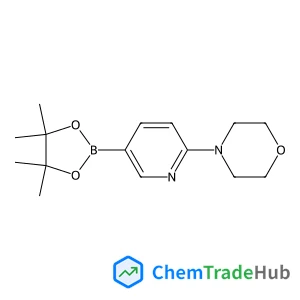
4-(5-(4,4,5,5-tetramethyl-1,3,2-dioxaborolan-2-yl)pyridin-2-yl)morpholine
CAS Number:
485799-04-0
Molecular Formula:
C15H23BN2O3

Recommended Suppliers






Disclaimer
This page provides academic journal information for reference and research purposes only. We are not affiliated with any journal publishers and do not handle publication submissions. For publication-related inquiries, please contact the respective journal publishers directly.
If you notice any inaccuracies in the information displayed, please contact us at support@chemtradehub.com. We will promptly review and address your concerns.