












Significant changes of the charge distribution at the surface of an ionic liquid due to the presence of small amounts of water
Literature Information
Publication Date
2011-10-26
DOI
10.1039/C1CP22551K
Impact Factor
3.676
Authors
Christiaan Ridings, Gunther Andersson
View Original
Abstract
The influence of small amounts of water dissolved in 1-hexyl-3-methylimidazolium chloride ([C6mim][Cl]) on the composition of the surface of the ionic liquid is investigated with the depth profiling technique neutral impact collision ion scattering spectroscopy. The concentration depth profiles of the elements in the sample were determined at three different water concentrations and show that small amounts of water affect the charge distribution in the ionic liquid along the surface normal. At low water concentrations (2500 ppm) the cation shows a strong presence at the surface with the alkyl chains oriented towards the gas phase, followed by a layer of anions below the alkyl chains of the cation. At higher water content (6000 to 10 000 ppm) the chloride anion shows an increased concentration at the ionic liquid surface while the alkyl chains move towards the bulk showing that the surface charge becomes more negative with increasing water content. The effect is attributed to the influence of water on the hydrogen bonding network in the ionic liquid.
Recommended Journals
Related Literature
From imines to amides via NHC-mediated oxidation
Shaofa Sun, Donghui Guo, Fangyi Li
2021-11-30
Research Article
DOI: 10.1039/D1QO01661J
Synthesis of topologically constrained naphthalimide appended palladium(ii)–N-heterocyclic carbene complexes – insights into additive controlled product selectivity
Pradeep Kumar Reddy Panyam, Ramdas Sreedharan, Thirumanavelan Gandhi
2018-05-23
Paper
DOI: 10.1039/C8OB00616D
Elucidating the selectivity of dyotropic rearrangements of β-lactones: a computational survey
Jingyang Zhang, Yumiao Ma, Ke Qiu, Bo Li, Zhengwen Xue, Boxue Tian, Yefeng Tang
2021-11-25
Research Article
DOI: 10.1039/D1QO01591E
Gold self-relay catalysis for accessing functionalized cyclopentenones bearing an all-carbon quaternary stereocenter
Fan-Tao Meng, Jing-Long Chen, Xiao-Yan Qin, Tian-Shu Zhang, Shu-Jiang Tu, Bo Jiang, Wen-Juan Hao
2021-11-18
Research Article
DOI: 10.1039/D1QO01313K
Synthesis of functionalized diarylbenzofurans via Ru-catalyzed C–H activation and cyclization under air: rapid access to the polycyclic scaffold of diptoindonesin G
Lufeng Ouyang, Zhigeng Lin, Shiqi Li, Baoyin Chen, Jidan Liu, Wen-Jing Shi, Liyao Zheng
2021-11-04
Research Article
DOI: 10.1039/D1QO01242H
Figure-eight arylene ethynylene macrocycles: facile synthesis and specific binding behavior toward Hg2+
Hui Nie, Qian-Hui Li, Siqi Zhang, Chuan-Ming Wang, Wen-Hui Lin, Ke Deng, Li-Jin Shu, Qing-Dao Zeng, Jun-Hua Wan
2021-09-29
Research Article
DOI: 10.1039/D1QO00812A
Electrophilic N-trifluoromethylthiophthalimide as a fluorinated reagent in the synthesis of acyl fluorides
Chen Zhu, Serik Zhumagazy, Huifeng Yue, Magnus Rueping
2021-11-25
Research Article
DOI: 10.1039/D1QO01633D
Regioselective ortho-functionalization of bromofluorenecarbaldehydes using TMPMgCl·LiCl
Dominik Göbel, Nils Clamor, Boris J. Nachtsheim
2018-05-15
Communication
DOI: 10.1039/C8OB01072B
Decarbonylative Sonogashira cross-coupling: a fruitful marriage of alkynes with carboxylic acid electrophiles
Michal Szostak
2021-11-19
Highlight
DOI: 10.1039/D1QO01539G
O-Phenylenediamine: a privileged pharmacophore of ferrostatins for radical-trapping reactivity in blocking ferroptosis
Xie-Huang Sheng, Cheng-Cheng Cui, Chao Shan, Yu-Zhen Li, Duo-Hong Sheng, Bin Sun, De-Zhan Chen
2018-05-03
Paper
DOI: 10.1039/C8OB00546J
You might also like
Compound Q&A
What industries use (1R,3S)-1,3-Cyclopentanediol (CAS: 16326-97-9)?
(1R,3S)-1,3-Cyclopentanediol finds applications in various industries. In the ph...
16326-97-9(1R,3S)-1,3-Cyclopen...
Compound Q&A
What precautions should be taken when handling N'-[4-(Dimethylamino)phenyl]-N,N-dimethyl-1,4-benzenediamine (CAS: 637-31-0)?
When handling N'-[4-(Dimethylamino)phenyl]-N,N-dimethyl-1,4-benzenediamine, it i...
637-31-0N'-[4-(Dimethylamino...
Compound Q&A
Are there alternatives to 5-(2,4-Difluorophenyl)-2-methoxypyrimidine (CAS: 1352318-16-1) in synthesis?
There are several alternatives to 5-(2,4-Difluorophenyl)-2-methoxypyrimidine in ...
1352318-16-15-(2,4-Difluoropheny...
Compound Q&A
What regulatory guidelines apply to 1-(3-Methoxyphenoxy)propan-2-ol (CAS: 382141-68-6)?
1-(3-Methoxyphenoxy)propan-2-ol (CAS: 382141-68-6) must comply with the Globally...
382141-68-61-(3-Methoxyphenoxy)...
Compound Q&A
Is Tetrodotoxin Citrate (CAS: 18660-81-6) safe?
Tetrodotoxin Citrate is extremely dangerous and should be handled with extreme c...
18660-81-6Tetrodotoxin Citrate
Compound Q&A
What are the main uses of 2-Methyl-2-propanyl [(1R,3S)-3-hydroxycyclopentyl]carbamate (CAS: 225641-84-9)?
2-Methyl-2-propanyl [(1R,3S)-3-hydroxycyclopentyl]carbamate (CAS: 225641-84-9) i...
225641-84-92-Methyl-2-propanyl ...
Compound Q&A
How should waste containing 4-(2-Hydroxyhexafluoroisopropyl)Benzoic Acid (CAS: 16261-80-6) be handled?
Waste containing 4-(2-Hydroxyhexafluoroisopropyl)Benzoic Acid (CAS: 16261-80-6) ...
16261-80-64-(2-Hydroxyhexafluo...
Compound Q&A
How is 2-Methyl-2-proanyl {(2S)-1-[(benzyloxy)amino]-3-hydroxy-3-methyl-1-oxo-2-butanyl}carbamate (CAS: 102507-19-7) typically synthesized?
2-Methyl-2-proanyl {(2S)-1-[(benzyloxy)amino]-3-hydroxy-3-methyl-1-oxo-2-butanyl...
102507-19-72-Methyl-2-propanyl ...
Compound Q&A
What is Benzeneethanamine, α-ethyl-, hydrochloride (1:1) (CAS: 20735-15-3)?
Benzeneethanamine, α-ethyl-, hydrochloride (1:1) is an organic compound with the...
20735-15-3Benzeneethanamine, α...
Compound Q&A
Are there alternatives to 3-{(E)-[4-(Dimethylamino)phenyl]diazenyl}benzoic acid (CAS: 20691-84-3) in synthesis?
In the synthesis of compounds similar to 3-{(E)-[4-(Dimethylamino)phenyl]diazeny...
20691-84-33-{(E)-[4-(Dimethyla...
Source Journal
Physical Chemistry Chemical Physics

CiteScore:
5.5
Self-citation Rate:
10.3%
Articles per Year:
3036
Physical Chemistry Chemical Physics (PCCP) is an international journal co-owned by 19 physical chemistry and physics societies from around the world. This journal publishes original, cutting-edge research in physical chemistry, chemical physics and biophysical chemistry. To be suitable for publication in PCCP, articles must include significant innovation and/or insight into physical chemistry; this is the most important criterion that reviewers and Editors will judge against when evaluating submissions. The journal has a broad scope and welcomes contributions spanning experiment, theory, computation and data science. Topical coverage includes spectroscopy, dynamics, kinetics, statistical mechanics, thermodynamics, electrochemistry, catalysis, surface science, quantum mechanics, quantum computing and machine learning. Interdisciplinary research areas such as polymers and soft matter, materials, nanoscience, energy, surfaces/interfaces, and biophysical chemistry are welcomed if they demonstrate significant innovation and/or insight into physical chemistry. Joined experimental/theoretical studies are particularly appreciated when complementary and based on up-to-date approaches.
Recommended Compounds
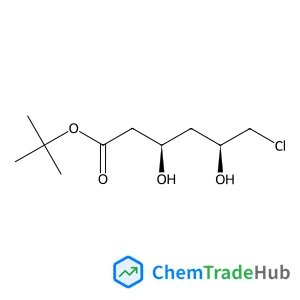
2-Methyl-2-propanyl (3R,5S)-6-chloro-3,5-dihydroxyhexanoate
CAS Number:
154026-93-4
Molecular Formula:
C10H19ClO4
Recommended Suppliers




Disclaimer
This page provides academic journal information for reference and research purposes only. We are not affiliated with any journal publishers and do not handle publication submissions. For publication-related inquiries, please contact the respective journal publishers directly.
If you notice any inaccuracies in the information displayed, please contact us at support@chemtradehub.com. We will promptly review and address your concerns.