













Chemical applications of neural networks: aromaticity of pyrimidine derivatives‡
Literature Information
Publication Date
2011-08-30
DOI
10.1039/C1CP22001B
Impact Factor
3.676
Authors
Mercedes Alonso, Carlos Miranda, Nazario Martín, Bernardo Herradón
View Original
Abstract
Neural networks are computational tools able to apprehend non-linear relationships between different parameters, having the capacity to order a large amount of input data and transform them into a graphical pattern of output data. We have previously reported their use for the quantification of the aromaticity through the Euclidean distance between neurons. In this article, we apply the method to a variety of pyrimidine derivatives with electron-donor and electron-withdrawing groups as substituents, with capacity to produce push–pull compounds. We have calculated the aromaticity of benzene (as a reference molecule), parent pyrimidine and other 11 pyrimidine derivatives having amino, dimethylamino and tricyanovinyl substitution. The neural network has been generated using ASE, Λ, NICSzz(1) and HOMA as aromaticity descriptors, since our previous work showed that the combination of these indices provided the best performance of the network. On studying the influence of the substituent on the aromaticity of the molecule, we have found that, opposite to benzene derivatives, all the substituents decrease the aromaticity of the ring. The interplay between aromaticity, planarity and push–pull properties of all the substituted pyrimidines has also been addressed. An interesting feature of the neural network to quantify aromaticity is that the importance of the reference reaction used to evaluate energy stabilization and magnetic susceptibility exaltation is minimized.
Related Literature
Rapid construction of the ABD tricyclic skeleton in meliacarpinin B from carvone enabled by an INOC strategy
Changming Dong, Tianjiao Qiao, Yi Xie, Xiao Zhang, Junli Ao, Guangxin Liang
2020-06-17
Research Article
DOI: 10.1039/D0QO00576B
Applications of N′-monofunctionalised TsDPEN derivatives in asymmetric catalysis
Jonathan Barrios-Rivera, Yingjian Xu, Martin Wills
2019-01-04
Review Article
DOI: 10.1039/C8OB02889C
Palladium-catalyzed enantioselective [5 + 4] annulation of ortho-quinone methides and vinylethylene carbonates
Chao Xia, Dong-Chao Wang, Gui-Rong Qu
2020-05-08
Research Article
DOI: 10.1039/D0QO00128G
Direct organocatalytic asymmetric Michael reaction of fluorine hemiaminal-type nucleophile to 4-nitro-5-styrylisoxazoles
Luyao Li, Bo Zhu, Huihui Fan, Zhiyong Jiang, Junbiao Chang
2020-04-17
Research Article
DOI: 10.1039/D0QO00348D
Insights into Lewis base-catalyzed chemoselective [3 + 2] and [3 + 4] annulation reactions of MBH carbonates
Qianqian Deng, Shi-Jun Li, Donghui Wei
2020-06-04
Research Article
DOI: 10.1039/D0QO00457J
One-pot stapling of interchain disulfides of antibodies using an isobutylene motif
Shuang Sun, Padma Akkapeddi, Nuria Martínez-Sáez, Vukosava M. Torres, Carlos Cordeiro, Omar Boutureira
2018-12-10
Paper
DOI: 10.1039/C8OB02877J
Imidazole carbamate probes for affinity guided azide-transfer to metal-binding proteins
Johan Palmfeldt
2019-01-16
Communication
DOI: 10.1039/C8OB03017K
Functional characterization of the halogenase SpmH and discovery of new deschloro-tryptophan dimers
Zhiwen Liu, Liang Ma, Liping Zhang, Wenjun Zhang, Yiguang Zhu, Yuchan Chen, Weimin Zhang, Changsheng Zhang
2018-12-06
Communication
DOI: 10.1039/C8OB02775G
The interplay of conformations and electronic properties in N-aryl phenothiazines
Laura Mayer, Lars May, Thomas J. J. Müller
2020-03-11
Research Article
DOI: 10.1039/D0QO00182A
You might also like
Compound Q&A
What industries use (1R,3S)-1,3-Cyclopentanediol (CAS: 16326-97-9)?
(1R,3S)-1,3-Cyclopentanediol finds applications in various industries. In the ph...
16326-97-9(1R,3S)-1,3-Cyclopen...
Compound Q&A
What precautions should be taken when handling N'-[4-(Dimethylamino)phenyl]-N,N-dimethyl-1,4-benzenediamine (CAS: 637-31-0)?
When handling N'-[4-(Dimethylamino)phenyl]-N,N-dimethyl-1,4-benzenediamine, it i...
637-31-0N'-[4-(Dimethylamino...
Compound Q&A
Are there alternatives to 5-(2,4-Difluorophenyl)-2-methoxypyrimidine (CAS: 1352318-16-1) in synthesis?
There are several alternatives to 5-(2,4-Difluorophenyl)-2-methoxypyrimidine in ...
1352318-16-15-(2,4-Difluoropheny...
Compound Q&A
What regulatory guidelines apply to 1-(3-Methoxyphenoxy)propan-2-ol (CAS: 382141-68-6)?
1-(3-Methoxyphenoxy)propan-2-ol (CAS: 382141-68-6) must comply with the Globally...
382141-68-61-(3-Methoxyphenoxy)...
Compound Q&A
Is Tetrodotoxin Citrate (CAS: 18660-81-6) safe?
Tetrodotoxin Citrate is extremely dangerous and should be handled with extreme c...
18660-81-6Tetrodotoxin Citrate
Compound Q&A
What are the main uses of 2-Methyl-2-propanyl [(1R,3S)-3-hydroxycyclopentyl]carbamate (CAS: 225641-84-9)?
2-Methyl-2-propanyl [(1R,3S)-3-hydroxycyclopentyl]carbamate (CAS: 225641-84-9) i...
225641-84-92-Methyl-2-propanyl ...
Compound Q&A
How should waste containing 4-(2-Hydroxyhexafluoroisopropyl)Benzoic Acid (CAS: 16261-80-6) be handled?
Waste containing 4-(2-Hydroxyhexafluoroisopropyl)Benzoic Acid (CAS: 16261-80-6) ...
16261-80-64-(2-Hydroxyhexafluo...
Compound Q&A
How is 2-Methyl-2-proanyl {(2S)-1-[(benzyloxy)amino]-3-hydroxy-3-methyl-1-oxo-2-butanyl}carbamate (CAS: 102507-19-7) typically synthesized?
2-Methyl-2-proanyl {(2S)-1-[(benzyloxy)amino]-3-hydroxy-3-methyl-1-oxo-2-butanyl...
102507-19-72-Methyl-2-propanyl ...
Compound Q&A
What is Benzeneethanamine, α-ethyl-, hydrochloride (1:1) (CAS: 20735-15-3)?
Benzeneethanamine, α-ethyl-, hydrochloride (1:1) is an organic compound with the...
20735-15-3Benzeneethanamine, α...
Compound Q&A
Are there alternatives to 3-{(E)-[4-(Dimethylamino)phenyl]diazenyl}benzoic acid (CAS: 20691-84-3) in synthesis?
In the synthesis of compounds similar to 3-{(E)-[4-(Dimethylamino)phenyl]diazeny...
20691-84-33-{(E)-[4-(Dimethyla...
Source Journal
Physical Chemistry Chemical Physics

CiteScore:
5.5
Self-citation Rate:
10.3%
Articles per Year:
3036
Physical Chemistry Chemical Physics (PCCP) is an international journal co-owned by 19 physical chemistry and physics societies from around the world. This journal publishes original, cutting-edge research in physical chemistry, chemical physics and biophysical chemistry. To be suitable for publication in PCCP, articles must include significant innovation and/or insight into physical chemistry; this is the most important criterion that reviewers and Editors will judge against when evaluating submissions. The journal has a broad scope and welcomes contributions spanning experiment, theory, computation and data science. Topical coverage includes spectroscopy, dynamics, kinetics, statistical mechanics, thermodynamics, electrochemistry, catalysis, surface science, quantum mechanics, quantum computing and machine learning. Interdisciplinary research areas such as polymers and soft matter, materials, nanoscience, energy, surfaces/interfaces, and biophysical chemistry are welcomed if they demonstrate significant innovation and/or insight into physical chemistry. Joined experimental/theoretical studies are particularly appreciated when complementary and based on up-to-date approaches.
Recommended Compounds
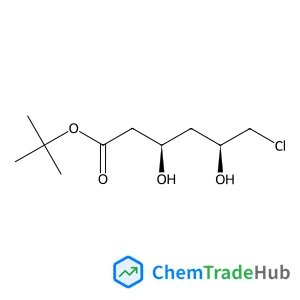
2-Methyl-2-propanyl (3R,5S)-6-chloro-3,5-dihydroxyhexanoate
CAS Number:
154026-93-4
Molecular Formula:
C10H19ClO4
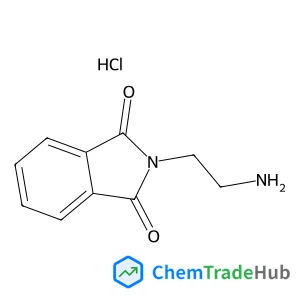
2-(2-Aminoethyl)-1H-isoindole-1,3(2H)-dione hydrochloride (1:1)
CAS Number:
30250-67-0
Molecular Formula:
C10H11ClN2O2
Recommended Suppliers






Disclaimer
This page provides academic journal information for reference and research purposes only. We are not affiliated with any journal publishers and do not handle publication submissions. For publication-related inquiries, please contact the respective journal publishers directly.
If you notice any inaccuracies in the information displayed, please contact us at support@chemtradehub.com. We will promptly review and address your concerns.