












Thermal dissociation of ethylene glycol vinyl ether
Literature Information
Publication Date
2011-10-24
DOI
10.1039/C1CP21073D
Impact Factor
3.676
Authors
Xueliang Yang, John H. Kiefer, Robert S. Tranter
View Original
Abstract
The pyrolysis of ethylene glycol vinyl ether (EGVE), an initial product of 1,4-dioxane dissociation, was examined in a diaphragmless shock tube (DFST) using laser schlieren densitometry (LS) at 57 ± 2 and 122 ± 3 Torr over 1200–1800 K. DFST/time-of-flight mass spectrometry experiments were also performed to identify reaction products. EGVE was found to dissociate via two channels: (1) a molecular H atom transfer/C–O scission to produce C2H3OH and CH3CHO, and (2) a radical channel involving C–O bond fission generating ˙CH2CH2OH and ˙CH2CHO radicals, with the second channel being strongly dominant over the entire experimental range. A reaction mechanism was constructed for the pyrolysis of EGVE which simulates the LS profiles very well over the full experimental range. The decomposition of EGVE is clearly well into the falloff region for these conditions, and a Gorin model RRKM fit was obtained for the dominant radical channel. The results are in good agreement with the experimental data and suggest the following rate coefficient expressions: k2,∞ = (6.71 ± 2.6) × 1027 × T−3.21exp(−35512/T) s−1; k2(120 Torr) = (1.23 ± 0.5) × 1092 × T−22.87exp(−48 248/T) s−1; k2(60 Torr) = (2.59 ± 1.0) × 1088 × T−21.96exp(−46283/T) s−1.
Related Literature
A convergent strategy towards febrifugine and related compounds
T. M. M. Maiden, N. Mbelesi, P. A. Procopiou, S. Swanson, J. P. A. Harrity
2018-05-15
Paper
DOI: 10.1039/C8OB00935J
Rh(iii)-Catalyzed tandem C(sp2)–H allylation/N-alkylation annulation of arene amides with 2-alkylidenetrimethylene carbonates
Hui Xie, Jin-Yi Liang, Zhuo-Jun Huang, Bing Shu, Yi-Chuan Zheng, Yan-Zhi Liu, Shao-Yong Chen, Xu-Ge Liu, Shang-Shi Zhang
2021-10-08
Research Article
DOI: 10.1039/D1QO01129D
Synthesis and biochemical evaluation of two novel N-hydroxyalkylated cyclosporin A analogs
Viktoria Kahlert, Oliver Ohlenschläger, Jelena Melesina, Christian Lücke
2018-05-24
Paper
DOI: 10.1039/C8OB00980E
Gold self-relay catalysis for accessing functionalized cyclopentenones bearing an all-carbon quaternary stereocenter
Fan-Tao Meng, Jing-Long Chen, Xiao-Yan Qin, Tian-Shu Zhang, Shu-Jiang Tu, Bo Jiang, Wen-Juan Hao
2021-11-18
Research Article
DOI: 10.1039/D1QO01313K
2-Pyridinylmethyl borrowing: base-promoted C-alkylation of (pyridin-2-yl)-methyl alcohols with ketones via cleavage of unstrained C(sp3)–C(sp3) bonds
Chuan-Ming Hong, Fei-Fei Zou, Xin Zhuang, Zhen Luo, Zheng-Qiang Liu, Li-Qing Ren, Qing-Hua Li, Tang-Lin Liu
2021-11-23
Research Article
DOI: 10.1039/D1QO01446C
Modular 2,3-diaryl-2H-azirine synthesis from ketoxime acetates via Cs2CO3-mediated cyclization
Wei Zhang, Xu-Cai Wang, Ying Zhang, De-Suo Yang, Zheng-Hui Guan
2018-05-22
Paper
DOI: 10.1039/C8OB00923F
Synthesis of topologically constrained naphthalimide appended palladium(ii)–N-heterocyclic carbene complexes – insights into additive controlled product selectivity
Pradeep Kumar Reddy Panyam, Ramdas Sreedharan, Thirumanavelan Gandhi
2018-05-23
Paper
DOI: 10.1039/C8OB00616D
Building of neomycin–nucleobase–amino acid conjugates for the inhibition of oncogenic miRNAs biogenesis
Duc Duy Vo, Cécile Becquart, Thi Phuong Anh Tran, Audrey Di Giorgio, Fabien Darfeuille, Cathy Staedel, Maria Duca
2018-08-13
Paper
DOI: 10.1039/C8OB01858H
You might also like
Compound Q&A
What industries use (1R,3S)-1,3-Cyclopentanediol (CAS: 16326-97-9)?
(1R,3S)-1,3-Cyclopentanediol finds applications in various industries. In the ph...
16326-97-9(1R,3S)-1,3-Cyclopen...
Compound Q&A
What precautions should be taken when handling N'-[4-(Dimethylamino)phenyl]-N,N-dimethyl-1,4-benzenediamine (CAS: 637-31-0)?
When handling N'-[4-(Dimethylamino)phenyl]-N,N-dimethyl-1,4-benzenediamine, it i...
637-31-0N'-[4-(Dimethylamino...
Compound Q&A
Are there alternatives to 5-(2,4-Difluorophenyl)-2-methoxypyrimidine (CAS: 1352318-16-1) in synthesis?
There are several alternatives to 5-(2,4-Difluorophenyl)-2-methoxypyrimidine in ...
1352318-16-15-(2,4-Difluoropheny...
Compound Q&A
What regulatory guidelines apply to 1-(3-Methoxyphenoxy)propan-2-ol (CAS: 382141-68-6)?
1-(3-Methoxyphenoxy)propan-2-ol (CAS: 382141-68-6) must comply with the Globally...
382141-68-61-(3-Methoxyphenoxy)...
Compound Q&A
Is Tetrodotoxin Citrate (CAS: 18660-81-6) safe?
Tetrodotoxin Citrate is extremely dangerous and should be handled with extreme c...
18660-81-6Tetrodotoxin Citrate
Compound Q&A
What are the main uses of 2-Methyl-2-propanyl [(1R,3S)-3-hydroxycyclopentyl]carbamate (CAS: 225641-84-9)?
2-Methyl-2-propanyl [(1R,3S)-3-hydroxycyclopentyl]carbamate (CAS: 225641-84-9) i...
225641-84-92-Methyl-2-propanyl ...
Compound Q&A
How should waste containing 4-(2-Hydroxyhexafluoroisopropyl)Benzoic Acid (CAS: 16261-80-6) be handled?
Waste containing 4-(2-Hydroxyhexafluoroisopropyl)Benzoic Acid (CAS: 16261-80-6) ...
16261-80-64-(2-Hydroxyhexafluo...
Compound Q&A
How is 2-Methyl-2-proanyl {(2S)-1-[(benzyloxy)amino]-3-hydroxy-3-methyl-1-oxo-2-butanyl}carbamate (CAS: 102507-19-7) typically synthesized?
2-Methyl-2-proanyl {(2S)-1-[(benzyloxy)amino]-3-hydroxy-3-methyl-1-oxo-2-butanyl...
102507-19-72-Methyl-2-propanyl ...
Compound Q&A
What is Benzeneethanamine, α-ethyl-, hydrochloride (1:1) (CAS: 20735-15-3)?
Benzeneethanamine, α-ethyl-, hydrochloride (1:1) is an organic compound with the...
20735-15-3Benzeneethanamine, α...
Compound Q&A
Are there alternatives to 3-{(E)-[4-(Dimethylamino)phenyl]diazenyl}benzoic acid (CAS: 20691-84-3) in synthesis?
In the synthesis of compounds similar to 3-{(E)-[4-(Dimethylamino)phenyl]diazeny...
20691-84-33-{(E)-[4-(Dimethyla...
Source Journal
Physical Chemistry Chemical Physics

CiteScore:
5.5
Self-citation Rate:
10.3%
Articles per Year:
3036
Physical Chemistry Chemical Physics (PCCP) is an international journal co-owned by 19 physical chemistry and physics societies from around the world. This journal publishes original, cutting-edge research in physical chemistry, chemical physics and biophysical chemistry. To be suitable for publication in PCCP, articles must include significant innovation and/or insight into physical chemistry; this is the most important criterion that reviewers and Editors will judge against when evaluating submissions. The journal has a broad scope and welcomes contributions spanning experiment, theory, computation and data science. Topical coverage includes spectroscopy, dynamics, kinetics, statistical mechanics, thermodynamics, electrochemistry, catalysis, surface science, quantum mechanics, quantum computing and machine learning. Interdisciplinary research areas such as polymers and soft matter, materials, nanoscience, energy, surfaces/interfaces, and biophysical chemistry are welcomed if they demonstrate significant innovation and/or insight into physical chemistry. Joined experimental/theoretical studies are particularly appreciated when complementary and based on up-to-date approaches.
Recommended Compounds
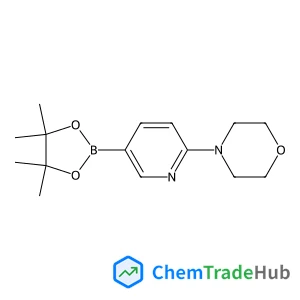
4-(5-(4,4,5,5-tetramethyl-1,3,2-dioxaborolan-2-yl)pyridin-2-yl)morpholine
CAS Number:
485799-04-0
Molecular Formula:
C15H23BN2O3
![N,N'-1,2-Ethanediylbis[2-(vinylsulfonyl)acetamide] structure](https://static.chemtradehub.com/structs/667/66710-66-5-b556.webp "N,N'-1,2-Ethanediylbis[2-(vinylsulfonyl)acetamide] structure")
N,N'-1,2-Ethanediylbis[2-(vinylsulfonyl)acetamide]
CAS Number:
66710-66-5
Molecular Formula:
C10H16N2O6S2
Recommended Suppliers




Disclaimer
This page provides academic journal information for reference and research purposes only. We are not affiliated with any journal publishers and do not handle publication submissions. For publication-related inquiries, please contact the respective journal publishers directly.
If you notice any inaccuracies in the information displayed, please contact us at support@chemtradehub.com. We will promptly review and address your concerns.