












Adsorption of DNA/RNA nucleobases on hexagonal boron nitride sheet: an ab initio study
Literature Information
Publication Date
2011-06-03
DOI
10.1039/C1CP20783K
Impact Factor
3.676
Authors
Qing Lin, Xiaolong Zou, Gang Zhou, Rui Liu, Jian Wu, Jia Li, Wenhui Duan
View Original
Abstract
Our ab initio calculations indicate that the interaction of deoxyribonucleic/ribonucleic acid (DNA/RNA) nucleobases [guanine (G), adenine (A), thymine (T), cytosine (C), and uracil (U)] with the hexagonal boron nitride (h-BN) sheet, a polar but chemically inert surface, is governed by mutual polarization. Unlike the case of graphene, all nucleobases exhibit the same stacking arrangement on the h-BN sheet due to polarization effects: the anions (N and O atoms) of nucleobases prefer to stay on top of cations (B) of the substrate as far as possible, regardless of the biological properties of nucleobases. The adsorption energies, ranging from 0.5 eV to 0.69 eV, increase in the order of U, C, T, A and G, which can be attributed to different side groups or atoms of nucleobases. The fundamental nature of DNA/RNA nucleobases and h-BN sheet remains unchanged upon adsorption, suggesting that the h-BN sheet is a promising template for DNA/RNA-related research, such as self-assembly.
Related Literature
Tuning the singlet–triplet energy gap of AIE luminogens: crystallization-induced room temperature phosphorescence and delay fluorescence, tunable temperature response, highly efficient non-doped organic light-emitting diodes
Jie Li, Yibin Jiang, Juan Cheng, Yilin Zhang, Huimin Su, Jacky W. Y. Lam, Herman H. Y. Sung, Kam Sing Wong, Hoi Sing Kwok
2014-11-14
Paper
DOI: 10.1039/C4CP04052J
Arresting consecutive steps of a photochromic reaction: studies of β-thioxoketones combining laser photolysis with NMR detection
Mariusz Pietrzak, Jacek Dobkowski, Alexandr Gorski, Sylwester Gawinkowski, Michał Kijak, Roman Luboradzki, Poul Erik Hansen, Jacek Waluk
2014-03-28
Paper
DOI: 10.1039/C4CP00530A
On the directionality and non-linearity of halogen and hydrogen bonds
J. Grant Hill, Anthony C. Legon
2014-08-14
Paper
DOI: 10.1039/C4CP03376K
Solid state chemistry of nitrogen oxides – Part II: surface consumption of NO2
G. Fedoseev, M. Minissale, E. Congiu, F. Dulieu, H. Linnartz
2014-03-17
Paper
DOI: 10.1039/C3CP54918F
Polarization dressed multi-order fluorescence of Pr3+:Y2SiO5
Ruimin Wang, Chengjun Lei, Changbiao Li, Huayan Lan, Huaibin Zheng, Yanpeng Zhang
2014-06-17
Paper
DOI: 10.1039/C4CP02001D
Indentation-formed nanocontacts: an atomic-scale perspective
William Paul, David Oliver, Peter Grütter
2014-03-17
Perspective
DOI: 10.1039/C3CP54869D
The nature of vertical excited states of dyes containing metals for DSSC applications: insights from TD-DFT and density based indexes
Tangui Le Bahers, Eric Brémond, Ilaria Ciofini
2014-01-16
Paper
DOI: 10.1039/C3CP55032J
Structural transformation of confined iodine in the elliptical channels of AlPO4-11 crystals under high pressure
Shuanglong Chen, Mingguang Yao, Ye Yuan, Fengxian Ma, Zhaodong Liu, Ran Liu, Wen Cui, Xue Yang, Bo Liu, Bo Zou, Tian Cui, Bingbing Liu
2014-02-26
Paper
DOI: 10.1039/C3CP55164D
The derivative discontinuity of the exchange–correlation functional
Paula Mori-Sánchez, Aron J. Cohen
2014-06-02
Perspective
DOI: 10.1039/C4CP01170H
Electrochemical studies of decamethylferrocene in supercritical carbon dioxide mixtures
Jack A. Branch, David A. Cook, Philip N. Bartlett
2014-11-12
Paper
DOI: 10.1039/C4CP04545A
You might also like
Compound Q&A
What are the main uses of 1H-Indazole-6-carbonitrile (CAS: 141290-59-7)?
1H-Indazole-6-carbonitrile finds applications in pharmaceuticals, where it serve...
141290-59-71H-Indazole-6-carbon...
Compound Q&A
How should waste containing Dioctyl (2E)-2-butenedioate (CAS: 2997-85-5) be handled?
Waste containing Dioctyl (2E)-2-butenedioate (CAS: 2997-85-5) should be collecte...
2997-85-5Dioctyl (2E)-2-buten...
Compound Q&A
What industries use Sodium [(1,2-benzoxazol-3-ylmethyl)sulfonyl]azanide (CAS: 68291-98-5)?
Sodium [(1,2-benzoxazol-3-ylmethyl)sulfonyl]azanide is primarily used in pharmac...
68291-98-5Sodium [(1,2-benzoxa...
Compound Q&A
Are there alternatives to Dimethyl 4-(4,4,5,5-tetramethyl-1,3,2-dioxaborolan-2-yl)-2,6-pyridinedicarboxylate (CAS: 741709-66-0) in synthesis?
Dimethyl 4-(4,4,5,5-tetramethyl-1,3,2-dioxaborolan-2-yl)-2,6-pyridinedicarboxyla...
741709-66-0Dimethyl 4-(4,4,5,5-...
Compound Q&A
How should waste containing 2-Fluoro-6-hydrazinopyridine (CAS: 80714-39-2) be handled?
Waste containing 2-Fluoro-6-hydrazinopyridine (CAS: 80714-39-2) should be manage...
80714-39-22-Fluoro-6-hydrazino...
Compound Q&A
What is 6-Formyl-2-pyridinecarboxylic acid (CAS: 499214-11-8)?
6-Formyl-2-pyridinecarboxylic acid is an organic compound with the molecular for...
499214-11-86-Formyl-2-pyridinec...
Compound Q&A
What is the market or research trend for 3-(3,4-dimethoxyphenyl)-2,5-dimethyl-N-(2-morpholin-4-ylethyl)pyrazolo[1,5-a]pyrimidin-7-amine (CAS: 900874-91-1)?
Research trends for this compound indicate a focus on its potential applications...
900874-91-13-(3,4-dimethoxyphen...
Compound Q&A
How is 9H-Tribenzo[b,d,f]azepine (CAS: 29875-73-8) typically synthesized?
9H-Tribenzo[b,d,f]azepine is typically synthesized via a multi-step process invo...
29875-73-89H-Tribenzo[b,d,f]az...
Compound Q&A
How is 1-Cyclopropyl-7-ethoxy-6-fluoro-8-methoxy-4-oxo-1,4-dihydro-3-quinolinecarboxylic acid (CAS: 1797982-51-4) typically synthesized?
1-Cyclopropyl-7-ethoxy-6-fluoro-8-methoxy-4-oxo-1,4-dihydro-3-quinolinecarboxyli...
1797982-51-41-Cyclopropyl-7-etho...
Compound Q&A
How should waste containing Methyl 3-oxo-1,2,3,4-tetrahydro-6-quinoxalinecarboxylate (CAS: 671820-52-3) be handled?
Waste containing Methyl 3-oxo-1,2,3,4-tetrahydro-6-quinoxalinecarboxylate (CAS: ...
671820-52-3Methyl 3-oxo-1,2,3,4...
Source Journal
Physical Chemistry Chemical Physics

CiteScore:
5.5
Self-citation Rate:
10.3%
Articles per Year:
3036
Physical Chemistry Chemical Physics (PCCP) is an international journal co-owned by 19 physical chemistry and physics societies from around the world. This journal publishes original, cutting-edge research in physical chemistry, chemical physics and biophysical chemistry. To be suitable for publication in PCCP, articles must include significant innovation and/or insight into physical chemistry; this is the most important criterion that reviewers and Editors will judge against when evaluating submissions. The journal has a broad scope and welcomes contributions spanning experiment, theory, computation and data science. Topical coverage includes spectroscopy, dynamics, kinetics, statistical mechanics, thermodynamics, electrochemistry, catalysis, surface science, quantum mechanics, quantum computing and machine learning. Interdisciplinary research areas such as polymers and soft matter, materials, nanoscience, energy, surfaces/interfaces, and biophysical chemistry are welcomed if they demonstrate significant innovation and/or insight into physical chemistry. Joined experimental/theoretical studies are particularly appreciated when complementary and based on up-to-date approaches.
Recommended Compounds
![Sodium 3-[(E)-(4-anilinophenyl)diazenyl]benzenesulfonate structure](https://static.chemtradehub.com/structs/587/587-98-4-035f.webp "Sodium 3-[(E)-(4-anilinophenyl)diazenyl]benzenesulfonate structure")
Sodium 3-[(E)-(4-anilinophenyl)diazenyl]benzenesulfonate
CAS Number:
587-98-4
Molecular Formula:
C18H14N3NaO3S

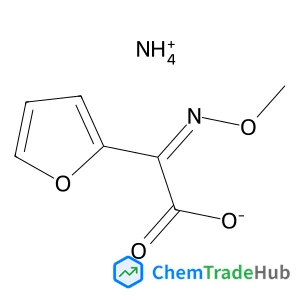
Ammonium (Z)-2-(furan-2-yl)-2-(methoxyimino)acetate
CAS Number:
97148-39-5
Molecular Formula:
C7H10N2O4
Recommended Suppliers





Disclaimer
This page provides academic journal information for reference and research purposes only. We are not affiliated with any journal publishers and do not handle publication submissions. For publication-related inquiries, please contact the respective journal publishers directly.
If you notice any inaccuracies in the information displayed, please contact us at support@chemtradehub.com. We will promptly review and address your concerns.