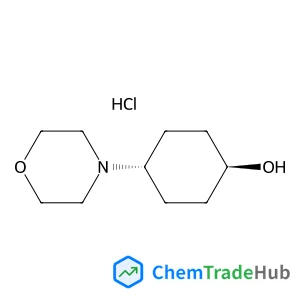
trans-4-(4-Morpholinyl)cyclohexanol hydrochloride (1:1)
CAS Number:
1588441-09-1
Molecular Formula:
C10H20ClNO2
James R. Jennings, Yeru Liu, Qing Wang, Shaik M. Zakeeruddin, Michael Grätzel
Replacing the nonyl groups on the solar cell dye Ru(4,4′-carboxylic acid-2,2′-bipyridine)(4,4′-dinonyl-2,2′-bipyridine)(NCS)2 (Z-907) with amino groups results in a marked decrease in solar cell performance. This is despite the fact that the amino derivative (Z-960) has more favourable light absorption characteristics than Z-907 when used with thick nanocrystalline TiO2 layers. Electron transfer to the electrolyte from the exposed fluorine-doped tin oxide (FTO) substrate is particularly fast in cells employing the Z-960 dye if a compact TiO2 blocking layer is not used. The kinetics of electron transfer from the nanocrystalline TiO2 layer in DSCs employing Z-960 are comparable to those of bare TiO2 and ca. 2 to 5 times faster than for cells employing Z-907. The faster charge recombination in cells employing Z-960 lowers open-circuit photovoltage and results in very significant charge collection losses that lower short-circuit photocurrent. Voltammetric measurements show that surface modification of FTO electrodes with Z-960 results in slightly more facile charge transfer to acceptor species in triiodide/iodide electrolytes in the dark. A simpler molecule, p-aminobenzoic acid, more dramatically catalyses this charge transfer reaction. Conversely, chemical modification of FTO electrodes with Z-907 or p-toluic acid retards charge transfer kinetics. Similar results are obtained for nanocrystalline TiO2 electrodes modified with these benzoic acid derivatives. These results strongly imply that surface adsorbed molecules bearing amino groups, including dye molecules, can catalyse charge recombination in dye-sensitized solar cells.

Nature

Israel Journal of Chemistry

Proceedings of the National Academy of Sciences of the United States of America

Russian Chemical Reviews

Helvetica Chimica Acta

European Journal of Wood and Wood Products

Journal of Heterocyclic Chemistry

Science Progress

Molecular Pharmacology

Journal of Medicinal Chemistry
Aidi Zhao, Shijing Tan, Bin Li, Bing Wang, Jinlong Yang, J. G. Hou
DOI: 10.1039/C3CP51446C
Jien-Lian Chen, Chang-Yu Yang, Hsiao-Jing Lin, Wei-Ping Hu
DOI: 10.1039/C3CP50447F
V. G. Khamaganov, J. N. Crowley
DOI: 10.1039/C3CP50291K
Sergei D. Ivanov, Alexander Witt, Dominik Marx
DOI: 10.1039/C3CP44523B
Jonas Elm, Solvejg Jørgensen, Merete Bilde, Kurt V. Mikkelsen
DOI: 10.1039/C3CP50192B
Artur Ciesielski, Sébastien Haar, Gábor Paragi, Zoltán Kupihár, Zoltán Kele, Stefano Masiero, Célia Fonseca Guerra, Gian Piero Spada, Lajos Kovács, Paolo Samorì
DOI: 10.1039/C3CP50891A
Siv G. Aalbergsjø, Eli O. Hole, Einar Sagstuen
DOI: 10.1039/C3CP50789K
Tomohiro Kobayashi, Ryunosuke Shishido, Kenta Mizuse, Asuka Fujii, Jer-Lai Kuo
DOI: 10.1039/C3CP50985K
Indrek Must, Urmas Johanson, Friedrich Kaasik, Inga Põldsalu, Andres Punning, Alvo Aabloo
DOI: 10.1039/C3CP51526E
Yuhua Duan
DOI: 10.1039/C3CP51101D
Ethyl 4-chlorothieno[2,3-b]pyridine-5-carboxylate (CAS: 59713-58-5) can be synth...
5-Methyl-1H-indole-3-carbaldehyde (CAS: 52562-50-2) is subject to various regula...
(1,3-Dimethyl-2,4-dioxo-1,2,3,4-tetrahydro-5-pyrimidinyl)boronic acid is a white...
Waste containing Sulfocostunolide A (CAS: 1016983-51-9) should be handled with c...
When handling Murraxocin (CAS: 88478-44-8), ensure proper personal protective eq...
Formvar (CAS: 63148-64-1) is an alkyd resin characterized by a high molecular we...
(S)-4-benzyl-2-((benzyloxy)methyl)morpholine is generally safe when handled with...
Methyl 1-(5-bromo-2-pyrimidinyl)cyclopropanecarboxylate (CAS: 1447607-69-3) is p...
2-Methyl-1-phenyl-1-propanamine hydrochloride (CAS: 24290-47-9) is generally con...
3-(4-Bromophenyl)-2-methylpropanoic acid is synthesized through a multi-step pro...

Physical Chemistry Chemical Physics (PCCP) is an international journal co-owned by 19 physical chemistry and physics societies from around the world. This journal publishes original, cutting-edge research in physical chemistry, chemical physics and biophysical chemistry. To be suitable for publication in PCCP, articles must include significant innovation and/or insight into physical chemistry; this is the most important criterion that reviewers and Editors will judge against when evaluating submissions. The journal has a broad scope and welcomes contributions spanning experiment, theory, computation and data science. Topical coverage includes spectroscopy, dynamics, kinetics, statistical mechanics, thermodynamics, electrochemistry, catalysis, surface science, quantum mechanics, quantum computing and machine learning. Interdisciplinary research areas such as polymers and soft matter, materials, nanoscience, energy, surfaces/interfaces, and biophysical chemistry are welcomed if they demonstrate significant innovation and/or insight into physical chemistry. Joined experimental/theoretical studies are particularly appreciated when complementary and based on up-to-date approaches.
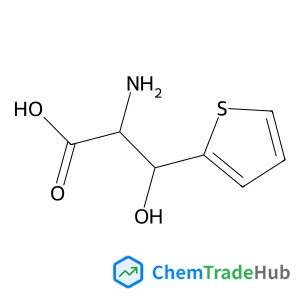

![4-{1-[4-(4,4,5,5-Tetramethyl-1,3,2-dioxaborolan-2-yl)phenyl]cyclopropyl}morpholine structure](https://static.chemtradehub.com/structs/120/1206594-08-2-7afb.webp "4-{1-[4-(4,4,5,5-Tetramethyl-1,3,2-dioxaborolan-2-yl)phenyl]cyclopropyl}morpholine structure")