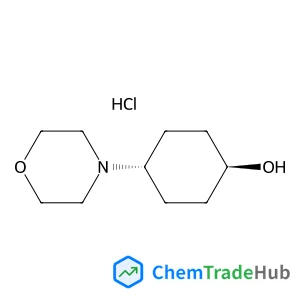
trans-4-(4-Morpholinyl)cyclohexanol hydrochloride (1:1)
CAS Number:
1588441-09-1
Molecular Formula:
C10H20ClNO2
Jingdong Zhang, Anna Christina Welinder, Qijin Chi, Jens Ulstrup
Self-assembled organization of functional molecules on solid surfaces has developed into a powerful and sophisticated tool for surface chemistry and nanotechnology. A number of reviews on the topic have been available since the mid 1990s. This perspective article aims to focus on recent development in the investigations of electronic structures and assembling dynamics of electrochemically controlled self-assembled monolayers (SAMs) of thiol containing molecules on gold surfaces. A brief introduction is first given and particularly illustrated by a Table summarizing the molecules studied, the surface lattice structures and the experimental operating conditions. This is followed by discussion of two major high-resolution experimental methods, scanning tunnelling microscopy (STM) and single-crystal electrochemistry. In Section 3, we briefly address choice of supporting electrolytes and substrate surfaces, and their effects on the SAM structures. Section 4 constitutes the major body of the article by offering some details of recent studies for the selected cases, including in situ monitoring of assembling dynamics, molecular electronic structures, and the key external factors determining the SAM packing. In Section 5, we give examples of what can be offered by theoretical computations for the detailed understanding of the SAM electronic structures revealed by STM images. A brief summary of the current applications of SAMs in wiring metalloproteins, design and fabrication of sensors, and single-molecule electronics is described in Section 6. In the final two sections (7 and 8), we discuss the current status in understanding of electronic structures and properties of SAMs in electrochemical environments and what could be expected for future perspectives.
Xiaoping Han
DOI: 10.1039/C3CP44031A
Yi-Min Wei, Jing-Hong Liang, Zhao-Bin Chen, Xiao-Shun Zhou, Bing-Wei Mao, Oscar A. Oviedo, Ezequiel P. M. Leiva
DOI: 10.1039/C3CP50473E
Philipp von den Hoff, Irina Znakovskaya, Regina de Vivie-Riedle
DOI: 10.1039/C3CP50591J
Hyeon Su Jeong, Sang Cheon Youn, Yun Ho Kim, Hee-Tae Jung
DOI: 10.1039/C3CP00052D
Bo Yang, Yulong Wang, Yifang Zhao, X.-M. Cao
DOI: 10.1039/C3CP51375K
Lauro Oliver Paz-Borbón, Anders Hellman, John Meurig Thomas, Henrik Grönbeck
DOI: 10.1039/C3CP51384J
Tae-Jun Ha, Prashant Sonar, Ananth Dodabalapur
DOI: 10.1039/C3CP51478A
Ethyl 4-chlorothieno[2,3-b]pyridine-5-carboxylate (CAS: 59713-58-5) can be synth...
5-Methyl-1H-indole-3-carbaldehyde (CAS: 52562-50-2) is subject to various regula...
(1,3-Dimethyl-2,4-dioxo-1,2,3,4-tetrahydro-5-pyrimidinyl)boronic acid is a white...
Waste containing Sulfocostunolide A (CAS: 1016983-51-9) should be handled with c...
When handling Murraxocin (CAS: 88478-44-8), ensure proper personal protective eq...
Formvar (CAS: 63148-64-1) is an alkyd resin characterized by a high molecular we...
(S)-4-benzyl-2-((benzyloxy)methyl)morpholine is generally safe when handled with...
Methyl 1-(5-bromo-2-pyrimidinyl)cyclopropanecarboxylate (CAS: 1447607-69-3) is p...
2-Methyl-1-phenyl-1-propanamine hydrochloride (CAS: 24290-47-9) is generally con...
3-(4-Bromophenyl)-2-methylpropanoic acid is synthesized through a multi-step pro...

Physical Chemistry Chemical Physics (PCCP) is an international journal co-owned by 19 physical chemistry and physics societies from around the world. This journal publishes original, cutting-edge research in physical chemistry, chemical physics and biophysical chemistry. To be suitable for publication in PCCP, articles must include significant innovation and/or insight into physical chemistry; this is the most important criterion that reviewers and Editors will judge against when evaluating submissions. The journal has a broad scope and welcomes contributions spanning experiment, theory, computation and data science. Topical coverage includes spectroscopy, dynamics, kinetics, statistical mechanics, thermodynamics, electrochemistry, catalysis, surface science, quantum mechanics, quantum computing and machine learning. Interdisciplinary research areas such as polymers and soft matter, materials, nanoscience, energy, surfaces/interfaces, and biophysical chemistry are welcomed if they demonstrate significant innovation and/or insight into physical chemistry. Joined experimental/theoretical studies are particularly appreciated when complementary and based on up-to-date approaches.