![{3-[Bis(4-hydroxyphenyl)methyl]-1-[2-(dimethylamino)ethyl]-1H-indol-2-yl}[4-(2-chlorophenyl)-1-piperazinyl]methanone structure](https://static.chemtradehub.com/structs/170/170365-25-0-e4d7.webp "{3-[Bis(4-hydroxyphenyl)methyl]-1-[2-(dimethylamino)ethyl]-1H-indol-2-yl}[4-(2-chlorophenyl)-1-piperazinyl]methanone structure")
{3-[Bis(4-hydroxyphenyl)methyl]-1-[2-(dimethylamino)ethyl]-1H-indol-2-yl}[4-(2-chlorophenyl)-1-piperazinyl]methanone
CAS Number:
170365-25-0
Molecular Formula:
C36H37ClN4O3
Quanxin Zhang, Xiaozhi Guo, Xiaoming Huang, Shuqing Huang, Dongmei Li, Yanhong Luo, Taro Toyoda, Qingbo Meng
At present, the photovoltaic performance of quantum dot-sensitized solar cells (QDSCs) is still much lower than conventional DSCs. Appropriate porous TiO2 photoanodes for QDSCs need to be further investigated, and optimization of the nanoparticle-based photoanodes is highly desirable as well. In this article, the influence of the structural properties of various TiO2 photoanodes on CdS/CdSe-sensitized solar cells have been systematically studied. Quantitative analyses of light-harvesting efficiency (LHE) and electron-transfer yield (ΦET) for the QDSCs are investigated for the first time. It is revealed that the LHE increases in the long wavelength region with the addition of large size TiO2 particles to the transparent film. In the meantime, the balance between the light scattering and surface area also needs to be controlled, which can significantly restrain the dark current of the device. A double-layer photoanodic structure can give 4.92% of light-to-electricity conversion efficiency with a photoactive area of 0.15 cm2.
DOI: 10.1039/C6CP07477D
G. Carrone, L. Zayat, L. D. Slep, R. Etchenique
DOI: 10.1039/C6CP06580E
Thomas Buchecker, Sebastian Krickl, Robert Winkler, Isabelle Grillo, Pierre Bauduin, Didier Touraud, Arno Pfitzner, Werner Kunz
DOI: 10.1039/C6CP06696H
Zhenhai Yu, Yong Wang, John Schneeloch, Chunyu Li, Ruidan Zhong, Zhiguo Liu, Genda Gu
DOI: 10.1039/C6CP07324G
Soma Khanra, Kartik Ghosh, Fabio F. Ferreira, Wendel A. Alves, Francesco Punzo, Ping Yu, Suchismita Guha
DOI: 10.1039/C6CP07879F
Vladimir A. Osipov
DOI: 10.1039/C6CP07496K
Daniel Bellinger, Christoph Brüning, Volker Engel, Bernd Engels
DOI: 10.1039/C6CP07673D
Elisa Albanese, Gianfranco Pacchioni
DOI: 10.1039/C6CP07535E
Simon Loftager, Juan María García-Lastra, Tejs Vegge
DOI: 10.1039/C6CP06312H
F. Aguilera-Granja, L. C. Balbás, A. Vega
DOI: 10.1039/C6CP06225C
2-(2-Chloroacetamido)-3-phenylpropanoic acid (CAS: 7765-11-9) is generally consi...
2-(Benzyloxy)-5-bromobenzoic acid can be handled safely if appropriate precautio...
(4-Methyl-1,2,5-oxadiazol-3-yl)methanamine hydrochloride is a chemical compound ...
2-(5-Hexylthiophen-2-yl)-4,4,5,5-tetramethyl-1,3,2-dioxaborolane (CAS: 917985-54...
While 4-(8-Methyl-9H-1,3-dioxolo[4,5-h][2,3]benzodiazepin-5-yl)benzenamine (CAS:...
The market for tert-butyl 3-hydroxy-4,5,7,8-tetrahydro-2H-pyrazolo[3,4-d]azepine...
Waste containing 3,5-Diamino-1H-pyrazole-4-carbonitrile (CAS: 6844-58-2) should ...
(6-Fluoro-3-pyridinyl)boronic acid can be synthesized through the reaction of 6-...
Dibenzyl carbonimidoylbiscarbamate (CAS: 10065-79-9) finds applications in vario...
The market for (beta,beta,2,3,4,5,6-~2~H_7_)Phenylalanine (CAS: 74228-83-4) is g...

Physical Chemistry Chemical Physics (PCCP) is an international journal co-owned by 19 physical chemistry and physics societies from around the world. This journal publishes original, cutting-edge research in physical chemistry, chemical physics and biophysical chemistry. To be suitable for publication in PCCP, articles must include significant innovation and/or insight into physical chemistry; this is the most important criterion that reviewers and Editors will judge against when evaluating submissions. The journal has a broad scope and welcomes contributions spanning experiment, theory, computation and data science. Topical coverage includes spectroscopy, dynamics, kinetics, statistical mechanics, thermodynamics, electrochemistry, catalysis, surface science, quantum mechanics, quantum computing and machine learning. Interdisciplinary research areas such as polymers and soft matter, materials, nanoscience, energy, surfaces/interfaces, and biophysical chemistry are welcomed if they demonstrate significant innovation and/or insight into physical chemistry. Joined experimental/theoretical studies are particularly appreciated when complementary and based on up-to-date approaches.
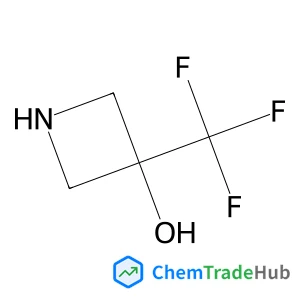
![3-[4-(difluoromethoxy)phenyl]-2-({[(9H-fluoren-9-yl)methoxy]carbonyl}amino)propanoic acid structure](https://static.chemtradehub.com/structs/149/1496564-27-2-952e.webp "3-[4-(difluoromethoxy)phenyl]-2-({[(9H-fluoren-9-yl)methoxy]carbonyl}amino)propanoic acid structure")