


From CO2 to dimethyl carbonate with dialkyldimethoxystannanes: the key role of monomeric species
Literature Information
Publication Date
2010-11-22
DOI
10.1039/C0CP02089C
Impact Factor
3.676
Authors
Mahboubeh Poor Kalhor, Henry Chermette, Stéphane Chambrey, Danielle Ballivet-Tkatchenko
View Original
Abstract
The formation of dimethyl carbonate (DMC) from CO2 and methanol with the dimer [n-Bu2Sn(OCH3)2]2 was investigated by experimental kinetics in support of DFT calculations. Under the reaction conditions (357–423 K, 10–20 MPa), identical initial rates are observed with three different reacting mixtures, CO2/toluene, supercritical CO2, and CO2/methanol, and are consistent with the formation of monomeric di-n-butyltin(IV) species. An intramolecular mechanism is, therefore, proposed with an Arrhenius activation energy amounting to 104 ± 10 kJ mol−1 for DMC synthesis. DFT calculations on the [(CH3)2Sn(OCH3)2]2/CO2 system show that the exothermic insertion of CO2 into the Sn–OCH3 bond occurs by a concerted Lewis acid–base interaction involving the tin center and the oxygen atom of the methoxy ligand. The Gibbs energy diagrams highlight that, under the reaction conditions, the dimer–monomer equilibrium is significantly shifted towards monomeric species, in agreement with the experimental kinetics. Importantly, the two Sn–OCH3 bonds are prompt to insert CO2. These results provide new insight into the reaction mechanism and catalyst design to enhance the turnover numbers.
Recommended Journals

Pharmacological Reviews

Planta Medica

Journal of Physics and Chemistry of Solids

Helvetica Chimica Acta

Journal of Medicinal Chemistry

Journal of Heterocyclic Chemistry

Proceedings of the National Academy of Sciences of the United States of America

Fibre Chemistry

Journal of Catalysis

Israel Journal of Chemistry
Related Literature
Template-free synthesis of single-crystalline cadmium nanotubes
Pingàn Hu, Yunqi Liu, Lei Fu, Lingchao Cao, Daoben Zhu
2004-02-04
Communication
DOI: 10.1039/B312708G
Mesocellular polymer foams with unprecedented uniform large mesopores and high surface areas
Jinwoo Lee, Jaeyun Kim, Sang-Wook Kim, Chae-Ho Shin, Taeghwan Hyeon
2004-02-06
Communication
DOI: 10.1039/B310713B
Pore size effects in the pyrolysis of 1,3-diphenylpropane confined in mesoporous silicas
Michelle K. Kidder, Phillip F. Britt, Zongtao Zhang, Sheng Dai, A. C. Buchanan, III
2003-10-15
Communication
DOI: 10.1039/B310405B
A novel azulene synthesis from the Ramirez ylide involving two different modes of its reaction with activated alkynes
Lee J. Higham, P. Gabriel Kelly, David M. Corr, Helge Müller-Bunz, Brian J. Walker, Declan G. Gilheany
2004-02-11
Communication
DOI: 10.1039/B316759C
Fluorescence detection of guanine–adenine transition by a hydrogen bond forming small compound
Keitaro Yoshimoto, Chun-Yan Xu, Seiichi Nishizawa, Takanobu Haga, Hiroyuki Satake, Norio Teramae
2003-10-31
Communication
DOI: 10.1039/B309229A
A novel water-soluble and self-doped conducting polyaniline graft copolymer
Woo Jin Bae, Keon Hyeong Kim, Yun Heum Park, Won Ho Jo
2003-10-09
Communication
DOI: 10.1039/B309346H
Terminally functionalized polyisobutylene oligomers as soluble supports in catalysis
David E. Bergbreiter, Jun Li
2003-11-27
Communication
DOI: 10.1039/B312368E
Living cationic ring-opening polymerization by water-stable initiator: synthesis of a well-defined optically active polythiourethane
Atsushi Nagai, Bungo Ochiai, Takeshi Endo
2003-11-07
Communication
DOI: 10.1039/B310735C
Electrochemical wiring of α,ω-alkanedithiol molecules into an electrical circuit
Renata Bilewicz, Krzysztof Slowinski
2004-01-23
Communication
DOI: 10.1039/B314815G
Free energy of adsorption of water and calcium on the {10 4} calcite surface
Sebastien Kerisit, Stephen C. Parker
2003-12-02
Communication
DOI: 10.1039/B311928A
You might also like
Compound Q&A
How should waste containing 2-Ethyl-4-Methyl-1H-Imidazole-5-Carbaldehyde (CAS: 88634-80-4) be handled?
Waste containing 2-Ethyl-4-Methyl-1H-Imidazole-5-Carbaldehyde (CAS: 88634-80-4) ...
88634-80-42-Ethyl-4-Methyl-1H-...
Compound Q&A
What industries use Triethoxy(octyl)silane (CAS: 1385031-14-0)?
Triethoxy(octyl)silane (CAS: 1385031-14-0) is widely used in the pharmaceuticals...
1385031-14-0Triethoxy(octyl)sila...
Compound Q&A
Are there alternatives to 3-iodo-7-nitro-1H-indazole (CAS: 864724-64-1) in synthesis?
Several alternatives to 3-iodo-7-nitro-1H-indazole (CAS: 864724-64-1) exist in t...
864724-64-13-iodo-7-nitro-1H-in...
Compound Q&A
Are there alternatives to Benzene, bis[(trimethoxysilyl)ethyl] (CAS: 266317-71-9) in synthesis?
Yes, there are alternatives to Benzene, bis[(trimethoxysilyl)ethyl] (CAS: 266317...
266317-71-9Benzene, bis[(trimet...
Compound Q&A
Is Isothiazole-3-carbonitrile (CAS: 1452-17-1) safe?
Isothiazole-3-carbonitrile (CAS: 1452-17-1) is generally considered safe when us...
1452-17-1Isothiazole-3-carbon...
Compound Q&A
Is (3-Chlorophenyl)methanol (CAS: 873-63-2) safe?
(3-Chlorophenyl)methanol (CAS: 873-63-2) is considered low to moderately toxic. ...
873-63-2(3-Chlorophenyl)meth...
Compound Q&A
How is (2S,3S)-2-Hydroxy-3-({[(2-methyl-2-propanyl)oxy]carbonyl}amino)-3-(2-naphthyl)propanoic acid (CAS: 959583-98-3) typically synthesized?
(2S,3S)-2-Hydroxy-3-({[(2-methyl-2-propanyl)oxy]carbonyl}amino)-3-(2-naphthyl)pr...
959583-98-3(2S,3S)-2-Hydroxy-3-...
Compound Q&A
What precautions should be taken when handling Methyl 2-(bromomethyl)-5-methoxybenzoate (CAS: 788081-99-2)?
Proper handling of methyl 2-(bromomethyl)-5-methoxybenzoate requires the use of ...
788081-99-2Methyl 2-(bromomethy...
Compound Q&A
What is 6,8-Dibromoimidazo[1,2-a]pyridine-2-carboxylic acid (CAS: 904805-36-3)?
6,8-Dibromoimidazo[1,2-a]pyridine-2-carboxylic acid (CAS: 904805-36-3) is an aro...
904805-36-36,8-Dibromoimidazo[1...
Compound Q&A
Is 3-Amino-5-bromo-2-pyridinecarbonitrile (CAS: 573675-27-1) safe?
3-Amino-5-bromo-2-pyridinecarbonitrile is considered safe when handled under pro...
573675-27-13-Amino-5-bromo-2-py...
Source Journal
Physical Chemistry Chemical Physics

CiteScore:
5.5
Self-citation Rate:
10.3%
Articles per Year:
3036
Physical Chemistry Chemical Physics (PCCP) is an international journal co-owned by 19 physical chemistry and physics societies from around the world. This journal publishes original, cutting-edge research in physical chemistry, chemical physics and biophysical chemistry. To be suitable for publication in PCCP, articles must include significant innovation and/or insight into physical chemistry; this is the most important criterion that reviewers and Editors will judge against when evaluating submissions. The journal has a broad scope and welcomes contributions spanning experiment, theory, computation and data science. Topical coverage includes spectroscopy, dynamics, kinetics, statistical mechanics, thermodynamics, electrochemistry, catalysis, surface science, quantum mechanics, quantum computing and machine learning. Interdisciplinary research areas such as polymers and soft matter, materials, nanoscience, energy, surfaces/interfaces, and biophysical chemistry are welcomed if they demonstrate significant innovation and/or insight into physical chemistry. Joined experimental/theoretical studies are particularly appreciated when complementary and based on up-to-date approaches.
Recommended Compounds
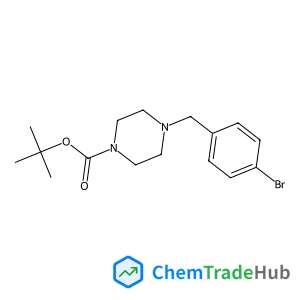
2-Methyl-2-propanyl 4-(4-bromobenzyl)-1-piperazinecarboxylate
CAS Number:
844891-10-7
Molecular Formula:
C16H23BrN2O2
Recommended Suppliers





Disclaimer
This page provides academic journal information for reference and research purposes only. We are not affiliated with any journal publishers and do not handle publication submissions. For publication-related inquiries, please contact the respective journal publishers directly.
If you notice any inaccuracies in the information displayed, please contact us at support@chemtradehub.com. We will promptly review and address your concerns.