












Vibrationally promoted electron emission at a metal surface: electron kinetic energy distributions
Literature Information
Publication Date
2010-11-15
DOI
10.1039/C0CP01626H
Impact Factor
3.676
Authors
Jerry LaRue, Tim Schäfer, Daniel Matsiev, Luis Velarde, N. Hendrik Nahler, Daniel J. Auerbach
View Original
Abstract
We report the first direct measurement of the kinetic energy of exoelectrons produced by collisions of vibrationally excited molecules with a low work function metal surface exhibiting electron excitations of 64% (most probable) and 95% (maximum) of the initial vibrational energy. This remarkable efficiency for vibrational-to-electronic energy transfer is in good agreement with previous results suggesting the coupling of multiple vibrational quanta to a single electron.
Related Literature
The effect of nanometre-sized Au particle loading on TiO2 photocatalysed reduction of bis(2-dipyridyl)disulfide to 2-mercaptopyridine by H2O
Hiroaki Tada, Fumiaki Suzuki, Shigeki Yoneda, Hisayoshi Kobayashi
2001-03-07
Paper
DOI: 10.1039/B007817O
ATR-IR spectroscopic studies of the formation of sulfuric acid and sulfuric acid monohydrate films
Paper
DOI: 10.1039/A904544I
Shining a new light on the structure of polyurea/polyurethane materials
Piangtawan Phoungtawee, Daniel Crespy
2021-06-17
Paper
DOI: 10.1039/D1PY00649E
Molecular simulation of the vapour–liquid phase coexistence of neon and argon using ab initio potentials
Patrick S. Vogt, Rail Liapine, Barbara Kirchner, Anthony J. Dyson, Hanspeter Huber, Gianluca Marcelli, Richard J. Sadus
2001-03-02
Paper
DOI: 10.1039/B008061F
Spectroscopic and thermodynamic study of the H-bonding of olefins onto the isolated hydroxyl of amorphous silica
Paper
DOI: 10.1039/A903682B
Does the cationic or the radical character dominate the reactivity of alkene radical cations towards solvent molecules?‡
M. Mohr, H. Zipse
2001-02-27
Paper
DOI: 10.1039/B007990L
On the molecular and vibrational structure of 1,6,6aλ 4-trithiapentalenes. Analysis of the “ bell-clapper” asymmetrical S–S–S stretching mode
Jens Spanget-Larsen, Kristine B. Andersen
2001-02-20
Paper
DOI: 10.1039/B009728O
Light-mediated controlled and classical polymerizations of less-activated monomers under high-pressure conditions
Anna Szelwicka, Anna Chrobok
2021-07-12
Paper
DOI: 10.1039/D1PY00738F
You might also like
Compound Q&A
What are the main uses of 4-Nitrophenyl phosphate disodium salt hexahydrate (CAS: 333338-18-4)?
4-Nitrophenyl phosphate disodium salt hexahydrate is primarily used as a substra...
333338-18-44-Nitrophenyl phosph...
Compound Q&A
What are the main uses of 2-(Trifluoromethyl)-1,3-oxazole-4-carboxylic Acid (CAS: 1060816-01-4)?
2-(Trifluoromethyl)-1,3-oxazole-4-carboxylic Acid (CAS: 1060816-01-4) is widely ...
1060816-01-42-(Trifluoromethyl)-...
Compound Q&A
How should 2-Fluoro-4-biphenylcarboxylic acid (CAS: 137045-30-8) be stored?
2-Fluoro-4-biphenylcarboxylic acid should be stored in a cool, dry place at room...
137045-30-82-Fluoro-4-biphenylc...
Compound Q&A
What industries use Prednisolone-21-Carboxylic Acid (CAS: 61549-70-0)?
Prednisolone-21-Carboxylic Acid is primarily used in the pharmaceutical industry...
61549-70-0Prednisolone-21-Carb...
Compound Q&A
How should 4-(Hydrazinomethyl)-1,2,3-benzenetriol (CAS: 3614-72-0) be stored?
4-(Hydrazinomethyl)-1,2,3-benzenetriol (CAS: 3614-72-0) should be stored in a co...
3614-72-04-(Hydrazinomethyl)-...
Compound Q&A
What industries use 4-Amino-1-methyl-1H-pyrazole-5-carboxylic acid hydrochloride (CAS: 92534-70-8)?
4-Amino-1-methyl-1H-pyrazole-5-carboxylic acid hydrochloride (CAS: 92534-70-8) i...
92534-70-84-Amino-1-methyl-1H-...
Compound Q&A
What regulatory guidelines apply to dehydropachymic acid (CAS: 77012-31-8)?
Dehydropachymic acid (CAS: 77012-31-8) is regulated by various agencies. It fall...
77012-31-8Dehydropachymic acid
Compound Q&A
What is the market or research trend for 6-[(2,2-Dimethylpropanoyl)amino]nicotinic acid (CAS: 898561-66-5)?
The market and research trends for 6-[(2,2-Dimethylpropanoyl)amino]nicotinic aci...
898561-66-56-[(2,2-Dimethylprop...
Compound Q&A
How should 1,10-Phenanthroline-2,9-dicarbaldehyde (CAS: 57709-62-3) be stored?
1,10-Phenanthroline-2,9-dicarbaldehyde should be stored in a cool, dry place awa...
57709-62-31,10-Phenanthroline-...
Compound Q&A
How is 5-Carbamoyl-11-oxo-10,11-dihydro-5H-dibenzo[b,f]azepin-10-yl acetate (CAS: 113952-21-9) typically synthesized?
5-Carbamoyl-11-oxo-10,11-dihydro-5H-dibenzo[b,f]azepin-10-yl acetate can be synt...
113952-21-95-Carbamoyl-11-oxo-1...
Source Journal
Physical Chemistry Chemical Physics

CiteScore:
5.5
Self-citation Rate:
10.3%
Articles per Year:
3036
Physical Chemistry Chemical Physics (PCCP) is an international journal co-owned by 19 physical chemistry and physics societies from around the world. This journal publishes original, cutting-edge research in physical chemistry, chemical physics and biophysical chemistry. To be suitable for publication in PCCP, articles must include significant innovation and/or insight into physical chemistry; this is the most important criterion that reviewers and Editors will judge against when evaluating submissions. The journal has a broad scope and welcomes contributions spanning experiment, theory, computation and data science. Topical coverage includes spectroscopy, dynamics, kinetics, statistical mechanics, thermodynamics, electrochemistry, catalysis, surface science, quantum mechanics, quantum computing and machine learning. Interdisciplinary research areas such as polymers and soft matter, materials, nanoscience, energy, surfaces/interfaces, and biophysical chemistry are welcomed if they demonstrate significant innovation and/or insight into physical chemistry. Joined experimental/theoretical studies are particularly appreciated when complementary and based on up-to-date approaches.
Recommended Compounds
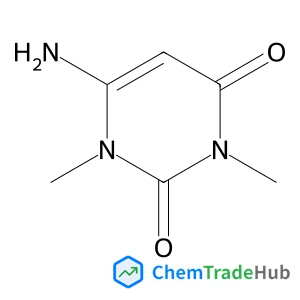
6-amino-1,3-dimethyl-1,2,3,4-tetrahydropyrimidine-2,4-dione
CAS Number:
6642-31-5
Molecular Formula:
C6H9N3O2

Recommended Suppliers





Disclaimer
This page provides academic journal information for reference and research purposes only. We are not affiliated with any journal publishers and do not handle publication submissions. For publication-related inquiries, please contact the respective journal publishers directly.
If you notice any inaccuracies in the information displayed, please contact us at support@chemtradehub.com. We will promptly review and address your concerns.