












Origin of chiral selectivity in gas-phase serine tetramers
Literature Information
Publication Date
2010-11-22
DOI
10.1039/C0CP01402H
Impact Factor
3.676
Authors
Anthony B. Costa, R. Graham Cooks
View Original
Abstract
Serine “magic-number” clusters have attracted substantial experimental and theoretical interest since their discovery. Serine undergoes marked chiral enrichment upon sublimation, which has been associated with the homochiral selectivity of the octamer. This process has been implicated in one possible mechanism leading to the origin of biological homochirality. While the octamer is the best known of the serine clusters, here we focus on the tetramer, the smallest serine cluster known to exhibit homochiral preference. This choice is based on its greater simplicity and tractability with accessible computational resources. Basin-hopping molecular dynamics simulations coupled to density functional theory calculations yield a “structural landscape” for low-lying configurations on the potential energy surface. The full range of enantiomeric compositions and charge states is investigated. Global energy minimum serine tetramers consist of a cage structure bonded by zwitterionic terminal groups. The participation of the serine hydroxyl side chains in hydrogen bonds with adjacent monomers drives the homochiral selectivity of serine tetramers. The configuration of the hydrogen bonding network is strongly dependent on enantiomeric composition and charge state. Smaller cations are incorporated into the center of the tetramer cage and effectively disable all side chain hydrogen bonding, while larger cations appear not to incorporate into the tetramer cage and are stabilized outside only in the homochiral case. The current theoretical data requires the introduction of a kinetic barrier to complete the model, limiting rearrangement from the basic cage configuration in some cases, which is discussed and probed directly by doubly-nudged elastic band transition state searches. These calculations elucidate a large barrier for reorganization of the cage, completing the theoretical understanding of the tetramers.
Related Literature
Uncovering reaction sequences on surfaces through graphical methods
Mina Jafari, Paul M. Zimmerman
2018-02-19
Paper
DOI: 10.1039/C8CP00044A
On the contribution of f electrons to the quadratic hyperpolarizability: the case of lanthanide terpyridyl complexes
Fatima Ibersiene, Camille Latouche, Claudine Katan, Abdou Boucekkine
2018-02-27
Communication
DOI: 10.1039/C8CP00853A
Towards reliable references for electron paramagnetic resonance parameters based on quantum chemistry: the case of verdazyl radicals
Steffen Eusterwiemann, Armido Studer
2018-02-26
Paper
DOI: 10.1039/C7CP05657E
Uptake of water by an acid–base nanoparticle: theoretical and experimental studies of the methanesulfonic acid–methylamine system
Jing Xu, Véronique Perraud, Barbara J. Finlayson-Pitts
2018-08-13
Paper
DOI: 10.1039/C8CP03634A
On the distinct binding modes of expansin and carbohydrate-binding module proteins on crystalline and nanofibrous cellulose: implications for cellulose degradation by designer cellulosomes
Adam Orłowski, Lior Artzi, Pierre-Andre Cazade, Melissabye Gunnoo, Edward A. Bayer, Damien Thompson
2018-03-06
Paper
DOI: 10.1039/C7CP07764E
Predictive modeling of intrinsic strengths for several groups of chemically related monolayers by a reference model
2018-02-08
Paper
DOI: 10.1039/C7CP06621J
Computational engineering of cellulase Cel9A-68 functional motions through mutations in its linker region
M. G. S. Costa, Y. F. Silva, P. R. Batista
2018-02-05
Paper
DOI: 10.1039/C7CP07073J
On the importance of non-covalent interactions for porous membranes: unraveling the role of pore size
Leonardo A. Cunha, Luiz F. A. Ferrão, Francisco B. C. Machado, Max Pinheiro, Jr
2018-07-12
Paper
DOI: 10.1039/C8CP03286F
Reply to the ‘Comment on “Methanol dimer formation drastically enhances hydrogen abstraction from methanol by OH at low temperature”’ by D. Heard, R. Shannon, J. Gomez Martin, R. Caravan, M. Blitz, J. Plane, M. Antiñolo, M. Agundez, E. Jimenez, B. Ballesteros, A. Canosa, G. El Dib, J. Albaladejo and J. Cernicharo, Phys. Chem. Chem. Phys., 2018, 20, DOI: 10.1039/C7CP04561A
W. Siebrand, Z. Smedarchina, D. Ferro-Costas, E. Martínez-Núñez, A. Fernández-Ramos
2018-02-22
Comment
DOI: 10.1039/C8CP00519B
You might also like
Compound Q&A
How should waste containing N-Methoxy-N-methyl-1,3-thiazole-5-carboxamide (CAS: 898825-89-3) be handled?
Waste containing N-Methoxy-N-methyl-1,3-thiazole-5-carboxamide (CAS: 898825-89-3...
898825-89-3N-Methoxy-N-methyl-1...
Compound Q&A
How should N-(4-Biphenylyl)dibenzo[b,d]furan-4-amine (CAS: 1318338-47-4) be stored?
N-(4-Biphenylyl)dibenzo[b,d]furan-4-amine should be stored in a tightly sealed c...
1318338-47-4N-(4-Biphenylyl)dibe...
Compound Q&A
What is the market or research trend for 3-Acetamido-5-amino-2,4,6-triiodobenzoic acid (CAS: 1713-07-1)?
The market for 3-Acetamido-5-amino-2,4,6-triiodobenzoic acid (CAS: 1713-07-1) is...
1713-07-13-Acetamido-5-amino-...
Compound Q&A
How should Benzyl 2-O-acetyl-3,4,6-tri-O-benzyl-beta-D-galactopyranoside (CAS: 61820-03-9) be stored?
Benzyl 2-O-acetyl-3,4,6-tri-O-benzyl-beta-D-galactopyranoside (CAS: 61820-03-9) ...
61820-03-9Benzyl 2-O-acetyl-3,...
Compound Q&A
What regulatory guidelines apply to 2-Ethylpiperazine dihydrochloride (CAS: 438050-52-3)?
2-Ethylpiperazine dihydrochloride (CAS: 438050-52-3) is regulated under the Glob...
438050-52-32-Ethylpiperazine di...
Compound Q&A
What regulatory guidelines apply to 1,1'-[1,3-Phenylenebis(methylene)]bis(3-methyl-1H-pyrrole-2,5-dione) (CAS: 119462-56-5)?
1,1'-[1,3-Phenylenebis(methylene)]bis(3-methyl-1H-pyrrole-2,5-dione) (CAS: 11946...
119462-56-51,1'-[1,3-Phenyleneb...
Compound Q&A
Are there alternatives to 5-Fluoro-2-(1-pyrrolidinyl)pyridine (CAS: 1287217-79-1) in synthesis?
Several alternatives can be used in the synthesis of 5-Fluoro-2-(1-pyrrolidinyl)...
1287217-79-15-Fluoro-2-(1-pyrrol...
Compound Q&A
What precautions should be taken when handling 1-((2R,3R,4R,5R)-5-((bis(4-methoxyphenyl)(phenyl)methoxy)methyl)-4-hydroxy-3-methoxytetrahydrofuran-2-yl)-5-methylpyrimidine-2,4(1H,3H)-dione (CAS: 153631-19-7)?
Proper personal protective equipment (PPE) must be worn when handling this compo...
153631-19-71-((2R,3R,4R,5R)-5-(...
Compound Q&A
What precautions should be taken when handling 6-Bromoimidazo[1,2-a]pyridin-8-amine (CAS: 676371-00-9)?
When handling 6-Bromoimidazo[1,2-a]pyridin-8-amine, it is important to wear appr...
676371-00-96-Bromoimidazo[1,2-a...
Compound Q&A
Are there alternatives to (2S,4R)-4-(4-Nitrobenzyl)pyrrolidine-2-carboxylic acid hydrochloride (CAS: 1049740-22-8) in synthesis?
Alternatives to (2S,4R)-4-(4-Nitrobenzyl)pyrrolidine-2-carboxylic acid hydrochlo...
1049740-22-8(2S,4R)-4-(4-Nitrobe...
Source Journal
Physical Chemistry Chemical Physics

CiteScore:
5.5
Self-citation Rate:
10.3%
Articles per Year:
3036
Physical Chemistry Chemical Physics (PCCP) is an international journal co-owned by 19 physical chemistry and physics societies from around the world. This journal publishes original, cutting-edge research in physical chemistry, chemical physics and biophysical chemistry. To be suitable for publication in PCCP, articles must include significant innovation and/or insight into physical chemistry; this is the most important criterion that reviewers and Editors will judge against when evaluating submissions. The journal has a broad scope and welcomes contributions spanning experiment, theory, computation and data science. Topical coverage includes spectroscopy, dynamics, kinetics, statistical mechanics, thermodynamics, electrochemistry, catalysis, surface science, quantum mechanics, quantum computing and machine learning. Interdisciplinary research areas such as polymers and soft matter, materials, nanoscience, energy, surfaces/interfaces, and biophysical chemistry are welcomed if they demonstrate significant innovation and/or insight into physical chemistry. Joined experimental/theoretical studies are particularly appreciated when complementary and based on up-to-date approaches.
Recommended Compounds
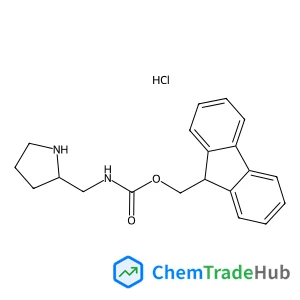
(S)-(9H-Fluoren-9-yl)methyl (pyrrolidin-2-ylmethyl)carbamate hydrochloride
CAS Number:
1217813-15-4
Molecular Formula:
C20H23ClN2O2


4-(Dimethylaminomethyl)phenylacetic acid hydrochloride
CAS Number:
99985-52-1
Molecular Formula:
C11H16ClNO2
![4-Chloro-2-{[(2-chlorophenoxy)acetyl]amino}benzoic acid structure](https://static.chemtradehub.com/structs/351/351424-20-9-9467.webp "4-Chloro-2-{[(2-chlorophenoxy)acetyl]amino}benzoic acid structure")
4-Chloro-2-{[(2-chlorophenoxy)acetyl]amino}benzoic acid
CAS Number:
351424-20-9
Molecular Formula:
C15H11Cl2NO4
Recommended Suppliers




Disclaimer
This page provides academic journal information for reference and research purposes only. We are not affiliated with any journal publishers and do not handle publication submissions. For publication-related inquiries, please contact the respective journal publishers directly.
If you notice any inaccuracies in the information displayed, please contact us at support@chemtradehub.com. We will promptly review and address your concerns.