












![5,7-Dihydroxy-3-(4-hydroxyphenyl)-6-[(1R,6R)-3-methyl-6-prop-1-en-2-ylcyclohex-2-en-1-yl]chromen-4-one structure](https://static.chemtradehub.com/structs/191/1914963-20-4-2b05.webp "5,7-Dihydroxy-3-(4-hydroxyphenyl)-6-[(1R,6R)-3-methyl-6-prop-1-en-2-ylcyclohex-2-en-1-yl]chromen-4-one structure")
5,7-Dihydroxy-3-(4-hydroxyphenyl)-6-[(1R,6R)-3-methyl-6-prop-1-en-2-ylcyclohex-2-en-1-yl]chromen-4-one
CAS Number:
1914963-20-4
Molecular Formula:
C25H24O5
A. M. Schulenburg, F. Merkt
The rotational structure of the lowest three vibrational levels (00, 61 and 41) of the 3px 1A2 Rydberg state of formaldehyde has been studied by doubly-resonant three-photon ionization spectroscopy. A strong a-type Coriolis interaction between the in-plane rocking (ν6) and out-of-plane bending (ν4) modes results in the observation of vibronically forbidden transitions to the 61 level from the intermediate à 1A2 (21 43) level. The full widths at half maximum of the rovibronic transitions to the 41 state are considerably larger than to the vibrational ground state and the 61 level. The band origin (T0 = 67 728.939(82) cm−1), the rigid rotor rotational constants (A = 9.006(19) cm−1, B = 1.331(20) cm−1, and C = 1.135(22) cm−1), the Coriolis coupling constant (ξa4,6 = 8.86(89) cm−1) and the deperturbed fundamental wave numbers of both vibrational modes (ṽ6 = 808.88(25) cm−1 and ṽ4 = 984.92(26) cm−1) have been determined for the 3px 1A2 Rydberg state. Polarization effects originating from the double-resonance technique have been exploited to detect the Coriolis interaction and investigate how it affects the predissociation dynamics.
Gangjian Tan, Fengyuan Shi, Jeff W. Doak, Hui Sun, Li-Dong Zhao, Pengli Wang, Ctirad Uher, Chris Wolverton, Vinayak P. Dravid
DOI: 10.1039/C4EE01463D
DOI: 10.1039/C5CE02383A
Jungho Jae, Geoffrey A. Tompsett, Yu-Chuan Lin, Torren R. Carlson, Jiacheng Shen, Taiying Zhang, Bin Yang, Charles E. Wyman, W. Curtis Conner, George W. Huber
DOI: 10.1039/B924621P
Anna Fedrigo, Davide Raspino, Francesco Grazzi, Antonella Scherillo
DOI: 10.1039/C9JA00300B
Bindu Antil, Sasanka Deka
DOI: 10.1039/D0TA02734K
Xiaoli Xu, Lingbo Xiao, Yanmin Jia, Zheng Wu, Feifei Wang, Yaojin Wang, Neale O. Haugen, Haitao Huang
DOI: 10.1039/C8EE01016A
S. Roscales, A. G. Csákÿ
DOI: 10.1039/C4CS00195H
Kangyu Zou, Peng Cai, Cheng Liu, Jiayang Li, Xu Gao, Laiqiang Xu, Guoqiang Zou, Hongshuai Hou, Zuming Liu, Xiaobo Ji
DOI: 10.1039/C9TA03797G
(5-Sulfamoyl-3-pyridinyl)boronic acid is primarily used in chemical synthesis, p...
Benzyl 2-methyl-2-(methylsulfonyl)-4-pentenoate is typically synthesized via est...
When handling 8-Fluoroquinolin-6-ol (CAS: 209353-22-0), it is important to use p...
1,3-Dibromo-5-(2-methyl-2-propanyl)benzene (CAS: 129316-09-2) is a crystalline c...
Ethyl 7-chloro-4-oxo-1-(1,3-thiazol-2-yl)-1,4-dihydro-1,8-naphthyridine-3-carbox...
When handling Delta-7-Avenasterol (CAS: 23290-26-8), it is important to wear app...
Proper handling involves the use of personal protective equipment such as gloves...
When handling 2-Methyl-2-proanyl 4-[(2-aminophenyl)amino]-1-piperidinecarboxylat...
N-Methyl-4-chlorobenzylamine hydrochloride (CAS: 65542-24-7) is a organic compou...
[2-(Dodecyloxy)ethoxy]acetic acid (CAS: 27306-90-7) is generally considered safe...

Physical Chemistry Chemical Physics (PCCP) is an international journal co-owned by 19 physical chemistry and physics societies from around the world. This journal publishes original, cutting-edge research in physical chemistry, chemical physics and biophysical chemistry. To be suitable for publication in PCCP, articles must include significant innovation and/or insight into physical chemistry; this is the most important criterion that reviewers and Editors will judge against when evaluating submissions. The journal has a broad scope and welcomes contributions spanning experiment, theory, computation and data science. Topical coverage includes spectroscopy, dynamics, kinetics, statistical mechanics, thermodynamics, electrochemistry, catalysis, surface science, quantum mechanics, quantum computing and machine learning. Interdisciplinary research areas such as polymers and soft matter, materials, nanoscience, energy, surfaces/interfaces, and biophysical chemistry are welcomed if they demonstrate significant innovation and/or insight into physical chemistry. Joined experimental/theoretical studies are particularly appreciated when complementary and based on up-to-date approaches.
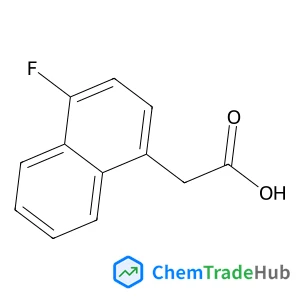
![7-Bromo-5-chloro-1H-pyrazolo[4,3-b]pyridine structure](https://static.chemtradehub.com/structs/135/1351813-70-1-a716.webp "7-Bromo-5-chloro-1H-pyrazolo[4,3-b]pyridine structure")
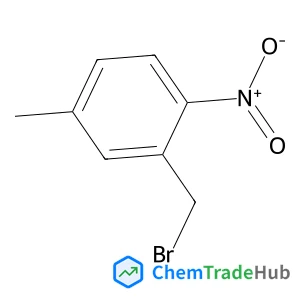
![4,4-Difluoro-2-methyl-1-{[(2-methyl-2-propanyl)oxy]carbonyl}-L-proline structure](https://static.chemtradehub.com/structs/119/1194032-23-9-f426.webp "4,4-Difluoro-2-methyl-1-{[(2-methyl-2-propanyl)oxy]carbonyl}-L-proline structure")




