













Radiofrequency polarization effects in low-field electron paramagnetic resonance‡
Literature Information
Publication Date
2009-07-03
DOI
10.1039/B907915G
Impact Factor
3.676
Authors
C. J. Wedge, Christopher T. Rodgers, Stuart A. Norman, Neville Baker, Kiminori Maeda, Kevin B. Henbest, C. R. Timmel, P. J. Hore
View Original
Abstract
Low-field optically detected EPR spectra of photochemically formed transient radical ion pairs are reported for weak circularly and linearly polarized radiofrequency (RF) fields. The spectra are found to be strongly dependent on the polarization and frequency of the RF field and on the angle between the static magnetic field and the plane containing the RF field. The spectra are discussed in terms of resonances arising from Zeeman and hyperfine interactions; the conditions for validity of the rotating frame approximation are determined. Knowledge of the latter is important when using low-field EPR as a diagnostic test for the operation of the radical pair mechanism.
Recommended Journals
Related Literature
Room-temperature sensor based on surface-enhanced Raman spectroscopy
Kuang-Hsuan Yang, Chung-Chin Yu
2014-07-21
Paper
DOI: 10.1039/C4AN01037J
A WS2 nanosheet-based platform for fluorescent DNA detection via PNA–DNA hybridization
Shuting Wang, Yulin Zhang, Yong Ning, Guo-Jun Zhang
2014-11-07
Paper
DOI: 10.1039/C4AN01738B
In vitro HER2 protein-induced affinity dissociation of carbon nanotube-wrapped anti-HER2 aptamers for HER2 protein detection
Javed H. Niazi, Sandeep K. Verma, Sarfaraj Niazi, Anjum Qureshi
2014-10-16
Paper
DOI: 10.1039/C4AN01665C
Label-free technology for the amplified detection of microRNA based on the allosteric hairpin DNA switch and hybridization chain reaction
Sheng Cai, Zhijuan Cao, Choiwan Lau, Jianzhong Lu
2014-09-09
Paper
DOI: 10.1039/C4AN01178C
Nanoscale-enhanced Ru(bpy)32+ electrochemiluminescence labels and related aptamer-based biosensing system‡
Erbo Ying, Erkang Wang
2008-07-28
Paper
DOI: 10.1039/B806301J
Enzymatic-reaction induced production of polydopamine nanoparticles for sensitive and visual sensing of urea
Nan Li, Hai-Bo Wang, Jing-Yuan Wang, Xin Wang
2014-11-18
Paper
DOI: 10.1039/C4AN01900H
Label-free fluorescence detection of DNA methylation and methyltransferase activity based on restriction endonuclease HpaII and exonuclease III
Chunyan Gao, Henan Li, Yuanjian Liu, Wei Wei, Yuanjian Zhang, Songqin Liu
2014-09-24
Paper
DOI: 10.1039/C4AN01359J
Determination of arsenate by sorption pre-concentration on polystyrene beads packed in a microfluidic device with chemiluminescence detection
Waraporn Som-aum, Haifang Li, Jiangjiang Liu, Jin-Ming Lin
2008-06-02
Paper
DOI: 10.1039/B801608A
UV photodissociation of trapped ions following ion mobility separation in a Q-ToF mass spectrometer
Bruno Bellina, Jeffery. M. Brown, Jakub Ujma, Paul Murray, Kevin Giles, Michael Morris, Perdita. E. Barran
2014-10-09
Communication
DOI: 10.1039/C4AN01656D
You might also like
Compound Q&A
What precautions should be taken when handling 2-Chloro-1,2-bis(4-methylphenyl)ethanone (CAS: 71193-32-3)?
When handling 2-Chloro-1,2-bis(4-methylphenyl)ethanone (CAS: 71193-32-3), it is ...
71193-32-32-Chloro-1,2-bis(4-m...
Compound Q&A
What industries use 4-Ethoxy-3-(5-methyl-4-oxo-7-propyl-1,4-dihydroimidazo[5,1-f][1,2,4]triazin-2-yl)benzenesulfonyl chloride (CAS: 224789-26-8)?
4-Ethoxy-3-(5-methyl-4-oxo-7-propyl-1,4-dihydroimidazo[5,1-f][1,2,4]triazin-2-yl...
224789-26-84-Ethoxy-3-(5-methyl...
Compound Q&A
How should Methyl 3-Oxo-4-Androsten-17-Carboxylate (CAS: 2681-55-2) be stored?
Methyl 3-Oxo-4-Androsten-17-Carboxylate (CAS: 2681-55-2) should be stored in a c...
2681-55-2Methyl 3-Oxo-4-Andro...
Compound Q&A
What are the main uses of (R)-3-Amino-4-(3-hexylphenylamino)-4-oxobutylphosphonic acid (CAS: 909725-61-7)?
(R)-3-Amino-4-(3-hexylphenylamino)-4-oxobutylphosphonic acid is primarily used i...
909725-61-7(R)-3-Amino-4-(3-hex...
Compound Q&A
What regulatory guidelines apply to 2-Methyl-2-propanyl 3-amino-3-carbamoyl-1-azetidinecarboxylate (CAS: 1254120-14-3)?
2-Methyl-2-propanyl 3-amino-3-carbamoyl-1-azetidinecarboxylate (CAS: 1254120-14-...
1254120-14-32-Methyl-2-propanyl ...
Compound Q&A
Are there alternatives to (E)-4-(tert-Butoxy)-4-oxobut-2-enoic acid (CAS: 135355-96-3) in synthesis?
There are alternative reagents that can be used in synthesis instead of (E)-4-(t...
135355-96-3(E)-4-(tert-Butoxy)-...
Compound Q&A
What are the physical and chemical properties of [2-(3-Chlorophenyl)-1,3-thiazol-4-yl]methanol (CAS: 121202-20-8)?
[2-(3-Chlorophenyl)-1,3-thiazol-4-yl]methanol (CAS: 121202-20-8) is a crystallin...
121202-20-8[2-(3-Chlorophenyl)-...
Compound Q&A
What is the market or research trend for Methyl (2S)-[(4S)-2,2-dimethyl-1,3-dioxolan-4-yl]{[(4-methylphenyl)sulfonyl]oxy}acetate (CAS: 166249-17-8)?
The market and research trends for Methyl (2S)-[(4S)-2,2-dimethyl-1,3-dioxolan-4...
166249-17-8Methyl (2S)-[(4S)-2,...
Compound Q&A
What is the market or research trend for 1-Bromo-2-isocyanatoethane (CAS: 42865-19-0)?
The market for 1-Bromo-2-isocyanatoethane (CAS: 42865-19-0) is driven by its use...
42865-19-01-Bromo-2-isocyanato...
Compound Q&A
What are the main uses of 4-Nitro-D-phenylalanine hydrochloride (CAS: 147065-06-3)?
4-Nitro-D-phenylalanine hydrochloride (CAS: 147065-06-3) is primarily used in re...
147065-06-34-Nitro-D-phenylalan...
Source Journal
Physical Chemistry Chemical Physics

CiteScore:
5.5
Self-citation Rate:
10.3%
Articles per Year:
3036
Physical Chemistry Chemical Physics (PCCP) is an international journal co-owned by 19 physical chemistry and physics societies from around the world. This journal publishes original, cutting-edge research in physical chemistry, chemical physics and biophysical chemistry. To be suitable for publication in PCCP, articles must include significant innovation and/or insight into physical chemistry; this is the most important criterion that reviewers and Editors will judge against when evaluating submissions. The journal has a broad scope and welcomes contributions spanning experiment, theory, computation and data science. Topical coverage includes spectroscopy, dynamics, kinetics, statistical mechanics, thermodynamics, electrochemistry, catalysis, surface science, quantum mechanics, quantum computing and machine learning. Interdisciplinary research areas such as polymers and soft matter, materials, nanoscience, energy, surfaces/interfaces, and biophysical chemistry are welcomed if they demonstrate significant innovation and/or insight into physical chemistry. Joined experimental/theoretical studies are particularly appreciated when complementary and based on up-to-date approaches.
Recommended Compounds


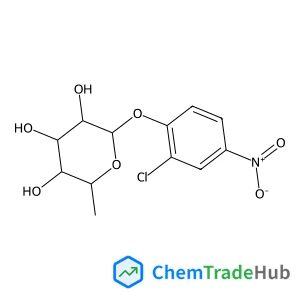
2-Chloro-4-nitrophenyl 6-deoxy-alpha-L-galactopyranoside
CAS Number:
157843-41-9
Molecular Formula:
C12H14ClNO7
Recommended Suppliers






Disclaimer
This page provides academic journal information for reference and research purposes only. We are not affiliated with any journal publishers and do not handle publication submissions. For publication-related inquiries, please contact the respective journal publishers directly.
If you notice any inaccuracies in the information displayed, please contact us at support@chemtradehub.com. We will promptly review and address your concerns.