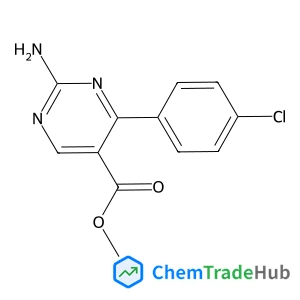
Methyl 2-amino-4-(4-chlorophenyl)-5-pyrimidinecarboxylate
CAS Number:
1133115-56-6
Molecular Formula:
C12H10ClN3O2
Victor Climent, Christopher F. Blanford, Fraser A. Armstrong
The ‘blue copper’ enzyme bilirubin oxidase from Myrothecium verrucaria shows significantly enhanced adsorption on a pyrolytic graphite ‘edge’ (PGE) electrode that has been covalently modified with naphthyl-2-carboxylate functionalities by diazonium coupling. Modified electrodes coated with bilirubin oxidase show electrocatalytic voltammograms for the direct, four-electron reduction of O2 by bilirubin oxidase with up to four times the current density of an unmodified PGE electrode. Electrocatalytic voltammograms measured with a rapidly rotating electrode (to remove effects of O2 diffusion limitation) have a complex shape (an almost linear dependence of current on potential below pH 6) that is similar regardless of how PGE is chemically modified. Importantly, the same waveform is observed if bilirubin oxidase is adsorbed on Au(111) or Pt(111) single-crystal electrodes (at which activity is short-lived). The electrocatalytic behavior of bilirubin oxidase, including its enhanced response on chemically-modified PGE, therefore reflects inherent properties that do not depend on the electrode material. The variation of voltammetric waveshapes and potential-dependent (O2) Michaelis constants with pH and analysis in terms of the dispersion model are consistent with a change in rate-determining step over the pH range 5–8: at pH 5, the high activity is limited by the rate of interfacial redox cycling of the Type 1 copper whereas at pH 8 activity is much lower and a sigmoidal shape is approached, showing that interfacial electron transfer is no longer a limiting factor. The electrocatalytic activity of bilirubin oxidase on Pt(111) appears as a prominent pre-wave to electrocatalysis by Pt surface atoms, thus substantiating in a single, direct experiment that the minimum overpotential required for O2 reduction by the enzyme is substantially smaller than required at Pt. At pH 8, the onset of O2 reduction lies within 0.14 V of the four-electron O2/2H2O potential.
Koji Fuji, Tsumoru Morimoto, Ken Tsutsumi, Kiyomi Kakiuchi
DOI: 10.1039/B503816B
Charlotte M. Haskins, David W. Knight
DOI: 10.1039/B417625C
Yusuke Fujii, Yasuchika Hasegawa, Shozo Yanagida, Yuji Wada
DOI: 10.1039/B502991K
David Belton, Siddharth V. Patwardhan, Carole C. Perry
DOI: 10.1039/B504310G
Hiroto Yoshida, Takashi Minabe, Joji Ohshita, Atsutaka Kunai
DOI: 10.1039/B505615B
DOI: 10.1039/B418196D
Jesus Ramírez, Rosa Corberán, Mercedes Sanaú, Eduardo Peris, Elena Fernandez
DOI: 10.1039/B503239C
Andrew M. Beale, Ad M. J. van der Eerden, Kaisa Kervinen, Mark A. Newton, Bert M. Weckhuysen
DOI: 10.1039/B504027B
2-Methylbenzene-1,4-diamine dihydrochloride (CAS: 615-45-2) should be stored in ...
(1S,4S)-2,5-Diazabicyclo[2.2.1]heptane dihydrobromide is generally considered sa...
(6-Chloropyridazin-3-YL)methanamine finds applications in the pharmaceutical ind...
2-Fluoro-3-methylphenol is primarily used in the synthesis of pharmaceuticals, p...
When handling 3-Methoxy-4-nitrobenzonitrile, it is important to wear appropriate...
When handling 1,3-Oxazolo[4,5-b]pyridine-2(3H)-thione (CAS: 211949-57-4), it is ...
4-Ethynylbenzamide (CAS: 90347-86-7) falls under various regulatory guidelines i...
3-(2-Ethylphenyl)-2-thioxo-4-imidazolidinone is primarily used as an intermediat...
(2-Fluoro-6-methoxyphenyl)acetic acid, also known as 4-fluoro-3-methoxybenzoic a...
Market trends for 2-[4-(Hydroxymethyl)phenoxy]ethanol (CAS: 102196-18-9) indicat...

Physical Chemistry Chemical Physics (PCCP) is an international journal co-owned by 19 physical chemistry and physics societies from around the world. This journal publishes original, cutting-edge research in physical chemistry, chemical physics and biophysical chemistry. To be suitable for publication in PCCP, articles must include significant innovation and/or insight into physical chemistry; this is the most important criterion that reviewers and Editors will judge against when evaluating submissions. The journal has a broad scope and welcomes contributions spanning experiment, theory, computation and data science. Topical coverage includes spectroscopy, dynamics, kinetics, statistical mechanics, thermodynamics, electrochemistry, catalysis, surface science, quantum mechanics, quantum computing and machine learning. Interdisciplinary research areas such as polymers and soft matter, materials, nanoscience, energy, surfaces/interfaces, and biophysical chemistry are welcomed if they demonstrate significant innovation and/or insight into physical chemistry. Joined experimental/theoretical studies are particularly appreciated when complementary and based on up-to-date approaches.