












Galvanic reactions involving silver nanoparticles embedded in cation-exchange membrane
Literature Information
Publication Date
2010-08-10
DOI
10.1039/C0CC00825G
Impact Factor
6.222
Authors
Rakesh Kumar, Ashok K. Pandey, Sadananda Das, Sangita Dhara, N. L. Misra, R. Shukla, A. K. Tyagi, Shobha V. Ramagiri, Jayesh R. Bellare, A. Goswami
View Original
Abstract
Galvanic reactions of Hg2+, Rh3+, and AuCl4− ions with Ag nanoparticles positioned near the surface and throughout the matrix of host poly(perfluorosulfonic) acid membrane have been studied.
Related Literature
Preparation of superhydrophobic films based on the diblock copolymer P(TFEMA-r-Sty)-b-PCEMA
2015-06-23
Paper
DOI: 10.1039/C5CP02751A
Secondary brown carbon formation via the dicarbonyl imine pathway: nitrogen heterocycle formation and synergistic effects
C. Zuth, T. Hoffmann, T. Opatz
2016-06-13
Paper
DOI: 10.1039/C6CP03029G
Roles of adsorption sites in electron transfer from CdS quantum dots to molecular catalyst cobaloxime studied by time-resolved spectroscopy
Lei Huang, Zhaochi Feng, Xiuli Wang, Can Li
2016-06-01
Paper
DOI: 10.1039/C6CP02808J
First principles optimally tuned range-separated density functional theory for prediction of phosphorus–hydrogen spin–spin coupling constants
Mojtaba Alipour, Parisa Fallahzadeh
2016-06-24
Paper
DOI: 10.1039/C6CP02648F
Concepts in bio-molecular spectroscopy: vibrational case studies on metalloenzymes
M. Horch, P. Hildebrandt, I. Zebger
2015-06-17
Perspective
DOI: 10.1039/C5CP02447A
Water distribution in a sorption enhanced methanation reactor by time resolved neutron imaging
A. Borgschulte, R. Delmelle, R. B. Duarte, A. Heel, P. Boillat, E. Lehmann
2016-01-11
Paper
DOI: 10.1039/C5CP07686B
Vibronic energy relaxation approach highlighting deactivation pathways in carotenoids
Vytautas Balevičius, Jr., Arpa Galestian Pour, Janne Savolainen, Craig N. Lincoln, Vladimír Lukeš, Eberhard Riedle, Darius Abramavicius, Jürgen Hauer
2015-06-30
Paper
DOI: 10.1039/C5CP00856E
Spectacular enhancement of thermoelectric phenomena in chemically synthesized graphene nanoribbons with substitution atoms
K. Zberecki, R. Swirkowicz, M. Wierzbicki
2016-06-07
Paper
DOI: 10.1039/C6CP02877B
Characterisation of the surface of freshly prepared precious metal catalysts
Stewart F. Parker, Devashibhai Adroja, Mónica Jiménez-Ruiz, Markus Tischer, Konrad Möbus, Stefan D. Wieland, Peter Albers
2016-03-09
Paper
DOI: 10.1039/C6CP01027J
Spectroscopic investigation into the design of solid–acid catalysts for the low temperature dehydration of ethanol
Matthew E. Potter, Sivan V. Aswegen, Emma K. Gibson, Robert Raja
2016-05-26
Paper
DOI: 10.1039/C6CP01209D
You might also like
Compound Q&A
Is 4-Benzyl-2,2-dimethylmorpholine (CAS: 84761-04-6) safe?
4-Benzyl-2,2-dimethylmorpholine is generally considered safe when handled under ...
84761-04-64-Benzyl-2,2-dimethy...
Compound Q&A
What is (5,6-Dimethoxy-3-pyridinyl)boronic acid (CAS: 1346526-61-1)?
(5,6-Dimethoxy-3-pyridinyl)boronic acid is a chemical compound with the molecula...
1346526-61-1(5,6-Dimethoxy-3-pyr...
Compound Q&A
How is 1,1,3,3-Tetramethyl-1,3-bis(2-methyl-2-propanyl)disiloxane (CAS: 67875-55-2) typically synthesized?
1,1,3,3-Tetramethyl-1,3-bis(2-methyl-2-propanyl)disiloxane is synthesized throug...
67875-55-21,1,3,3-Tetramethyl-...
Compound Q&A
What are the main uses of (2R,4S)-1-Boc-4-methylpyrrolidine-2-carboxylic acid (CAS: 1018818-04-6)?
(2R,4S)-1-Boc-4-methylpyrrolidine-2-carboxylic acid is primarily used as a build...
1018818-04-6(2R,4S)-1-Boc-4-meth...
Compound Q&A
What precautions should be taken when handling 2,3-Dichloroacrylonitrile (CAS: 22410-58-8)?
When handling 2,3-Dichloroacrylonitrile, it is crucial to wear appropriate perso...
22410-58-82,3-Dichloroacryloni...
Compound Q&A
How should (S)-1-(o-Tolyl)ethanamine hydrochloride (CAS: 1332832-16-2) be stored?
(S)-1-(o-Tolyl)ethanamine hydrochloride should be stored in a cool, dry place to...
1332832-16-2(S)-1-(o-Tolyl)ethan...
Compound Q&A
What are the physical and chemical properties of Benzyl [1-(hydroxyamino)-1-imino-2-methyl-2-propanyl]carbamate (CAS: 518047-98-8)?
Benzyl [1-(hydroxyamino)-1-imino-2-methyl-2-propanyl]carbamate (CAS: 518047-98-8...
518047-98-8Benzyl [1-(hydroxyam...
Compound Q&A
What industries use 2-Methyloxazole-5-carbaldehyde (CAS: 885273-42-7)?
2-Methyloxazole-5-carbaldehyde is used in the pharmaceutical industry for the sy...
885273-42-72-Methyloxazole-5-ca...
Compound Q&A
What is the market or research trend for 2-Methyl-2-propanyl 4-[(1S)-1-hydroxyethyl]-1-piperidinecarboxylate (CAS: 389889-82-1)?
The market for 2-Methyl-2-propanyl 4-[(1S)-1-hydroxyethyl]-1-piperidinecarboxyla...
389889-82-12-Methyl-2-propanyl ...
Compound Q&A
Is 1-Butyl-3-methylpyridinium bromide (CAS: 26576-85-2) safe?
1-Butyl-3-methylpyridinium bromide is generally considered safe for laboratory u...
26576-85-21-Butyl-3-methylpyri...
Source Journal
Chemical Communications

CiteScore:
8.6
Self-citation Rate:
4.7%
Articles per Year:
2458
ChemComm publishes urgent research which is of outstanding significance and interest to experts in the field, while also appealing to the journal’s broad chemistry readership. Our communication format is ideally suited to short, urgent studies that are of such importance that they require accelerated publication. Our scope covers all topics in chemistry, and research at the interface of chemistry and other disciplines (such as materials science, nanoscience, physics, engineering and biology) where there is a significant novelty in the chemistry aspects. Major topic areas covered include: Analytical Chemistry Catalysis Chemical Biology and medicinal chemistry Computational Chemistry and Machine Learning Energy and sustainable chemistry Environmental Chemistry Green Chemistry Inorganic Chemistry Materials Chemistry Nanoscience Organic Chemistry Physical Chemistry Polymer Chemistry Supramolecular Chemistry
Recommended Compounds
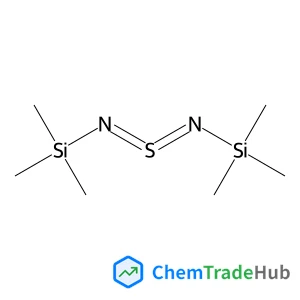
1,3-Bis(trimethylsilyl)-2lambda~4~-diazathia-1,2-diene
CAS Number:
18156-25-7
Molecular Formula:
C6H18N2SSi2
Recommended Suppliers





Disclaimer
This page provides academic journal information for reference and research purposes only. We are not affiliated with any journal publishers and do not handle publication submissions. For publication-related inquiries, please contact the respective journal publishers directly.
If you notice any inaccuracies in the information displayed, please contact us at support@chemtradehub.com. We will promptly review and address your concerns.