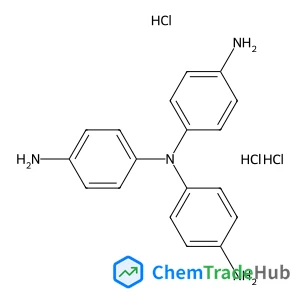
N1,N1-Bis(4-aminophenyl)benzene-1,4-diamine trihydrochloride
CAS Number:
114254-48-7
Molecular Formula:
C18H21Cl3N4
A. Kirrander, Ch. Jungen, H. H. Fielding
Ever since the first lasers were built over 40 years ago, chemists and physicists have been attempting to exploit them as tools for controlling the outcome of chemical reactions. Over the last decade this dream has become a reality. The most successful approaches have employed learning algorithms to shape femtosecond laser pulses; however, in these experiments, the laser light effectively learns for itself what pulse shape is required to generate a specific product and it is not always easy to unravel the underlying physics of the control process. In this theoretical investigation we unravel the mechanism of ionisation/dissociation control in the prototypical H2 molecule. We track the excited state molecular dynamics from the moment of interaction with the laser field to ionization and dissociation, and determine how sequences of carefully tuned laser pulses are able to change the ionization/dissociation branching ratio.
Arnošt Zukal, Angeles Pulido, Barbara Gil, Petr Nachtigall, Ota Bludský, Miroslav Rubeš, Jiří Čejka
DOI: 10.1039/C001950J
Cheng Yang, Yu-Tao Xie, Matthew M. F. Yuen, Xiaomin Xiong, C. P. Wong
DOI: 10.1039/C0CP00414F
Ce Hao, Zhilong Xiu, Jieshan Qiu
DOI: 10.1039/B927049C
Cosimo Bonetti, Maxime T. A. Alexandre, Ivo H. M. van Stokkum, Roger G. Hiller, Marie Louise Groot, Rienk van Grondelle, John T. M. Kennis
DOI: 10.1039/B923695C
María Paz Fernández-García, Pedro Gorria, Marta Sevilla, Antonio B. Fuertes, Roberto Boada, Jesús Chaboy, Giuliana Aquilanti, Jesús A. Blanco
DOI: 10.1039/C0CP00396D
Juan A. Santana, Carlos R. Cabrera, Yasuyuki Ishikawa
DOI: 10.1039/C000981D
Yin-Feng Wang, Zhuo Li, Ying Li, Zhi-Ru Li, Zong-Jun Li, Di Wu, Fang Ma, Chia-Chung Sun
DOI: 10.1039/B927344A
Xumei Wang, Shuping Xu, Weiqing Xu
DOI: 10.1039/C0CP00929F
Satoshi Katano, Yoichi Uehara
DOI: 10.1039/C0CP01005G
Mariusz Łukaszewski, Katarzyna Hubkowska, Andrzej Czerwiński
DOI: 10.1039/C0CP00542H
Waste containing N-Methoxy-N-methyl-1,3-thiazole-5-carboxamide (CAS: 898825-89-3...
N-(4-Biphenylyl)dibenzo[b,d]furan-4-amine should be stored in a tightly sealed c...
The market for 3-Acetamido-5-amino-2,4,6-triiodobenzoic acid (CAS: 1713-07-1) is...
Benzyl 2-O-acetyl-3,4,6-tri-O-benzyl-beta-D-galactopyranoside (CAS: 61820-03-9) ...
2-Ethylpiperazine dihydrochloride (CAS: 438050-52-3) is regulated under the Glob...
1,1'-[1,3-Phenylenebis(methylene)]bis(3-methyl-1H-pyrrole-2,5-dione) (CAS: 11946...
Several alternatives can be used in the synthesis of 5-Fluoro-2-(1-pyrrolidinyl)...
Proper personal protective equipment (PPE) must be worn when handling this compo...
When handling 6-Bromoimidazo[1,2-a]pyridin-8-amine, it is important to wear appr...
Alternatives to (2S,4R)-4-(4-Nitrobenzyl)pyrrolidine-2-carboxylic acid hydrochlo...

Physical Chemistry Chemical Physics (PCCP) is an international journal co-owned by 19 physical chemistry and physics societies from around the world. This journal publishes original, cutting-edge research in physical chemistry, chemical physics and biophysical chemistry. To be suitable for publication in PCCP, articles must include significant innovation and/or insight into physical chemistry; this is the most important criterion that reviewers and Editors will judge against when evaluating submissions. The journal has a broad scope and welcomes contributions spanning experiment, theory, computation and data science. Topical coverage includes spectroscopy, dynamics, kinetics, statistical mechanics, thermodynamics, electrochemistry, catalysis, surface science, quantum mechanics, quantum computing and machine learning. Interdisciplinary research areas such as polymers and soft matter, materials, nanoscience, energy, surfaces/interfaces, and biophysical chemistry are welcomed if they demonstrate significant innovation and/or insight into physical chemistry. Joined experimental/theoretical studies are particularly appreciated when complementary and based on up-to-date approaches.
![2-Methylbenzo[h]quinoline structure](https://static.chemtradehub.com/structs/605/605-88-9-ac43.webp "2-Methylbenzo[h]quinoline structure")
![[5-fluoro-2-(morpholine-4-carbonyl)phenyl]boronic acid structure](https://static.chemtradehub.com/structs/121/1217501-26-2-505c.webp "[5-fluoro-2-(morpholine-4-carbonyl)phenyl]boronic acid structure")
![4-Chloro-2-{[(2-chlorophenoxy)acetyl]amino}benzoic acid structure](https://static.chemtradehub.com/structs/351/351424-20-9-9467.webp "4-Chloro-2-{[(2-chlorophenoxy)acetyl]amino}benzoic acid structure")