












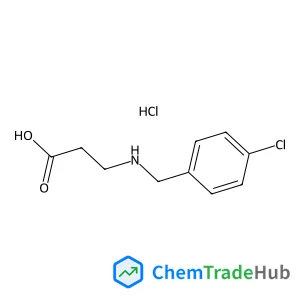
N-(4-Chlorobenzyl)-beta-alanine hydrochloride (1:1)
CAS Number:
1172479-10-5
Molecular Formula:
C10H13Cl2NO2
Yin-Feng Wang, Zhuo Li, Ying Li, Zhi-Ru Li, Zong-Jun Li, Di Wu, Fang Ma, Chia-Chung Sun
Expanding the non-knot region of the famous Möbius strip with topological one-sided characteristics, an interesting structure of a Möbius basket molecule with all real frequencies was obtained at the B3LYP/6-31G(d) level for the first time. This structure contains six fused five-membered pyrrole rings contrasting with the isolated pentagon rule for the fullerenes. The twisted handle joints the outer and inner surfaces of the bowl to form a one-sided container molecule. Comparing the Möbius basket to its isomers of a Möbius strip and a normal basket, the framework shape effects on the structure and properties are systematically exhibited. Especially, (1) the basket-making effect increases kinetic stability (the HOMO–LUMO gap increases from 1.116 eV for Möbius strip to 1.608 eV for Möbius basket); (2) from the normal basket to the Möbius basket, the twisting effect obviously increases the static first hyperpolarizability (from 2836 to 3773 au) and IP (from 6.622 to 6.857 eV). It is found that the aza atom, knot, the bowl, and the combination of the knot and bowl units are important regulating factors for the charge transfer (CT) direction in the crucial transitions. This provides the possibility to control the charge transfer direction in crucial transitions by variation of the structures, which is important for the designs of the new optical and photoelectric materials and devices with good performances.
Lei Wang, Zhaoxiang Dai, Rulong Zhou
DOI: 10.1039/C8CP02569J
Nirmali Prabha Das, Brigitta Müller, Ágota Tóth, Dezső Horváth, Gábor Schuszter
DOI: 10.1039/C8CP01798K
Sheng-Lung Chou, Jen-Iu Lo, Yu-Chain Peng, Hsiao-Chi Lu, Bing-Ming Cheng
DOI: 10.1039/C8CP00078F
Janina Kopyra
DOI: 10.1039/C7CP08149A
Weifeng Jin, Xiaojing Mu, Kun Zhang, Zhengguo Shang
DOI: 10.1039/C8CP02859A
Aleksander P. Stupak, Thomas Blaudeck, Eduard I. Zenkevich, Stefan Krause, Christian von Borczyskowski
DOI: 10.1039/C8CP02846J
Franziska Fennel, Jana Gershberg
DOI: 10.1039/C7CP07778E
Yun Kyung Shin, A. S. M. Jonayat, Wonho Lee, Clive A. Randall, Adri C. T. van Duin
DOI: 10.1039/C8CP03586E
C. S. Trevisan, R. R. Lucchese, W. Iskandar, R. Moshammer, R. Strom, T. Severt, B. Jochim, D. Reedy, M. Weller, A. L. Landers, J. B. Williams, I. Ben-Itzhak, R. Dörner, D. Slaughter, Th. Weber, T. N. Rescigno
DOI: 10.1039/C8CP03637C
Waste containing N-Methoxy-N-methyl-1,3-thiazole-5-carboxamide (CAS: 898825-89-3...
N-(4-Biphenylyl)dibenzo[b,d]furan-4-amine should be stored in a tightly sealed c...
The market for 3-Acetamido-5-amino-2,4,6-triiodobenzoic acid (CAS: 1713-07-1) is...
Benzyl 2-O-acetyl-3,4,6-tri-O-benzyl-beta-D-galactopyranoside (CAS: 61820-03-9) ...
2-Ethylpiperazine dihydrochloride (CAS: 438050-52-3) is regulated under the Glob...
1,1'-[1,3-Phenylenebis(methylene)]bis(3-methyl-1H-pyrrole-2,5-dione) (CAS: 11946...
Several alternatives can be used in the synthesis of 5-Fluoro-2-(1-pyrrolidinyl)...
Proper personal protective equipment (PPE) must be worn when handling this compo...
When handling 6-Bromoimidazo[1,2-a]pyridin-8-amine, it is important to wear appr...
Alternatives to (2S,4R)-4-(4-Nitrobenzyl)pyrrolidine-2-carboxylic acid hydrochlo...

Physical Chemistry Chemical Physics (PCCP) is an international journal co-owned by 19 physical chemistry and physics societies from around the world. This journal publishes original, cutting-edge research in physical chemistry, chemical physics and biophysical chemistry. To be suitable for publication in PCCP, articles must include significant innovation and/or insight into physical chemistry; this is the most important criterion that reviewers and Editors will judge against when evaluating submissions. The journal has a broad scope and welcomes contributions spanning experiment, theory, computation and data science. Topical coverage includes spectroscopy, dynamics, kinetics, statistical mechanics, thermodynamics, electrochemistry, catalysis, surface science, quantum mechanics, quantum computing and machine learning. Interdisciplinary research areas such as polymers and soft matter, materials, nanoscience, energy, surfaces/interfaces, and biophysical chemistry are welcomed if they demonstrate significant innovation and/or insight into physical chemistry. Joined experimental/theoretical studies are particularly appreciated when complementary and based on up-to-date approaches.
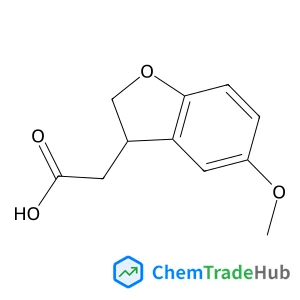
![tert-Butyl 6-chloro-4-oxospiro[chroman-2,4'-piperidine]-1'-carboxylate structure](https://static.chemtradehub.com/structs/101/1011482-37-3-88a5.webp "tert-Butyl 6-chloro-4-oxospiro[chroman-2,4'-piperidine]-1'-carboxylate structure")
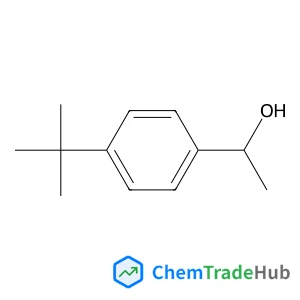
![2-(7,7-Difluorobicyclo[4.1.0]hept-1-yl)ethanamine structure](https://static.chemtradehub.com/structs/209/2098065-08-6-ff24.webp "2-(7,7-Difluorobicyclo[4.1.0]hept-1-yl)ethanamine structure")






