![[(2R)-6,6-Dimethyl-2-morpholinyl]methanol hydrochloride (1:1) structure](https://static.chemtradehub.com/structs/141/1416444-88-6-e06a.webp "[(2R)-6,6-Dimethyl-2-morpholinyl]methanol hydrochloride (1:1) structure")
[(2R)-6,6-Dimethyl-2-morpholinyl]methanol hydrochloride (1:1)
CAS Number:
1416444-88-6
Molecular Formula:
C7H16ClNO2
Daniel Eduardo Weibel, Felipe Kessler, Gunar Vingre da Silva Mota
The surfaces of polystyrene (PS) thin films were selectively functionalized by a combination of monochromatic synchrotron radiation with oxygen exposure. By selecting specific K-shell excitation energies, it was shown that highly efficient surface functionalization can be obtained. After the treatments, several oxygen functionalities were detected by XPS and NEXAFS spectroscopy. The functionalization strongly depended on the excitation energy. C 1s → σ*C–C transitions produced an extremely efficient oxidation of the uppermost monolayer of the PS films. The COO and CO elemental contributions in the C 1s envelope at the PS surface was higher than 70%. On the contrary, other excitation energies did not introduce COO functionalities efficiently. The obtained results were explained by taking into account the known Auger stimulated desorption mechanism. The present research will open new ways to functionalize a polymer surface by a combination of monochromatic inner-shell excitation together with exposure to a reactive gas atmosphere.
M. V. Dávila, P. M. Pasinetti, A. J. Ramirez-Pastor
DOI: 10.1039/C6CP03548E
Jongcheol Seo, Stephan Warnke, Sandy Gewinner, Wieland Schöllkopf, Michael T. Bowers, Gert von Helden
DOI: 10.1039/C6CP04941A
Yoshihiro Hayashi, Sohta Akiyama, Akimitsu Miyaji, Yasumasa Sekiguchi, Yasuharu Sakamoto, Akinobu Shiga, To-ru Koyama, Ken Motokura, Toshihide Baba
DOI: 10.1039/C6CP04171J
Katharina Keller, Mian Qi, Vanessa Koch, Julia Wegner, Henrik Hintz, Adelheid Godt, Gunnar Jeschke, Anton Savitsky, Maxim Yulikov
DOI: 10.1039/C6CP04884F
Justyna Dominikowska, Mirosław Jabłoński, Marcin Palusiak
DOI: 10.1039/C6CP03774G
Pablo Sampedro, Bo Y. Chang, Ignacio R. Sola
DOI: 10.1039/C6CP04761K
Anh Phan, Tai Bui, Erick Acosta, Pushkala Krishnamurthy, Alberto Striolo
DOI: 10.1039/C6CP03296F
DOI: 10.1039/C6CP04816A
Mengxiao Sun, Kun Zhang, Wanchun Jiang, Meng He
DOI: 10.1039/C6CP04600B
D. Ondarse-Alvarez, S. Kömürlü, A. E. Roitberg, G. Pierdominici-Sottile, S. Tretiak, S. Fernandez-Alberti, V. D. Kleiman
DOI: 10.1039/C6CP04448D
When handling lithium chloride hydrate (1:1:1) (CAS: 16712-20-2), it is importan...
4-(4H-1,2,4-Triazol-4-yl)piperidine is generally considered safe for use in phar...
Waste containing 1,3-Thiazole-2-carboxamide (CAS: 16733-85-0) should be collecte...
5-(Difluoromethyl)-2-fluorobenzonitrile (CAS: 934175-58-3) is subject to regulat...
Methyl 3-acetamido-2-thiophenecarboxylate can be synthesized by the reaction of ...
4-Isoquinolinecarbonitrile is a chemical compound with the CAS number 34846-65-6...
Store Methyl 1H-1,2,3-triazole-4-carboxylate (CAS: 877309-59-6) in a cool, dry p...
6-Bromo[1,3]thiazolo[5,4-b]pyridin-2-amine (CAS: 1160791-13-8) is subject to the...
(2S,3S)-2-Ammonio-3-(3,4-dihydroxyphenyl)-3-hydroxypropanoate (CAS: 23651-95-8) ...
7-Bromo-3-methyl-3,4-dihydroquinazolin-4-one is a solid with a crystalline form....

Polymer Chemistry welcomes submissions in all areas of polymer science that have a strong focus on macromolecular chemistry. Manuscripts may cover a broad range of fields, yet no direct application focus is required.
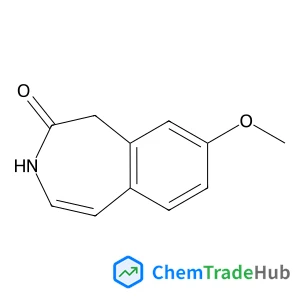
![N-[2-(2-Pyridinyl)ethyl]-1-propanamine structure](https://static.chemtradehub.com/structs/554/55496-57-6-22b4.webp "N-[2-(2-Pyridinyl)ethyl]-1-propanamine structure")