


![2-Methylbenzo[h]quinoline structure](https://static.chemtradehub.com/structs/605/605-88-9-ac43.webp "2-Methylbenzo[h]quinoline structure")
Electronic absorption and vibrational spectra and nonlinear optical properties of 4-methoxy-2-nitroaniline
Literature Information
Publication Date
2010-07-06
DOI
10.1039/B927190B
Impact Factor
3.676
Authors
C. Ravikumar, I. Hubert Joe
View Original
Abstract
FT-Raman, IR and UV–vis spectroscopies have been applied to investigate the potential nonlinear optical (NLO) material 4-methoxy-2-nitroaniline. A detailed interpretation of the vibrational spectra was carried out with the aid of normal coordinate analysis following the scaled quantum mechanical force field methodology. Density functional theory is applied to explore the nonlinear optical properties of the molecule. The study suggests the importance of π-conjugated systems for nonlinear optical properties and the possibility of charge transfer interactions. Good consistency is found between the calculated results and experimental data for the electronic absorption, IR and Raman spectra. The solvent effects have been calculated using time-dependent density functional theory in combination with the polarized continuum model, and the results are in good agreement with experimental measurements. The calculations reveal that incorporation of substituents (amino, nitro and methoxy) has a strong influence on the structure and spectroscopic properties of the molecule, and the effect of electron charge transfer was examined by natural bond orbital population analysis.
Recommended Journals

Mini-Reviews in Medicinal Chemistry

Current Pharmaceutical Biotechnology

Lab on a Chip

CrystEngComm

Physical Chemistry Chemical Physics

Nature Reviews Drug Discovery

Journal of Enzyme inhibition and Medicinal Chemistry

Coloration Technology

Angewandte Chemie International Edition

Advanced Engineering Materials
Related Literature
High oxide-ion conductivity in acceptor-doped Bi-based perovskites at modest doping levels
Linhao Li, Joe Kler, Anthony R. West, Roger A. De Souza, Derek C. Sinclair
2021-05-03
Paper
DOI: 10.1039/D1CP01120K
Caged-electron states and split-electron states in the endohedral alkali C60
Yi-Fan Yang, Lorenz S. Cederbaum
2021-04-22
Paper
DOI: 10.1039/D1CP01341F
From absolute potentials to a generalized computational standard hydrogen electrode for aqueous and non-aqueous solvents
Michael Busch, Elisabet Ahlberg, Kari Laasonen
2021-05-04
Paper
DOI: 10.1039/D1CP00499A
An experimental investigation of light emission produced in the process of positronium formation in matter
M. Pietrow, R. Zaleski, A. Wagner, P. Słomski, E. Hirschmann, R. Krause-Rehberg, M. O. Liedke, M. Butterling, D. Weinberger
2021-04-30
Paper
DOI: 10.1039/D1CP00755F
Measurement and modelling solubility of amino acids and peptides in aqueous 2-propanol solutions
Hoang Tam Do, Patrick Franke, Sophia Volpert, Marcel Klinksiek, Max Thome, Christoph Held
2021-04-08
Paper
DOI: 10.1039/D1CP00005E
Theoretical and experimental insights into the effects of halogen composition on the thermal decomposition details, as well as the fire-suppressing mechanism and performance of CF3CXCH2 (X = F, Cl, Br)
Suting Zhou, Qi Yang, Haijun Zhang, Xiaomeng Zhou
2021-04-19
Paper
DOI: 10.1039/D0CP05956K
Expanding carbon capture capacity: uncovering additional CO2 adsorption sites in imine-linked porous organic cages
Zezhong John Li, Simcha Srebnik
2021-03-23
Paper
DOI: 10.1039/D0CP06708C
Ligand-to-metal charge transfer of a pyridine surface complex on TiO2 for selective dehydrogenative cross-coupling with benzene
Shimpei Naniwa, Shinichiro Hishitani
2021-04-15
Paper
DOI: 10.1039/D1CP00496D
Should a hotter paramagnet transform quicker to a ferromagnet? Monte Carlo simulation results for Ising model
Nalina Vadakkayil, Subir K. Das
2021-04-27
Communication
DOI: 10.1039/D1CP00879J
Photon-induced deactivations of multiple traps in CH3NH3PbI3 perovskite films by different photon energies
Asmida Herawati, Hui-Ching Lin, Shun-Hsiang Chan, Tsong-Shin Lim, Forest Shih-Sen Chien
2021-04-26
Paper
DOI: 10.1039/D1CP00974E
You might also like
Compound Q&A
How should waste containing N-Methoxy-N-methyl-1,3-thiazole-5-carboxamide (CAS: 898825-89-3) be handled?
Waste containing N-Methoxy-N-methyl-1,3-thiazole-5-carboxamide (CAS: 898825-89-3...
898825-89-3N-Methoxy-N-methyl-1...
Compound Q&A
How should N-(4-Biphenylyl)dibenzo[b,d]furan-4-amine (CAS: 1318338-47-4) be stored?
N-(4-Biphenylyl)dibenzo[b,d]furan-4-amine should be stored in a tightly sealed c...
1318338-47-4N-(4-Biphenylyl)dibe...
Compound Q&A
What is the market or research trend for 3-Acetamido-5-amino-2,4,6-triiodobenzoic acid (CAS: 1713-07-1)?
The market for 3-Acetamido-5-amino-2,4,6-triiodobenzoic acid (CAS: 1713-07-1) is...
1713-07-13-Acetamido-5-amino-...
Compound Q&A
How should Benzyl 2-O-acetyl-3,4,6-tri-O-benzyl-beta-D-galactopyranoside (CAS: 61820-03-9) be stored?
Benzyl 2-O-acetyl-3,4,6-tri-O-benzyl-beta-D-galactopyranoside (CAS: 61820-03-9) ...
61820-03-9Benzyl 2-O-acetyl-3,...
Compound Q&A
What regulatory guidelines apply to 2-Ethylpiperazine dihydrochloride (CAS: 438050-52-3)?
2-Ethylpiperazine dihydrochloride (CAS: 438050-52-3) is regulated under the Glob...
438050-52-32-Ethylpiperazine di...
Compound Q&A
What regulatory guidelines apply to 1,1'-[1,3-Phenylenebis(methylene)]bis(3-methyl-1H-pyrrole-2,5-dione) (CAS: 119462-56-5)?
1,1'-[1,3-Phenylenebis(methylene)]bis(3-methyl-1H-pyrrole-2,5-dione) (CAS: 11946...
119462-56-51,1'-[1,3-Phenyleneb...
Compound Q&A
Are there alternatives to 5-Fluoro-2-(1-pyrrolidinyl)pyridine (CAS: 1287217-79-1) in synthesis?
Several alternatives can be used in the synthesis of 5-Fluoro-2-(1-pyrrolidinyl)...
1287217-79-15-Fluoro-2-(1-pyrrol...
Compound Q&A
What precautions should be taken when handling 1-((2R,3R,4R,5R)-5-((bis(4-methoxyphenyl)(phenyl)methoxy)methyl)-4-hydroxy-3-methoxytetrahydrofuran-2-yl)-5-methylpyrimidine-2,4(1H,3H)-dione (CAS: 153631-19-7)?
Proper personal protective equipment (PPE) must be worn when handling this compo...
153631-19-71-((2R,3R,4R,5R)-5-(...
Compound Q&A
What precautions should be taken when handling 6-Bromoimidazo[1,2-a]pyridin-8-amine (CAS: 676371-00-9)?
When handling 6-Bromoimidazo[1,2-a]pyridin-8-amine, it is important to wear appr...
676371-00-96-Bromoimidazo[1,2-a...
Compound Q&A
Are there alternatives to (2S,4R)-4-(4-Nitrobenzyl)pyrrolidine-2-carboxylic acid hydrochloride (CAS: 1049740-22-8) in synthesis?
Alternatives to (2S,4R)-4-(4-Nitrobenzyl)pyrrolidine-2-carboxylic acid hydrochlo...
1049740-22-8(2S,4R)-4-(4-Nitrobe...
Source Journal
Physical Chemistry Chemical Physics
CiteScore:
5.5
Self-citation Rate:
10.3%
Articles per Year:
3036
Physical Chemistry Chemical Physics (PCCP) is an international journal co-owned by 19 physical chemistry and physics societies from around the world. This journal publishes original, cutting-edge research in physical chemistry, chemical physics and biophysical chemistry. To be suitable for publication in PCCP, articles must include significant innovation and/or insight into physical chemistry; this is the most important criterion that reviewers and Editors will judge against when evaluating submissions. The journal has a broad scope and welcomes contributions spanning experiment, theory, computation and data science. Topical coverage includes spectroscopy, dynamics, kinetics, statistical mechanics, thermodynamics, electrochemistry, catalysis, surface science, quantum mechanics, quantum computing and machine learning. Interdisciplinary research areas such as polymers and soft matter, materials, nanoscience, energy, surfaces/interfaces, and biophysical chemistry are welcomed if they demonstrate significant innovation and/or insight into physical chemistry. Joined experimental/theoretical studies are particularly appreciated when complementary and based on up-to-date approaches.
Recommended Compounds

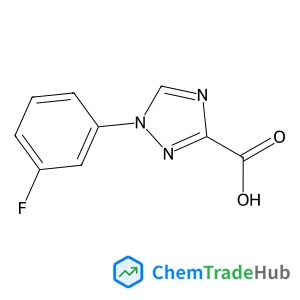
1-(3-Fluorophenyl)-1H-1,2,4-triazole-3-carboxylic acid
CAS Number:
1292369-51-7
Molecular Formula:
C9H6FN3O2

Recommended Suppliers






Disclaimer
This page provides academic journal information for reference and research purposes only. We are not affiliated with any journal publishers and do not handle publication submissions. For publication-related inquiries, please contact the respective journal publishers directly.
If you notice any inaccuracies in the information displayed, please contact us at support@chemtradehub.com. We will promptly review and address your concerns.