












Core shell structure for solid gas synthesis of LiBD4
Literature Information
Publication Date
2010-03-17
DOI
10.1039/B927068J
Impact Factor
3.676
Authors
D. Wallacher, A. Hoser, Y. W. Cho, K. H. Oh
View Original
Abstract
The formation of LiBD4 by the reaction of LiD in a diborane/hydrogen atmosphere was analysed by in situ neutron diffraction and subsequent microstructural and chemical analysis of the final product. The neutron diffraction shows that nucleation of LiBD4 already starts at temperatures of 100 °C, i.e. in its low temperature phase (orthorhombic structure). However, even at higher temperatures the reaction is incomplete. We observe a yield of approximately 50% at a temperature of 185 °C. A core shell structure of the grains, in which LiBD4 forms a passivation layer on the surface of the LiD grains, was found in the subsequent microstructural (electron microscopy) and chemical (electron energy loss spectrometry) analysis.
Recommended Journals
Related Literature
Kink energy and kink dipole moments on vicinal Au(001) in halide electrolytes
M. Al-Shakran, G. Beltramo, M. Giesen
2014-03-17
Paper
DOI: 10.1039/C4CP00448E
Molecular self-assembly at nanometer scale modulated surfaces: trimesic acid on Ag(111), Cu(111) and Ag/Cu(111)
Mahdi Sadeghzadeh Baviloliaei, Lars Diekhöner
2014-04-24
Paper
DOI: 10.1039/C4CP01429D
Combined excitatory and inhibitory coupling in a 1-D array of Belousov–Zhabotinsky droplets
Ning Li, Irving R. Epstein, Seth Fraden
2014-04-17
Paper
DOI: 10.1039/C4CP00957F
Adsorption and splitting of H2S on 2D-ZnO1−xNy: first-principles analysis
Summayya Kouser, Nacir Tit
2014-04-22
Paper
DOI: 10.1039/C4CP01092B
Experimental determination of electrostatic properties of Na–X zeolite from high resolution X-ray diffraction
2014-03-31
Paper
DOI: 10.1039/C3CP55397C
Insight into the structure and the mechanism of the slow proton transfer in the GFP double mutant T203V/S205A
Ron Simkovitch, Shay Shomer, Rinat Gepshtein, Dan Huppert, Mari Saif, Karen Kallio, S. James Remington
2014-04-14
Paper
DOI: 10.1039/C4CP00311J
Mechanisms of enhanced sulfur tolerance on samarium (Sm)-doped cerium oxide (CeO2) from first principles
Hee Su Kim, Sung Pil Yoon, Jonghee Han, Chang Won Yoon, Sun Hee Choi, Suk Woo Nam, Hyung Chul Ham
2014-04-01
Paper
DOI: 10.1039/C4CP00777H
Enhanced thermoelectric efficiency in ferromagnetic silicene nanoribbons terminated with hydrogen atoms
K. Zberecki, R. Swirkowicz, M. Wierzbicki
2014-05-01
Paper
DOI: 10.1039/C4CP01039F
Computational investigations on the catalytic mechanism of maleate isomerase: the role of the active site cysteine residues
Hisham M. Dokainish, Bogdan F. Ion, James W. Gauld
2014-05-08
Paper
DOI: 10.1039/C4CP01342E
Excitonic energy transfer in polymer wrapped carbon nanotubes in gradually grown nanoassemblies
Victor A. Karachevtsev, Alexander M. Plokhotnichenko, Victor S. Leontiev
2014-04-14
Paper
DOI: 10.1039/C4CP00776J
You might also like
Compound Q&A
What precautions should be taken when handling 2-Chloro-1,2-bis(4-methylphenyl)ethanone (CAS: 71193-32-3)?
When handling 2-Chloro-1,2-bis(4-methylphenyl)ethanone (CAS: 71193-32-3), it is ...
71193-32-32-Chloro-1,2-bis(4-m...
Compound Q&A
What industries use 4-Ethoxy-3-(5-methyl-4-oxo-7-propyl-1,4-dihydroimidazo[5,1-f][1,2,4]triazin-2-yl)benzenesulfonyl chloride (CAS: 224789-26-8)?
4-Ethoxy-3-(5-methyl-4-oxo-7-propyl-1,4-dihydroimidazo[5,1-f][1,2,4]triazin-2-yl...
224789-26-84-Ethoxy-3-(5-methyl...
Compound Q&A
How should Methyl 3-Oxo-4-Androsten-17-Carboxylate (CAS: 2681-55-2) be stored?
Methyl 3-Oxo-4-Androsten-17-Carboxylate (CAS: 2681-55-2) should be stored in a c...
2681-55-2Methyl 3-Oxo-4-Andro...
Compound Q&A
What are the main uses of (R)-3-Amino-4-(3-hexylphenylamino)-4-oxobutylphosphonic acid (CAS: 909725-61-7)?
(R)-3-Amino-4-(3-hexylphenylamino)-4-oxobutylphosphonic acid is primarily used i...
909725-61-7(R)-3-Amino-4-(3-hex...
Compound Q&A
What regulatory guidelines apply to 2-Methyl-2-propanyl 3-amino-3-carbamoyl-1-azetidinecarboxylate (CAS: 1254120-14-3)?
2-Methyl-2-propanyl 3-amino-3-carbamoyl-1-azetidinecarboxylate (CAS: 1254120-14-...
1254120-14-32-Methyl-2-propanyl ...
Compound Q&A
Are there alternatives to (E)-4-(tert-Butoxy)-4-oxobut-2-enoic acid (CAS: 135355-96-3) in synthesis?
There are alternative reagents that can be used in synthesis instead of (E)-4-(t...
135355-96-3(E)-4-(tert-Butoxy)-...
Compound Q&A
What are the physical and chemical properties of [2-(3-Chlorophenyl)-1,3-thiazol-4-yl]methanol (CAS: 121202-20-8)?
[2-(3-Chlorophenyl)-1,3-thiazol-4-yl]methanol (CAS: 121202-20-8) is a crystallin...
121202-20-8[2-(3-Chlorophenyl)-...
Compound Q&A
What is the market or research trend for Methyl (2S)-[(4S)-2,2-dimethyl-1,3-dioxolan-4-yl]{[(4-methylphenyl)sulfonyl]oxy}acetate (CAS: 166249-17-8)?
The market and research trends for Methyl (2S)-[(4S)-2,2-dimethyl-1,3-dioxolan-4...
166249-17-8Methyl (2S)-[(4S)-2,...
Compound Q&A
What is the market or research trend for 1-Bromo-2-isocyanatoethane (CAS: 42865-19-0)?
The market for 1-Bromo-2-isocyanatoethane (CAS: 42865-19-0) is driven by its use...
42865-19-01-Bromo-2-isocyanato...
Compound Q&A
What are the main uses of 4-Nitro-D-phenylalanine hydrochloride (CAS: 147065-06-3)?
4-Nitro-D-phenylalanine hydrochloride (CAS: 147065-06-3) is primarily used in re...
147065-06-34-Nitro-D-phenylalan...
Source Journal
Physical Chemistry Chemical Physics

CiteScore:
5.5
Self-citation Rate:
10.3%
Articles per Year:
3036
Physical Chemistry Chemical Physics (PCCP) is an international journal co-owned by 19 physical chemistry and physics societies from around the world. This journal publishes original, cutting-edge research in physical chemistry, chemical physics and biophysical chemistry. To be suitable for publication in PCCP, articles must include significant innovation and/or insight into physical chemistry; this is the most important criterion that reviewers and Editors will judge against when evaluating submissions. The journal has a broad scope and welcomes contributions spanning experiment, theory, computation and data science. Topical coverage includes spectroscopy, dynamics, kinetics, statistical mechanics, thermodynamics, electrochemistry, catalysis, surface science, quantum mechanics, quantum computing and machine learning. Interdisciplinary research areas such as polymers and soft matter, materials, nanoscience, energy, surfaces/interfaces, and biophysical chemistry are welcomed if they demonstrate significant innovation and/or insight into physical chemistry. Joined experimental/theoretical studies are particularly appreciated when complementary and based on up-to-date approaches.
Recommended Compounds
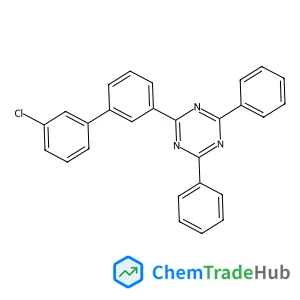
2-(3'-Chlorobiphenyl-3-yl)-4,6-diphenyl-1,3,5-triazine
CAS Number:
1443049-83-9
Molecular Formula:
C27H18ClN3
Recommended Suppliers







Disclaimer
This page provides academic journal information for reference and research purposes only. We are not affiliated with any journal publishers and do not handle publication submissions. For publication-related inquiries, please contact the respective journal publishers directly.
If you notice any inaccuracies in the information displayed, please contact us at support@chemtradehub.com. We will promptly review and address your concerns.