












Experimental determination of electrostatic properties of Na–X zeolite from high resolution X-ray diffraction
Literature Information
Publication Date
2014-03-31
DOI
10.1039/C3CP55397C
Impact Factor
3.676
Authors
View Original
Abstract
High-resolution single crystal X-ray diffraction is used for the first time to obtain the charge density distribution in dehydrated Na–X zeolite. The electron density is extracted according to the Hansen & Coppens multipolar-model, from which Pval–κ-type atomic charges are derived. In order to compare the experimental electron density with theoretical calculations on zeolites and other minerals, a topological analysis is performed to derive AIM charges and electron density properties at bond critical points. The results are compared with that described in the literature. Finally, the electrostatic potential is evaluated in a periodic, mean field approach (disordered cation distribution in the Fd space group) and for a given distribution of the cations (space group P1). The electrostatic energy is, then, derived in the neighbourhood of cation sites where the molecules are usually physisorbed.
Recommended Journals
Related Literature
Copper(ii) catalyzed domino synthesis of quinoline derivatives from arylamines and alkynes
Huimin Dai, Chun-Xiao Li, Chao Yu, Zihao Wang, Hong Yan, Changsheng Lu
2017-07-04
Research Article
DOI: 10.1039/C7QO00333A
Correction: Total synthesis of natural products via iridium catalysis
Changchun Yuan, Bo Liu
2018-01-31
Correction
DOI: 10.1039/C8QO90004C
The influence of branched alkyl side chains in A–D–A oligothiophenes on the photovoltaic performance and morphology of solution-processed bulk-heterojunction solar cells
Ibrahim Ata, Sadok Ben Dkhil, Martin Pfannmöller, Sara Bals, David Duché, Jean-Jacques Simon, Tomoyuki Koganezawa, Noriyuki Yoshimoto, Christine Videlot-Ackermann, Olivier Margeat, Jörg Ackermann, Peter Bäuerle
2017-05-02
Research Article
DOI: 10.1039/C7QO00222J
Harnessing the potential diversity of resinic diterpenes through visible light-induced sensitized oxygenation coupled to Kornblum–DeLaMare and Hock reactions
Benjamin Laroche
2017-08-31
Research Article
DOI: 10.1039/C7QO00633K
A direct metal-free C2–H functionalization of quinoline N-oxides: a highly selective amination and alkylation strategy towards 2-substituted quinolines
Wen-Zhu Bi, Kai Sun, Chen Qu, Xiao-Lan Chen, Shao-Hua Zhu, Xu Li, Hai-Tao Wu, Li-Kun Duan
2017-05-11
Research Article
DOI: 10.1039/C7QO00311K
Divergent synthesis of hydropyridine derivatives via nitrogen-containing Lewis base mediated regioselective [4 + 2] cyclizations
Hongxing Jin, Erqing Li
2017-08-16
Research Article
DOI: 10.1039/C7QO00596B
Transition-metal-free radical fluoroalkylation of isocyanides for the synthesis of tri-/di-/monofluoromethylated phenanthridines
Jing Fang, Wei-Guo Shen, Gui-Zhen Ao
2017-07-17
Research Article
DOI: 10.1039/C7QO00473G
Gold-catalyzed diversified synthesis of 3-aminosugar analogues of digitoxin and digoxin
Jing Zeng, Guangfei Sun, Ruobin Wang, Shuxin Zhang, Shuang Teng, Zhiwen Liao, Lingkui Meng
2017-09-06
Research Article
DOI: 10.1039/C7QO00648A
Silver-mediated fluorination of alkyl iodides with TMSCF3 as the fluorinating agent
Liyan Wang, Xiaohuan Jiang, Pingping Tang
2017-06-27
Research Article
DOI: 10.1039/C7QO00450H
Efficient access to chiral 1,2-amino alcohols via Ir/f-amphox-catalyzed asymmetric hydrogenation of α-amino ketones
Yang Hu, Weilong Wu, Xiu-Qin Dong
2017-04-24
Research Article
DOI: 10.1039/C7QO00237H
You might also like
Compound Q&A
What precautions should be taken when handling 4-Methyl-6-(trifluoromethyl)quinoline (CAS: 40716-16-3)?
When handling 4-Methyl-6-(trifluoromethyl)quinoline (CAS: 40716-16-3), safety go...
40716-16-34-Methyl-6-(trifluor...
Compound Q&A
What is 4-(3,5-Difluorophenyl)aniline (CAS: 405058-00-6)?
4-(3,5-Difluorophenyl)aniline is an aromatic organic compound with the CAS numbe...
405058-00-64-(3,5-Difluoropheny...
Compound Q&A
How is 5-{[4-(Trifluoromethyl)phenyl]sulfanyl}-1,2,3-thiadiazole-4-carboxylic acid (CAS: 338982-07-3) typically synthesized?
5-{[4-(Trifluoromethyl)phenyl]sulfanyl}-1,2,3-thiadiazole-4-carboxylic acid can ...
338982-07-35-{[4-(Trifluorometh...
Compound Q&A
What is the market or research trend for 4-Benzylaniline hydrochloride (CAS: 6317-57-3)?
The market for 4-Benzylaniline hydrochloride (CAS: 6317-57-3) is steadily growin...
6317-57-34-Benzylaniline hydr...
Compound Q&A
Is [3-(Diethylsulfamoyl)phenyl]boronic acid (CAS: 871329-58-7) safe?
[3-(Diethylsulfamoyl)phenyl]boronic acid is generally considered safe when handl...
871329-58-7[3-(Diethylsulfamoyl...
Compound Q&A
What are the main uses of 3-Bromo-2,5-dimethoxyaniline (CAS: 115929-62-9)?
3-Bromo-2,5-dimethoxyaniline is mainly used in the pharmaceutical and chemical i...
115929-62-93-Bromo-2,5-dimethox...
Compound Q&A
What regulatory guidelines apply to N-Methyl-1-(5-methyl-1H-indol-3-yl)methanamine (CAS: 915922-67-7)?
N-Methyl-1-(5-methyl-1H-indol-3-yl)methanamine (CAS: 915922-67-7) is subject to ...
915922-67-7N-Methyl-1-(5-methyl...
Compound Q&A
What industries use Carbamic acid, N-[(5S)-5,6-diamino-6-oxohexyl]-, 1,1-dimethylethyl ester (CAS: 24828-96-4)?
This compound is primarily used in the pharmaceutical industry for the synthesis...
24828-96-4Carbamic acid, N-[(5...
Compound Q&A
How should 2-Methyl-2-propanyl [(1S,3R)-3-aminocyclohexyl]carbamate (CAS: 1298101-47-9) be stored?
2-Methyl-2-propanyl [(1S,3R)-3-aminocyclohexyl]carbamate (CAS: 1298101-47-9) sho...
1298101-47-92-Methyl-2-propanyl ...
Compound Q&A
What industries use Ethyl 2-bromo-4,4,4-trifluorobutanoate (CAS: 367-33-9)?
Ethyl 2-bromo-4,4,4-trifluorobutanoate (CAS: 367-33-9) is utilized in the pharma...
367-33-9Ethyl 2-bromo-4,4,4-...
Source Journal
Physical Chemistry Chemical Physics

CiteScore:
5.5
Self-citation Rate:
10.3%
Articles per Year:
3036
Physical Chemistry Chemical Physics (PCCP) is an international journal co-owned by 19 physical chemistry and physics societies from around the world. This journal publishes original, cutting-edge research in physical chemistry, chemical physics and biophysical chemistry. To be suitable for publication in PCCP, articles must include significant innovation and/or insight into physical chemistry; this is the most important criterion that reviewers and Editors will judge against when evaluating submissions. The journal has a broad scope and welcomes contributions spanning experiment, theory, computation and data science. Topical coverage includes spectroscopy, dynamics, kinetics, statistical mechanics, thermodynamics, electrochemistry, catalysis, surface science, quantum mechanics, quantum computing and machine learning. Interdisciplinary research areas such as polymers and soft matter, materials, nanoscience, energy, surfaces/interfaces, and biophysical chemistry are welcomed if they demonstrate significant innovation and/or insight into physical chemistry. Joined experimental/theoretical studies are particularly appreciated when complementary and based on up-to-date approaches.
Recommended Compounds
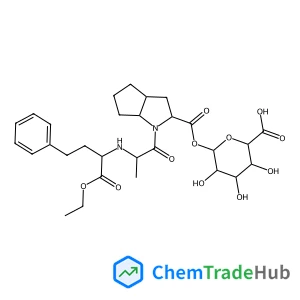


cis-3-Amino-1-(trifluoromethyl)cyclobutanol hydrochloride (1:1)
CAS Number:
1408075-16-0
Molecular Formula:
C5H9ClF3NO
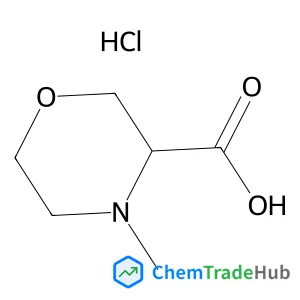
4-Methyl-3-morpholinecarboxylic acid hydrochloride (1:1)
CAS Number:
1240518-90-4
Molecular Formula:
C6H12ClNO3
Recommended Suppliers







Disclaimer
This page provides academic journal information for reference and research purposes only. We are not affiliated with any journal publishers and do not handle publication submissions. For publication-related inquiries, please contact the respective journal publishers directly.
If you notice any inaccuracies in the information displayed, please contact us at support@chemtradehub.com. We will promptly review and address your concerns.