












Adsorption and splitting of H2S on 2D-ZnO1−xNy: first-principles analysis
Literature Information
Publication Date
2014-04-22
DOI
10.1039/C4CP01092B
Impact Factor
3.676
Authors
Summayya Kouser, Nacir Tit
View Original
Abstract
We present a thorough analysis of molecular adsorption of a toxic gas, H2S, on pristine, defective and N-substituted 2D-ZnO using first-principles simulations within density functional theory and the parameterized form of van der Waals (vdW) interaction. We find that the binding of H2S with pristine 2D-ZnO is relatively weak (adsorption energy EA = −29 to −36 kJ mol−1) as it is mainly through the vdW interaction. However, substitutional nitrogen doping in 2D-ZnO leads to a drastic increase in the adsorption energy (EA = −152 kJ mol−1) resulting in dissociation of H2S molecules. This originates fundamentally from a strong covalent bonding interaction between an unpaired electron in the p-orbital of nitrogen and an electron in the s-orbital of H. While O-vacancy in 2D-ZnO has little effect on its interaction with H2S at lower coverages, a strong interaction at higher coverages leads to splitting of H2S and formation of H2 molecules. Our work shows that 2D-ZnO is a promising material to facilitate capturing of toxic H2S from the environment and at the same time converting it to a green source of energy.
Related Literature
Rhodium-catalyzed intramolecular carbosilylation of alkynes via C(sp3)–Si bond cleavage
Qi Yang, Liang Liu, Yue Chi, Wei Hao, Wen-Xiong Zhang
2017-12-04
Research Article
DOI: 10.1039/C7QO00927E
New D–π-A push–pull chromophores as low band gap molecular semiconductors for organic small molecule solar cell applications
Abbasriyaludeen Abdul Raheem, Santhosh Kamaraj, Veeman Sannasi, Chandrasekar Praveen
2017-11-22
Research Article
DOI: 10.1039/C7QO00920H
Cu-Catalyzed tertiary alkylation of α-(trifluoromethyl)styrenes with tertiary alkylmagnesium reagents
Wenpeng Dai, Yingyin Lin, Yan Wan, Song Cao
2017-09-18
Research Article
DOI: 10.1039/C7QO00716G
l-Phenylalanine potassium catalyzed asymmetric formal [3 + 3] annulation of 2-enoyl-pyridine N-oxides with acetone
Youguo Xu, Sheng Zhang, Lijun Li, Yukang Wang, Zhenggen Zha, Zhiyong Wang
2017-10-09
Research Article
DOI: 10.1039/C7QO00796E
Divergent synthesis of hydropyridine derivatives via nitrogen-containing Lewis base mediated regioselective [4 + 2] cyclizations
Hongxing Jin, Erqing Li
2017-08-16
Research Article
DOI: 10.1039/C7QO00596B
Harnessing the potential diversity of resinic diterpenes through visible light-induced sensitized oxygenation coupled to Kornblum–DeLaMare and Hock reactions
Benjamin Laroche
2017-08-31
Research Article
DOI: 10.1039/C7QO00633K
Transition-metal-free dehydrogenation coupling of pyridinium through a self-promoted hydride transfer process
Yuzhen Ding, Zhiqiang Pan, Xiaogang Tong
2017-06-12
Research Article
DOI: 10.1039/C7QO00389G
Synthesis of thiophosphates through a three-component reaction by using sulfur dioxide as the sulfur source
Xinxing Gong, Jiahao Chen, Jianhe Liu
2017-08-17
Research Article
DOI: 10.1039/C7QO00634A
You might also like
Compound Q&A
What precautions should be taken when handling 4-Methyl-6-(trifluoromethyl)quinoline (CAS: 40716-16-3)?
When handling 4-Methyl-6-(trifluoromethyl)quinoline (CAS: 40716-16-3), safety go...
40716-16-34-Methyl-6-(trifluor...
Compound Q&A
What is 4-(3,5-Difluorophenyl)aniline (CAS: 405058-00-6)?
4-(3,5-Difluorophenyl)aniline is an aromatic organic compound with the CAS numbe...
405058-00-64-(3,5-Difluoropheny...
Compound Q&A
How is 5-{[4-(Trifluoromethyl)phenyl]sulfanyl}-1,2,3-thiadiazole-4-carboxylic acid (CAS: 338982-07-3) typically synthesized?
5-{[4-(Trifluoromethyl)phenyl]sulfanyl}-1,2,3-thiadiazole-4-carboxylic acid can ...
338982-07-35-{[4-(Trifluorometh...
Compound Q&A
What is the market or research trend for 4-Benzylaniline hydrochloride (CAS: 6317-57-3)?
The market for 4-Benzylaniline hydrochloride (CAS: 6317-57-3) is steadily growin...
6317-57-34-Benzylaniline hydr...
Compound Q&A
Is [3-(Diethylsulfamoyl)phenyl]boronic acid (CAS: 871329-58-7) safe?
[3-(Diethylsulfamoyl)phenyl]boronic acid is generally considered safe when handl...
871329-58-7[3-(Diethylsulfamoyl...
Compound Q&A
What are the main uses of 3-Bromo-2,5-dimethoxyaniline (CAS: 115929-62-9)?
3-Bromo-2,5-dimethoxyaniline is mainly used in the pharmaceutical and chemical i...
115929-62-93-Bromo-2,5-dimethox...
Compound Q&A
What regulatory guidelines apply to N-Methyl-1-(5-methyl-1H-indol-3-yl)methanamine (CAS: 915922-67-7)?
N-Methyl-1-(5-methyl-1H-indol-3-yl)methanamine (CAS: 915922-67-7) is subject to ...
915922-67-7N-Methyl-1-(5-methyl...
Compound Q&A
What industries use Carbamic acid, N-[(5S)-5,6-diamino-6-oxohexyl]-, 1,1-dimethylethyl ester (CAS: 24828-96-4)?
This compound is primarily used in the pharmaceutical industry for the synthesis...
24828-96-4Carbamic acid, N-[(5...
Compound Q&A
How should 2-Methyl-2-propanyl [(1S,3R)-3-aminocyclohexyl]carbamate (CAS: 1298101-47-9) be stored?
2-Methyl-2-propanyl [(1S,3R)-3-aminocyclohexyl]carbamate (CAS: 1298101-47-9) sho...
1298101-47-92-Methyl-2-propanyl ...
Compound Q&A
What industries use Ethyl 2-bromo-4,4,4-trifluorobutanoate (CAS: 367-33-9)?
Ethyl 2-bromo-4,4,4-trifluorobutanoate (CAS: 367-33-9) is utilized in the pharma...
367-33-9Ethyl 2-bromo-4,4,4-...
Source Journal
Physical Chemistry Chemical Physics

CiteScore:
5.5
Self-citation Rate:
10.3%
Articles per Year:
3036
Physical Chemistry Chemical Physics (PCCP) is an international journal co-owned by 19 physical chemistry and physics societies from around the world. This journal publishes original, cutting-edge research in physical chemistry, chemical physics and biophysical chemistry. To be suitable for publication in PCCP, articles must include significant innovation and/or insight into physical chemistry; this is the most important criterion that reviewers and Editors will judge against when evaluating submissions. The journal has a broad scope and welcomes contributions spanning experiment, theory, computation and data science. Topical coverage includes spectroscopy, dynamics, kinetics, statistical mechanics, thermodynamics, electrochemistry, catalysis, surface science, quantum mechanics, quantum computing and machine learning. Interdisciplinary research areas such as polymers and soft matter, materials, nanoscience, energy, surfaces/interfaces, and biophysical chemistry are welcomed if they demonstrate significant innovation and/or insight into physical chemistry. Joined experimental/theoretical studies are particularly appreciated when complementary and based on up-to-date approaches.
Recommended Compounds
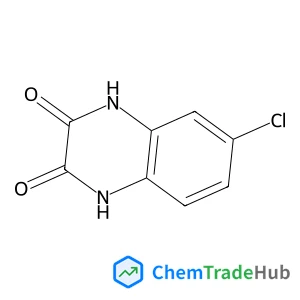
6-CHLORO-2,3-DIOXO-1,2,3,4-TETRAHYDROQUINOXALINE, 97
CAS Number:
169-14-2
Molecular Formula:
C8H5ClN2O2
Recommended Suppliers






Disclaimer
This page provides academic journal information for reference and research purposes only. We are not affiliated with any journal publishers and do not handle publication submissions. For publication-related inquiries, please contact the respective journal publishers directly.
If you notice any inaccuracies in the information displayed, please contact us at support@chemtradehub.com. We will promptly review and address your concerns.