













Sugar–salt and sugar–salt–water complexes: structure and dynamics of glucose–KNO3–(H2O)n
Literature Information
Publication Date
2010-02-22
DOI
10.1039/B925797G
Impact Factor
3.676
Authors
Brina Brauer, Victoria Buch
View Original
Abstract
Molecular dynamics (MD) simulations are carried out for the complex of glucose with KNO3 and for complexes of the type glucose–KNO3–(H2O)n, for n ≤ 11. Structure and dynamic properties of the systems are explored. The MD simulations are carried out using primarily the DL_POLY/OPLS force field, and global and local minimum energy structures of some of the systems are compared with ab initio calculations. The main findings include: (1) complexation with KNO3 leads to an “inverse anomeric effect”, with the β-glucose complex more stable than the α-glucose by ∼1.74 kcal mol−1; (2) as temperature is increased to 600 K, the KNO3 remains undissociated in the 1 : 1 complex, with the K+ hooked to the equilibrium site, and the NO3− bound to it, undergoing large-amplitude bending/torsional motions; (3) for n ≥ 3 water molecules added to the system, charge separation into K+ and NO3− ions takes place; (4) for the sugar–water system with n = 11 water molecules all hydroxyl groups are hydrated with the glucose adopting a surface position, indicative of a surfactant property of the sugar; and (5) comparison of DL_POLY with MP2/TZP structure predictions indicates that the empirical force field predicts global and local minimum structures reasonably well, but errs in giving the energy rankings of the different minima. The implications of the results on the effects of salts on saccharides are discussed.
Related Literature
Autocatalyzed three-component cyclization of polyfluoroalkyl-3-oxo esters, methyl ketones and alkyl amines: a novel approach to 3-alkylamino-5-hydroxy-5-polyfluoroalkylcyclohex-2-en-1-ones
Marina V. Goryaeva, Svetlana O. Kushch, Olga G. Khudina, Yanina V. Burgart, Yulia S. Kudyakova, Marina A. Ezhikova, Mikhail I. Kodess, Pavel A. Slepukhin, Lilya Sh. Sadretdinova, Natalya P. Evstigneeva, Natalya A. Gerasimova, Victor I. Saloutin
2019-03-26
Paper
DOI: 10.1039/C9OB00293F
Sarocladione, a unique 5,10:8,9-diseco-steroid from the deep-sea-derived fungus Sarocladium kiliense
Chun-Lan Xie, Jin-Mei Xia, Cui-Ping Xing, Zhu-Hua Luo, Zongze Shao, Xiao-Jun Yan, Shan He, Xian-Wen Yang
2019-05-29
Communication
DOI: 10.1039/C9OB01159E
Questioning the γ-gauche effect: stereoassignment of 1,3-disubstituted-tetrahydro-β-carbolines using 1H–1H coupling constants
Kristýna Cagašová, Maryam Ghavami, Zhong-Ke Yao, Paul R. Carlier
2019-06-17
Paper
DOI: 10.1039/C9OB01139K
Planarized B,N-phenylated dibenzoazaborine with a carbazole substructure: electronic impact of the structural constraint
Mikinori Ando, Mika Sakai, Naoki Ando, Masato Hirai
2019-05-14
Communication
DOI: 10.1039/C9OB00934E
Design of S–S bond containing maleimide-conjugated closo-dodecaborate (SSMID): identification of unique modification sites on albumin and investigation of intracellular uptake
Shinichi Sato, Hiroya Asami, Tomoko Hasegawa, Jun-Ya Kohno, Hiroyuki Nakamura
2019-04-03
Communication
DOI: 10.1039/C9OB00584F
New geldanamycin derivatives with anti Hsp properties by mutasynthesis
Jekaterina Hermane, Simone Eichner, Lena Mancuso, Benjamin Schröder, Florenz Sasse, Carsten Zeilinger, Andreas Kirschning
2019-05-07
Paper
DOI: 10.1039/C9OB00892F
Correction: Enantiomeric NMR discrimination of carboxylic acids using actinomycin D as a chiral solvating agent
Liwen Bai, Pian Chen, Jiangxia Xiang, Jiarui Sun, Xinxiang Lei
2019-03-28
Correction
DOI: 10.1039/C9OB90055A
N-Heterocyclic carbene-catalyzed diastereoselective synthesis of sulfenylated indanes via sulfa-Michael–Michael (aldol) cascade reactions
Ze-Nan Feng, Jin-Yun Luo, Yang Zhang, Guang-Fen Du, Lin He
2019-04-12
Communication
DOI: 10.1039/C9OB00210C
You might also like
Compound Q&A
What is 1-(2,4,6-Trifluorophenyl)ethanol (CAS: 1250113-83-7)?
1-(2,4,6-Trifluorophenyl)ethanol is an organic compound with the CAS number 1250...
1250113-83-71-(2,4,6-Trifluoroph...
Compound Q&A
Is 1-(2,4-Dimethoxybenzyl)-4-(hydroxymethyl)-2-pyrrolidinone (CAS: 919111-34-5) safe?
1-(2,4-Dimethoxybenzyl)-4-(hydroxymethyl)-2-pyrrolidinone (CAS: 919111-34-5) is ...
919111-34-51-(2,4-Dimethoxybenz...
Compound Q&A
What are the physical and chemical properties of (7S,15R)-6β,15-Diacetoxy-7α,20-epoxy-7-hydroxykaura-2,16-dien-1-one (CAS: 51419-51-3)?
(7S,15R)-6β,15-Diacetoxy-7α,20-epoxy-7-hydroxykaura-2,16-dien-1-one is a crystal...
51419-51-3(7S,15R)-6β,15-Diace...
Compound Q&A
What regulatory guidelines apply to rac-ethyl (1r,4r)-4-hydroxycyclohexane-1-carboxylate, trans (CAS: 3618-04-0)?
The compound rac-ethyl (1r,4r)-4-hydroxycyclohexane-1-carboxylate, trans (CAS: 3...
3618-04-0rac-ethyl (1r,4r)-4-...
Compound Q&A
What is the market or research trend for 2-(2,4-Difluorophenoxy)-3-nitropyridine (CAS: 175135-62-3)?
The market for 2-(2,4-Difluorophenoxy)-3-nitropyridine (CAS: 175135-62-3) is cur...
175135-62-32-(2,4-Difluoropheno...
Compound Q&A
What are the main uses of 6-Diazo-5-oxo-L-norleucine (CAS: 157-03-9)?
The main uses of 6-Diazo-5-oxo-L-norleucine (CAS: 157-03-9) include research in ...
157-03-96-Diazo-5-oxo-L-norl...
Compound Q&A
What precautions should be taken when handling 2-Aminoethyl-mono-amide-DOTA-tris(tBu ester) (CAS: 173308-19-5)?
When handling 2-Aminoethyl-mono-amide-DOTA-tris(tBu ester) (CAS: 173308-19-5), i...
173308-19-52-Aminoethyl-mono-am...
Compound Q&A
How is 5-Methylimidazo[1,2-a]pyridine-3-carbaldehyde (CAS: 178488-37-4) typically synthesized?
5-Methylimidazo[1,2-a]pyridine-3-carbaldehyde (CAS: 178488-37-4) can be synthesi...
178488-37-45-Methylimidazo[1,2-...
Compound Q&A
Are there alternatives to 2,4,6-Trihydroxyisophthalaldehyde (CAS: 4396-13-8) in synthesis?
There are alternative reagents that can be used in the synthesis of 2,4,6-Trihyd...
4396-13-82,4,6-Trihydroxyisop...
Compound Q&A
What is (2Z)-3-(5-Fluoro-1H-indol-3-yl)-2-sulfanylacrylic acid (CAS: 179461-52-0)?
(2Z)-3-(5-Fluoro-1H-indol-3-yl)-2-sulfanylacrylic acid is a chemical compound wi...
179461-52-0(2Z)-3-(5-Fluoro-1H-...
Source Journal
Physical Chemistry Chemical Physics

CiteScore:
5.5
Self-citation Rate:
10.3%
Articles per Year:
3036
Physical Chemistry Chemical Physics (PCCP) is an international journal co-owned by 19 physical chemistry and physics societies from around the world. This journal publishes original, cutting-edge research in physical chemistry, chemical physics and biophysical chemistry. To be suitable for publication in PCCP, articles must include significant innovation and/or insight into physical chemistry; this is the most important criterion that reviewers and Editors will judge against when evaluating submissions. The journal has a broad scope and welcomes contributions spanning experiment, theory, computation and data science. Topical coverage includes spectroscopy, dynamics, kinetics, statistical mechanics, thermodynamics, electrochemistry, catalysis, surface science, quantum mechanics, quantum computing and machine learning. Interdisciplinary research areas such as polymers and soft matter, materials, nanoscience, energy, surfaces/interfaces, and biophysical chemistry are welcomed if they demonstrate significant innovation and/or insight into physical chemistry. Joined experimental/theoretical studies are particularly appreciated when complementary and based on up-to-date approaches.
Recommended Compounds
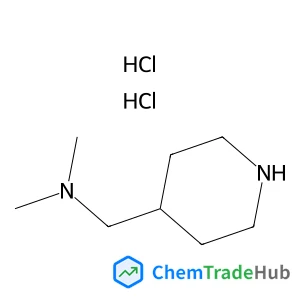
N,N-dimethyl(piperidin-4-yl)methanamine hydrochloride
CAS Number:
172281-72-0
Molecular Formula:
C8H20Cl2N2
![2-(Methylsulfonyl)-2,4,5,6-tetrahydropyrrolo[3,4-c]pyrazole structure](https://static.chemtradehub.com/structs/122/1226781-80-1-09d5.webp "2-(Methylsulfonyl)-2,4,5,6-tetrahydropyrrolo[3,4-c]pyrazole structure")
2-(Methylsulfonyl)-2,4,5,6-tetrahydropyrrolo[3,4-c]pyrazole
CAS Number:
1226781-80-1
Molecular Formula:
C6H9N3O2S

Recommended Suppliers




Disclaimer
This page provides academic journal information for reference and research purposes only. We are not affiliated with any journal publishers and do not handle publication submissions. For publication-related inquiries, please contact the respective journal publishers directly.
If you notice any inaccuracies in the information displayed, please contact us at support@chemtradehub.com. We will promptly review and address your concerns.