












Silyloxyazadienes: one intermediate and two competitive pericyclic reactions
Literature Information
Publication Date
2010-03-29
DOI
10.1039/B925351C
Impact Factor
3.676
Authors
Alessandro Bongini, Mauro Panunzio, Alessandro Venturini
View Original
Abstract
The two competing mechanisms in the reaction of 3-trialkylsilyloxy-2-aza-1,3 dienes to form β-lactams through a [2+2] electrocyclic ring closure or tetrahydrooxazinan-4-ones via a [4+2] hetero-Diels–Alder reaction were studied using Density Functional computations. Although the [2+2] and [4+2] mechanisms are typical of dienes, their competition, starting from the same diene intermediate, has not yet been observed and analyzed. This competition is governed by a delicate interplay between temperature and substituents at the diene and dienophile, respectively. Clearly, entropy tends to favor the [4+2] hetero-Diels–Alder at low temperatures and the [2+2] electrocyclic ring closure at high temperatures, but simple substituent modifications at the diene and dienophile, can make the [4+2] competitive at high temperatures and sometimes even transform the [4+2] concerted mechanism into a two-step Mukaiyama-type process. Moreover, a study of the global electrophilicity values showed that charge transfer in the hetero-Diels–Alder transition states is driven by chemical hardness rather than by chemical potential.
Recommended Journals
Related Literature
Computer simulation studies on passive recruitment dynamics of lipids induced by the adsorption of charged nanoparticles
2014-05-07
Paper
DOI: 10.1039/C4CP00553H
Experimental determination of electrostatic properties of Na–X zeolite from high resolution X-ray diffraction
2014-03-31
Paper
DOI: 10.1039/C3CP55397C
Insight into the structure and the mechanism of the slow proton transfer in the GFP double mutant T203V/S205A
Ron Simkovitch, Shay Shomer, Rinat Gepshtein, Dan Huppert, Mari Saif, Karen Kallio, S. James Remington
2014-04-14
Paper
DOI: 10.1039/C4CP00311J
A conformation-selective IR-UV study of the dipeptides Ac-Phe-Ser-NH2 and Ac-Phe-Cys-NH2: probing the SH⋯O and OH⋯O hydrogen bond interactions
Bin Yan, Sander Jaeqx, Wim J. van der Zande, Anouk M. Rijs
2014-04-23
Paper
DOI: 10.1039/C4CP00810C
Construction of 3D V2O5/hydrogenated-WO3 nanotrees on tungsten foil for high-performance pseudocapacitors
Fengmei Wang, Yuanchang Li, Zhongzhou Cheng, Kai Xu, Xueying Zhan, Zhenxing Wang, Jun He
2014-04-17
Paper
DOI: 10.1039/C4CP01200C
Synergistic contributions by decreasing overpotential and enhancing charge-transfer in α-Fe2O3/Mn3O4/graphene catalysts with heterostructures for photocatalytic water oxidation
Shunli Yin, Xiaomei Wang, Zhigang Mou, Yijie Wu, Hui Huang, Mingshan Zhu, Yukou Du, Ping Yang
2014-03-11
Paper
DOI: 10.1039/C4CP00384E
Confined H2O molecules as local probes of pressure-induced amorphisation in faujasite
Frederico Alabarse, Claire Levelut, Aude Isambert, Philippe Hébert, Shinji Kohara, David Maurin, Jean-Louis Bantignies, Olivier Cambon, Gaëlle Creff, Pascale Roy, Jean-Blaise Brubach, Tahar Hammouda, Denis Andrault, Julien Haines
2014-04-28
Paper
DOI: 10.1039/C4CP00186A
Cobalt porphyrin electrode films for electrocatalytic water oxidation
Ali Han, Hongxing Jia, Hao Ma, Shifan Ye, Haotian Wu, Haitao Lei, Yongzhen Han, Rui Cao, Pingwu Du
2014-04-15
Paper
DOI: 10.1039/C4CP00523F
Effect of ozone exposure on the electrical characteristics of high-purity, large-diameter semiconducting carbon nanotubes
Jia Gao, Yueh-Lin Loo
2014-04-08
Paper
DOI: 10.1039/C4CP00665H
Pressure dependent OH yields in the reactions of CH3CO and HOCH2CO with O2
C. B. M. Groß, T. J. Dillon, J. N. Crowley
2014-04-28
Paper
DOI: 10.1039/C4CP01108B
You might also like
Compound Q&A
What precautions should be taken when handling 2-Chloro-1,2-bis(4-methylphenyl)ethanone (CAS: 71193-32-3)?
When handling 2-Chloro-1,2-bis(4-methylphenyl)ethanone (CAS: 71193-32-3), it is ...
71193-32-32-Chloro-1,2-bis(4-m...
Compound Q&A
What industries use 4-Ethoxy-3-(5-methyl-4-oxo-7-propyl-1,4-dihydroimidazo[5,1-f][1,2,4]triazin-2-yl)benzenesulfonyl chloride (CAS: 224789-26-8)?
4-Ethoxy-3-(5-methyl-4-oxo-7-propyl-1,4-dihydroimidazo[5,1-f][1,2,4]triazin-2-yl...
224789-26-84-Ethoxy-3-(5-methyl...
Compound Q&A
How should Methyl 3-Oxo-4-Androsten-17-Carboxylate (CAS: 2681-55-2) be stored?
Methyl 3-Oxo-4-Androsten-17-Carboxylate (CAS: 2681-55-2) should be stored in a c...
2681-55-2Methyl 3-Oxo-4-Andro...
Compound Q&A
What are the main uses of (R)-3-Amino-4-(3-hexylphenylamino)-4-oxobutylphosphonic acid (CAS: 909725-61-7)?
(R)-3-Amino-4-(3-hexylphenylamino)-4-oxobutylphosphonic acid is primarily used i...
909725-61-7(R)-3-Amino-4-(3-hex...
Compound Q&A
What regulatory guidelines apply to 2-Methyl-2-propanyl 3-amino-3-carbamoyl-1-azetidinecarboxylate (CAS: 1254120-14-3)?
2-Methyl-2-propanyl 3-amino-3-carbamoyl-1-azetidinecarboxylate (CAS: 1254120-14-...
1254120-14-32-Methyl-2-propanyl ...
Compound Q&A
Are there alternatives to (E)-4-(tert-Butoxy)-4-oxobut-2-enoic acid (CAS: 135355-96-3) in synthesis?
There are alternative reagents that can be used in synthesis instead of (E)-4-(t...
135355-96-3(E)-4-(tert-Butoxy)-...
Compound Q&A
What are the physical and chemical properties of [2-(3-Chlorophenyl)-1,3-thiazol-4-yl]methanol (CAS: 121202-20-8)?
[2-(3-Chlorophenyl)-1,3-thiazol-4-yl]methanol (CAS: 121202-20-8) is a crystallin...
121202-20-8[2-(3-Chlorophenyl)-...
Compound Q&A
What is the market or research trend for Methyl (2S)-[(4S)-2,2-dimethyl-1,3-dioxolan-4-yl]{[(4-methylphenyl)sulfonyl]oxy}acetate (CAS: 166249-17-8)?
The market and research trends for Methyl (2S)-[(4S)-2,2-dimethyl-1,3-dioxolan-4...
166249-17-8Methyl (2S)-[(4S)-2,...
Compound Q&A
What is the market or research trend for 1-Bromo-2-isocyanatoethane (CAS: 42865-19-0)?
The market for 1-Bromo-2-isocyanatoethane (CAS: 42865-19-0) is driven by its use...
42865-19-01-Bromo-2-isocyanato...
Compound Q&A
What are the main uses of 4-Nitro-D-phenylalanine hydrochloride (CAS: 147065-06-3)?
4-Nitro-D-phenylalanine hydrochloride (CAS: 147065-06-3) is primarily used in re...
147065-06-34-Nitro-D-phenylalan...
Source Journal
Physical Chemistry Chemical Physics

CiteScore:
5.5
Self-citation Rate:
10.3%
Articles per Year:
3036
Physical Chemistry Chemical Physics (PCCP) is an international journal co-owned by 19 physical chemistry and physics societies from around the world. This journal publishes original, cutting-edge research in physical chemistry, chemical physics and biophysical chemistry. To be suitable for publication in PCCP, articles must include significant innovation and/or insight into physical chemistry; this is the most important criterion that reviewers and Editors will judge against when evaluating submissions. The journal has a broad scope and welcomes contributions spanning experiment, theory, computation and data science. Topical coverage includes spectroscopy, dynamics, kinetics, statistical mechanics, thermodynamics, electrochemistry, catalysis, surface science, quantum mechanics, quantum computing and machine learning. Interdisciplinary research areas such as polymers and soft matter, materials, nanoscience, energy, surfaces/interfaces, and biophysical chemistry are welcomed if they demonstrate significant innovation and/or insight into physical chemistry. Joined experimental/theoretical studies are particularly appreciated when complementary and based on up-to-date approaches.
Recommended Compounds
![2-Hydroxy-4-[({[(4-methylphenyl)sulfonyl]oxy}acetyl)amino]benzoic acid structure](https://static.chemtradehub.com/structs/501/501919-59-1-579f.webp "2-Hydroxy-4-[({[(4-methylphenyl)sulfonyl]oxy}acetyl)amino]benzoic acid structure")
2-Hydroxy-4-[({[(4-methylphenyl)sulfonyl]oxy}acetyl)amino]benzoic acid
CAS Number:
501919-59-1
Molecular Formula:
C16H15NO7S
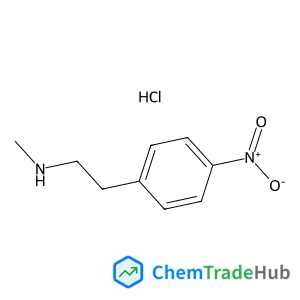
N-Methyl-2-(4-nitrophenyl)ethanamine hydrochloride (1:1)
CAS Number:
166943-39-1
Molecular Formula:
C9H13ClN2O2
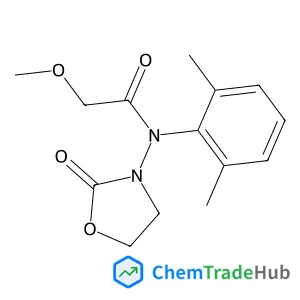
N-(2,6-Dimethylphenyl)-2-methoxy-N-(2-oxo-1,3-oxazolidin-3-yl)acetamide
CAS Number:
77732-09-3
Molecular Formula:
C14H18N2O4
Recommended Suppliers





Disclaimer
This page provides academic journal information for reference and research purposes only. We are not affiliated with any journal publishers and do not handle publication submissions. For publication-related inquiries, please contact the respective journal publishers directly.
If you notice any inaccuracies in the information displayed, please contact us at support@chemtradehub.com. We will promptly review and address your concerns.