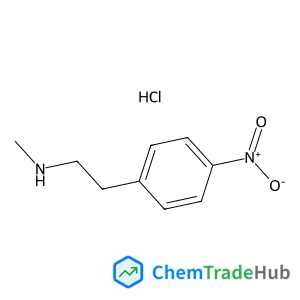
N-Methyl-2-(4-nitrophenyl)ethanamine hydrochloride (1:1)
CAS Number:
166943-39-1
Molecular Formula:
C9H13ClN2O2
Linying Liu, Jianhua Zhang, Xiaowei Zhao, Zheng Mao, Na Liu, Youyu Zhang
An enhanced understanding of the interactions between charged nanoparticles (CNPs) and a curved vesicle membrane may have important implications for the design of nanocarrier agents and drug delivery systems. In this work, coarse-grained molecular dynamics (CGMD) simulations of the CNPs with vesicles were performed to evaluate the effects of hydrophobicity, surface charge density and distribution on the curved vesicle membrane. The simulations reveal that there exist four distinct modes (insertion, repulsion, adhesion, and penetration) in the CNP–vesicle interaction. In contrast to previous studies on a planar membrane, the interactions of CNPs and a curved vesicle membrane show some novel properties. CNPs with low surface charge density (or neutral ones) can penetrate into the interior of the vesicle membrane more easily because of the increased membrane tension. The asymmetry between two leaflets of the membrane induces different interaction strengths of the negatively CNPs with the outer and inner leaflets. After penetration, the negatively CNPs prefer to stay close to the inner leaflet inside the vesicle where CNPs have stronger interactions with their surroundings. In the present work, we analyze the detailed mechanism of CNP's spontaneous penetration into vesicles, which is rarely mentioned in previous simulations. Moreover, we found that the negatively CNPs with the same surface charge density but different distribution result in different modes: the homogeneous mode is more likely to adsorb on the vesicle surface while the inhomogeneous mode tends to be more penetrable. In addition, the flip-flop phenomenon of the lipid membrane and the exchanging of water in or out of the vesicle were observed during penetration. Our results demonstrate that the electrostatic effect plays an essential role in the interaction between CNPs and vesicles. These findings suggest a way of controlling the CNP–vesicle interaction by coupling the hydrophobic properties, surface charge density and distribution of CNPs to enhance the probability of CNP's penetration into vesicles.
(3.beta.)-3-Hydroxy-N,N-dimethyl-chol-5-en-24-amide (CAS: 79066-03-8) is primari...
5-(Aminomethyl)-2-methoxyphenol (CAS: 89702-89-6) is classified under GHS as a s...
Thieno[2,3-c]pyridin-7(6H)-one (CAS: 28981-13-7) is a heterocyclic organic compo...
1-[(6-Methoxy-3-pyridinyl)methyl]-4-piperidinamine dihydrochloride is generally ...
[(2E)-3-Phenyl-2-propen-1-yl]phosphonic acid (CAS: 146404-58-2) is regulated und...
6-Bromo-7-methoxyquinoline (CAS: 1620515-86-7) falls under the scope of the Glob...
This compound is primarily used in the pharmaceutical industry for the developme...
1-Ethyl-7-[2-methyl-6-(4H-1,2,4-triazol-3-yl)-3-pyridinyl]-3,5-dihydropyrazino[2...
Alternative reagents such as 2-[(dimethylamino)methyl]phenylboronic acid or rela...
3-(Piperidin-4-yloxy)pyridine (CAS: 310881-48-2) is an organic compound with the...

Physical Chemistry Chemical Physics (PCCP) is an international journal co-owned by 19 physical chemistry and physics societies from around the world. This journal publishes original, cutting-edge research in physical chemistry, chemical physics and biophysical chemistry. To be suitable for publication in PCCP, articles must include significant innovation and/or insight into physical chemistry; this is the most important criterion that reviewers and Editors will judge against when evaluating submissions. The journal has a broad scope and welcomes contributions spanning experiment, theory, computation and data science. Topical coverage includes spectroscopy, dynamics, kinetics, statistical mechanics, thermodynamics, electrochemistry, catalysis, surface science, quantum mechanics, quantum computing and machine learning. Interdisciplinary research areas such as polymers and soft matter, materials, nanoscience, energy, surfaces/interfaces, and biophysical chemistry are welcomed if they demonstrate significant innovation and/or insight into physical chemistry. Joined experimental/theoretical studies are particularly appreciated when complementary and based on up-to-date approaches.