


Transferability of a coarse-grained atactic polystyrene model: the non-bonded potential effect
Literature Information
Publication Date
2016-10-04
DOI
10.1039/C6CP03753D
Impact Factor
3.676
Authors
View Original
Abstract
In this paper, we construct an efficient and simple coarse grained (CG) model for atactic polystyrene (PS) by using a 1 : 1 mapping scheme at 463 K and 1 atm pressure and derive the corresponding bonded and non-bonded potentials in the CG force field (FF) via a direct Boltzmann inversion approach and a combined structure-based and thermodynamic quantities-based CG method, respectively. For computational considerations, the non-bonded interaction between CG particles is described by Lennard-Jones (LJ) type potentials, and both the radial distribution function (RDF) and the bulk density of the atomistic simulations are taken as target properties in the parameterization of the two LJ parameters. To shed light on the choice of LJ forms of CG non-bonded potentials when designing the CG models, a series of CG models with different LJ potentials are constructed and compared in order to understand how the quality of a CG model in reproducing the structure and thermodynamic properties of chemically realistic systems is affected by the choice of non-bonded potentials. We find that with our structural and thermodynamics combined CG method to construct the CG FF at a single thermodynamic state point without any temperature dependent LJ potential correction and/or pressure optimization, the resulting CG models possess good temperature transferability in a wide range of temperatures 300–600 K, where both the target properties and several other static properties (such as thermal expansion coefficient and mean-square radius of gyration) are generally reproduced. Furthermore, the non-bonded LJ potential influences the density response of CG models to the temperature change, i.e., CG models with harder LJ potentials show better temperature transferability than the softer ones. Meanwhile, the derived Tg increases with increasing LJ repulsion strength while thermal expansion coefficients in both melt and glass states are lowered as the LJ potential hardens. With regard to the local conformation and local packing distribution functions, varying non-bonded LJ potential hardness influences only the magnitude of the peak height but does not affect the peak position, in particular the magnitude of the non-bonded potential effect on local distribution functions becomes stronger at lower temperatures. More specifically, this effect on the local chain conformation statistics at the CG level is different for the distribution of bond-lengths, bond angles and dihedrals. As a result, the size of the CG chains is fairly insensitive to the non-bonded LJ potentials within 300–600 K. In short, the CG model with the harder LJ-type non-bonded CG potential is a more realistic representation of excluded volume interactions of the underlying atomistic PS monomer and thus has the potential to generate a higher Tg to match with the atomistic systems.
Recommended Journals

Polycyclic Aromatic Compounds

Heteroatom Chemistry

Journal of the Indian Institute of Science

Journal of Asian Natural Products Research

Main Group Chemistry

Acta Metallurgica Sinica-English Letters

Chinese Journal of Chemistry

Critical Reviews in Solid State and Materials Sciences

Bioorganic & Medicinal Chemistry Letters

Biocatalysis and Biotransformation
Related Literature
You might also like
Compound Q&A
What are the main uses of (3.beta.)-3-Hydroxy-N,N-dimethyl-chol-5-en-24-amide (CAS: 79066-03-8)?
(3.beta.)-3-Hydroxy-N,N-dimethyl-chol-5-en-24-amide (CAS: 79066-03-8) is primari...
79066-03-8(3.beta.)-3-Hydroxy-...
Compound Q&A
What regulatory guidelines apply to 5-(aminomethyl)-2-methoxyphenol (CAS: 89702-89-6)?
5-(Aminomethyl)-2-methoxyphenol (CAS: 89702-89-6) is classified under GHS as a s...
89702-89-65-(aminomethyl)-2-me...
Compound Q&A
What is Thieno[2,3-c]pyridin-7(6H)-one (CAS: 28981-13-7)?
Thieno[2,3-c]pyridin-7(6H)-one (CAS: 28981-13-7) is a heterocyclic organic compo...
28981-13-7Thieno[2,3-c]pyridin...
Compound Q&A
Is 1-[(6-Methoxy-3-pyridinyl)methyl]-4-piperidinamine dihydrochloride (CAS: 1185311-28-7) safe?
1-[(6-Methoxy-3-pyridinyl)methyl]-4-piperidinamine dihydrochloride is generally ...
1185311-28-71-[(6-Methoxy-3-pyri...
Compound Q&A
What regulatory guidelines apply to [(2E)-3-Phenyl-2-propen-1-yl]phosphonic acid (CAS: 146404-58-2)?
[(2E)-3-Phenyl-2-propen-1-yl]phosphonic acid (CAS: 146404-58-2) is regulated und...
146404-58-2[(2E)-3-Phenyl-2-pro...
Compound Q&A
What regulatory guidelines apply to 6-Bromo-7-methoxyquinoline (CAS: 1620515-86-7)?
6-Bromo-7-methoxyquinoline (CAS: 1620515-86-7) falls under the scope of the Glob...
1620515-86-76-Bromo-7-methoxyqui...
Compound Q&A
What industries use (2R)-1-(1-Benzofuran-2-yl)-N-propyl-2-pentanamine (CAS: 260550-89-8)?
This compound is primarily used in the pharmaceutical industry for the developme...
260550-89-8(2R)-1-(1-Benzofuran...
Compound Q&A
What are the main uses of 1-Ethyl-7-[2-methyl-6-(4H-1,2,4-triazol-3-yl)-3-pyridinyl]-3,5-dihydropyrazino[2,3-b]pyrazin-2(1H)-one (CAS: 1228013-15-7)?
1-Ethyl-7-[2-methyl-6-(4H-1,2,4-triazol-3-yl)-3-pyridinyl]-3,5-dihydropyrazino[2...
1228013-15-71-Ethyl-7-[2-methyl-...
Compound Q&A
Are there alternatives to {5-(Acryloylamino)-2-[(dimethylamino)methyl]phenyl}boronic acid (CAS: 1217500-78-1) in synthesis?
Alternative reagents such as 2-[(dimethylamino)methyl]phenylboronic acid or rela...
1217500-78-1{5-(Acryloylamino)-2...
Compound Q&A
What is 3-(Piperidin-4-yloxy)pyridine (CAS: 310881-48-2)?
3-(Piperidin-4-yloxy)pyridine (CAS: 310881-48-2) is an organic compound with the...
310881-48-23-(Piperidin-4-yloxy...
Source Journal
Physical Chemistry Chemical Physics

CiteScore:
5.5
Self-citation Rate:
10.3%
Articles per Year:
3036
Physical Chemistry Chemical Physics (PCCP) is an international journal co-owned by 19 physical chemistry and physics societies from around the world. This journal publishes original, cutting-edge research in physical chemistry, chemical physics and biophysical chemistry. To be suitable for publication in PCCP, articles must include significant innovation and/or insight into physical chemistry; this is the most important criterion that reviewers and Editors will judge against when evaluating submissions. The journal has a broad scope and welcomes contributions spanning experiment, theory, computation and data science. Topical coverage includes spectroscopy, dynamics, kinetics, statistical mechanics, thermodynamics, electrochemistry, catalysis, surface science, quantum mechanics, quantum computing and machine learning. Interdisciplinary research areas such as polymers and soft matter, materials, nanoscience, energy, surfaces/interfaces, and biophysical chemistry are welcomed if they demonstrate significant innovation and/or insight into physical chemistry. Joined experimental/theoretical studies are particularly appreciated when complementary and based on up-to-date approaches.
Recommended Compounds
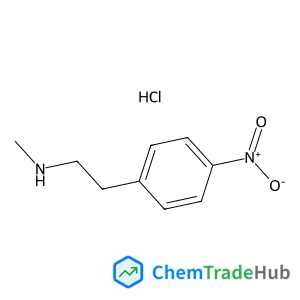
N-Methyl-2-(4-nitrophenyl)ethanamine hydrochloride (1:1)
CAS Number:
166943-39-1
Molecular Formula:
C9H13ClN2O2
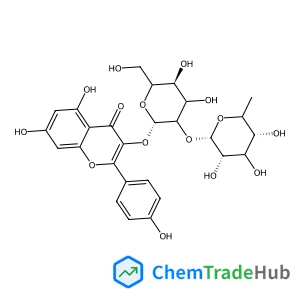
5,7-Dihydroxy-2-(4-hydroxyphenyl)-4-oxo-4H-chromen-3-yl 2-O-(6-deoxy-alpha-L-mannopyranosyl)-beta-D-glucopyranoside
CAS Number:
32602-81-6
Molecular Formula:
C27H30O15
Recommended Suppliers





Disclaimer
This page provides academic journal information for reference and research purposes only. We are not affiliated with any journal publishers and do not handle publication submissions. For publication-related inquiries, please contact the respective journal publishers directly.
If you notice any inaccuracies in the information displayed, please contact us at support@chemtradehub.com. We will promptly review and address your concerns.