













Para-hydrogen induced polarization in multi-spin systems studied at variable magnetic field
Literature Information
Publication Date
2009-09-02
DOI
10.1039/B914188J
Impact Factor
3.676
Authors
S. E. Korchak, H.-M. Vieth
View Original
Abstract
A theoretical description of para-hydrogen-induced polarization (PHIP) is developed, applicable to coupled multi-spin systems that are polarized at an arbitrary magnetic field. Scalar spin–spin interaction is considered to be the leading factor governing PHIP formation and transfer. At low magnetic fields, these interactions make the spins strongly coupled and cause efficient, coherent re-distribution of spin polarization. We describe the effects of strong coupling and field cycling for a three-spin system and compare calculated spectra with the experimental examples available. By using a fast field-cycling device, which shuttles the whole NMR probe, and thereby makes high-resolution NMR detection at high field possible, we studied PHIP patterns for a set of different fields between 0.1 mT and 7 T. PHIP spectra were measured for ethylbenzene as the product of a catalytic reaction between para-hydrogen and styrene. Additionally, the polarizations of ethylbenzene bound to the catalyst, and of the starting styrene molecule were analyzed. This is the first time that the full field dependence of PHIP has been determined experimentally. The spectra obtained are in perfect agreement with the simulations for the CH2 and CH3 protons of ethylbenzene and even for its weakly-polarized aromatic protons. Analysis of styrene polarization shows that the time profile of the field variation has pronounced effects on the PHIP pattern. Our study gives evidence that scalar spin–spin interactions determine the PHIP patterns. Possible applications of the theory are discussed.
Recommended Journals
Related Literature
Effect of electric field non-uniformity on droplets coalescence
Shirui Luo, Jarrod Schiffbauer
2016-10-04
Paper
DOI: 10.1039/C6CP06085D
Time-gated luminescence bioimaging with new luminescent nanocolloids based on [Mo6I8(C2F5COO)6]2− metal atom clusters
Chrystelle Neaime, Maria Amela-Cortes, Yann Molard, Stéphane Cordier, Benjamin Dierre, Michel Mortier, Toshiaki Takei, Kohsei Takahashi, Hajime Haneda, Marc Verelst, Séverine Lechevallier
2016-10-07
Paper
DOI: 10.1039/C6CP05290H
Energetics of native defects in anatase TiO2: a hybrid density functional study
Pakpoom Reunchan
2016-10-10
Paper
DOI: 10.1039/C6CP05798E
The catalytic effect of TiO2 nanosheets on extracellular electron transfer of Shewanella loihica PV-4
Tao Yin, Hui Li, Lin Su, Shuo Liu, Chunwei Yuan
2016-10-05
Paper
DOI: 10.1039/C6CP04509J
Dark states enhance the photocell power via phononic dissipation
Yiteng Zhang, Aaron Wirthwein, Fahhad H. Alharbi, Gregory S. Engel
2016-11-07
Paper
DOI: 10.1039/C6CP06098F
Extracting nano-gold from HAuCl4 solution manipulated with electrons
Y. Lu, K. Wang, F.-R. Chen, W. Zhang, M. L. Sui
2016-10-12
Paper
DOI: 10.1039/C6CP06032C
Ab initio thermodynamic study of the SnO2(110) surface in an O2 and NO environment: a fundamental understanding of the gas sensing mechanism for NO and NO2
Song-Nam Hong, Yun-Hyok Kye, Chol-Jun Yu, Un-Gi Jong, Gum-Chol Ri, Chang-Song Choe, Kwang-Hui Kim, Ju-Myong Han
2016-10-12
Paper
DOI: 10.1039/C6CP05433A
Direct observation of ice nucleation events on individual atmospheric particles
Bingbing Wang, Daniel A. Knopf, Swarup China, Bruce W. Arey, Mary K. Gilles, Alexander Laskin
2016-09-14
Paper
DOI: 10.1039/C6CP05253C
Glycation induces conformational changes in the amyloid-β peptide and enhances its aggregation propensity: molecular insights
Neelanjana Sengupta
2016-10-25
Paper
DOI: 10.1039/C6CP05041G
Ionic liquids as modulators of physicochemical properties and nanostructures of sodium dodecyl sulfate in aqueous solutions and potential application in pesticide microemulsions
Jing Li, Tengfei Fan, Yong Xu, Xuemin Wu
2016-10-11
Paper
DOI: 10.1039/C6CP04722J
You might also like
Compound Q&A
What are the main uses of (3.beta.)-3-Hydroxy-N,N-dimethyl-chol-5-en-24-amide (CAS: 79066-03-8)?
(3.beta.)-3-Hydroxy-N,N-dimethyl-chol-5-en-24-amide (CAS: 79066-03-8) is primari...
79066-03-8(3.beta.)-3-Hydroxy-...
Compound Q&A
What regulatory guidelines apply to 5-(aminomethyl)-2-methoxyphenol (CAS: 89702-89-6)?
5-(Aminomethyl)-2-methoxyphenol (CAS: 89702-89-6) is classified under GHS as a s...
89702-89-65-(aminomethyl)-2-me...
Compound Q&A
What is Thieno[2,3-c]pyridin-7(6H)-one (CAS: 28981-13-7)?
Thieno[2,3-c]pyridin-7(6H)-one (CAS: 28981-13-7) is a heterocyclic organic compo...
28981-13-7Thieno[2,3-c]pyridin...
Compound Q&A
Is 1-[(6-Methoxy-3-pyridinyl)methyl]-4-piperidinamine dihydrochloride (CAS: 1185311-28-7) safe?
1-[(6-Methoxy-3-pyridinyl)methyl]-4-piperidinamine dihydrochloride is generally ...
1185311-28-71-[(6-Methoxy-3-pyri...
Compound Q&A
What regulatory guidelines apply to [(2E)-3-Phenyl-2-propen-1-yl]phosphonic acid (CAS: 146404-58-2)?
[(2E)-3-Phenyl-2-propen-1-yl]phosphonic acid (CAS: 146404-58-2) is regulated und...
146404-58-2[(2E)-3-Phenyl-2-pro...
Compound Q&A
What regulatory guidelines apply to 6-Bromo-7-methoxyquinoline (CAS: 1620515-86-7)?
6-Bromo-7-methoxyquinoline (CAS: 1620515-86-7) falls under the scope of the Glob...
1620515-86-76-Bromo-7-methoxyqui...
Compound Q&A
What industries use (2R)-1-(1-Benzofuran-2-yl)-N-propyl-2-pentanamine (CAS: 260550-89-8)?
This compound is primarily used in the pharmaceutical industry for the developme...
260550-89-8(2R)-1-(1-Benzofuran...
Compound Q&A
What are the main uses of 1-Ethyl-7-[2-methyl-6-(4H-1,2,4-triazol-3-yl)-3-pyridinyl]-3,5-dihydropyrazino[2,3-b]pyrazin-2(1H)-one (CAS: 1228013-15-7)?
1-Ethyl-7-[2-methyl-6-(4H-1,2,4-triazol-3-yl)-3-pyridinyl]-3,5-dihydropyrazino[2...
1228013-15-71-Ethyl-7-[2-methyl-...
Compound Q&A
Are there alternatives to {5-(Acryloylamino)-2-[(dimethylamino)methyl]phenyl}boronic acid (CAS: 1217500-78-1) in synthesis?
Alternative reagents such as 2-[(dimethylamino)methyl]phenylboronic acid or rela...
1217500-78-1{5-(Acryloylamino)-2...
Compound Q&A
What is 3-(Piperidin-4-yloxy)pyridine (CAS: 310881-48-2)?
3-(Piperidin-4-yloxy)pyridine (CAS: 310881-48-2) is an organic compound with the...
310881-48-23-(Piperidin-4-yloxy...
Source Journal
Physical Chemistry Chemical Physics

CiteScore:
5.5
Self-citation Rate:
10.3%
Articles per Year:
3036
Physical Chemistry Chemical Physics (PCCP) is an international journal co-owned by 19 physical chemistry and physics societies from around the world. This journal publishes original, cutting-edge research in physical chemistry, chemical physics and biophysical chemistry. To be suitable for publication in PCCP, articles must include significant innovation and/or insight into physical chemistry; this is the most important criterion that reviewers and Editors will judge against when evaluating submissions. The journal has a broad scope and welcomes contributions spanning experiment, theory, computation and data science. Topical coverage includes spectroscopy, dynamics, kinetics, statistical mechanics, thermodynamics, electrochemistry, catalysis, surface science, quantum mechanics, quantum computing and machine learning. Interdisciplinary research areas such as polymers and soft matter, materials, nanoscience, energy, surfaces/interfaces, and biophysical chemistry are welcomed if they demonstrate significant innovation and/or insight into physical chemistry. Joined experimental/theoretical studies are particularly appreciated when complementary and based on up-to-date approaches.
Recommended Compounds
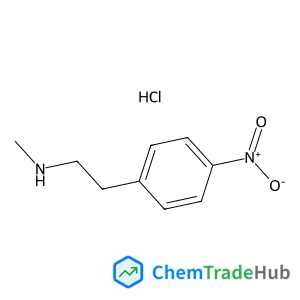
N-Methyl-2-(4-nitrophenyl)ethanamine hydrochloride (1:1)
CAS Number:
166943-39-1
Molecular Formula:
C9H13ClN2O2
Recommended Suppliers




Disclaimer
This page provides academic journal information for reference and research purposes only. We are not affiliated with any journal publishers and do not handle publication submissions. For publication-related inquiries, please contact the respective journal publishers directly.
If you notice any inaccuracies in the information displayed, please contact us at support@chemtradehub.com. We will promptly review and address your concerns.